Picture this: you're walking through a wooded area in the eastern United States, maybe in late summer, and you spot what looks like a small, bright green dragon clinging to a tree branch. It's covered in fierce-looking black-tipped spines, and its head sports four prominent, curved horns. Your first thought might be "run" or "is that thing poisonous?" Let me stop you right there. You've just met the hickory horned devil caterpillar, the larval stage of the stunning regal moth (Citheronia regalis). And despite its nightmare-fuel appearance, it's one of the most harmless and fascinating insects you'll ever encounter. This guide is for anyone who's found one, wants to find one, or is curious about raising them. I've been studying and rearing these giants for years, and I'm here to cut through the myths and give you the real, practical details.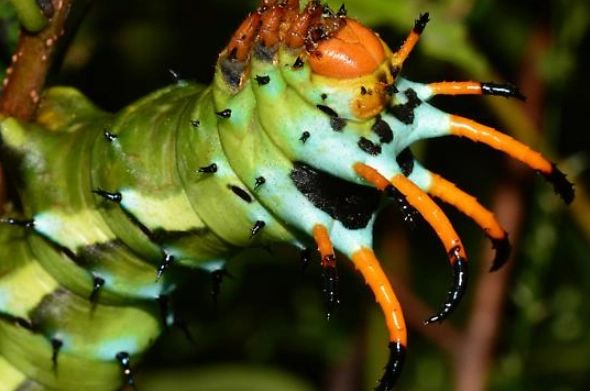
What’s Inside This Guide
What Does a Hickory Horned Devil Caterpillar Look Like?
You can't mistake it for anything else. A mature hickory horned devil is a beast, reaching up to 6 inches long—about the size of a hot dog. Its body is a vibrant aqua-green or turquoise. The most striking features are the rows of long, black-tipped spines running along its back and sides. The "horns" on its thorax (the segment right behind the head) are orange at the base and black at the tips, and they're surprisingly flexible. They can wave them around if they feel threatened, which is purely for show.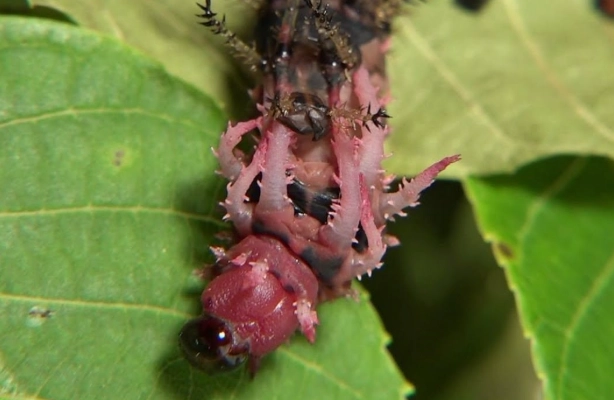
Here’s a quick breakdown of key identification features to separate it from other large caterpillars:
| Feature | Hickory Horned Devil | Similar Caterpillars (e.g., Tomato Hornworm) |
|---|---|---|
| Color | Bright aqua-green | Usually darker green with white markings |
| Spines/Horns | Multiple rows of long, black-tipped spines; four prominent head horns | A single, stiff "horn" on the rear end |
| Size at Maturity | 5 to 6 inches | 3 to 4 inches |
| Head Color | Orange or reddish-brown | Usually same as body color |
One thing most online guides get wrong is the color consistency. Early instars (growth stages) are actually a dull brown or orange, and they only develop that iconic green in the final two instars. If you find a small, brown spiky caterpillar on a walnut tree, it might just be a baby devil.
The Life Cycle: From Devil to Regal Moth
The transformation is nothing short of miraculous. The caterpillar stage is the main event—it's when they do all their eating and growing. After that final, massive instar, things get interesting.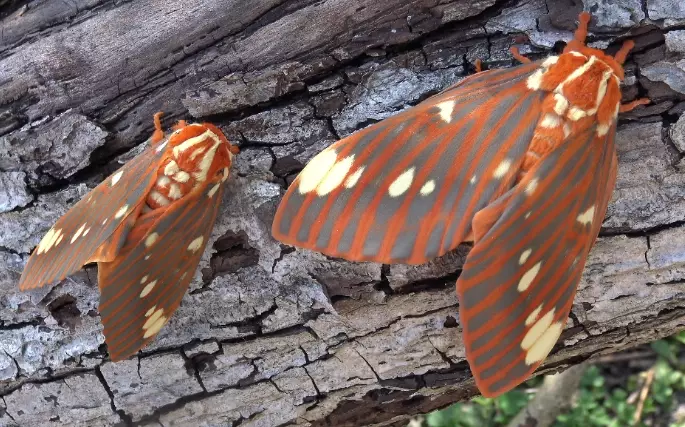
The caterpillar will stop eating and its color may dull slightly. This is the pre-pupation wandering stage. It will crawl down from its host tree and search for a suitable spot to burrow into the soil. This is a critical moment if you're raising one indoors. They need to burrow. I've seen beginners panic when their caterpillar starts frantically pacing the enclosure, not realizing it's trying to fulfill this deep instinct.
Once buried, it forms a tough, dark brown chamber in the soil and pupates inside. It will spend the winter in this pupal stage. Come the following summer, the adult regal moth emerges. And what an adult! It's a large moth with wings patterned in gorgeous shades of orange, gray, and cream. They have no functional mouthparts and live only about a week, just long enough to mate and lay eggs for the next generation. The University of Florida's Entomology Department has a fantastic featured creatures page with detailed images of the entire life cycle.
How to Care for a Hickory Horned Devil Caterpillar (Step-by-Step)
So you've found one and want to observe its metamorphosis. It's a rewarding project, but it's not like keeping a pet in a jar. Here’s my field-tested method, born from a few early failures.
Step 1: The Right Setup
Forget the old mayo jar. You need a proper rearing container. A large, clear plastic storage bin (5-10 gallons) with a ventilated lid works perfectly. Line the bottom with a few inches of slightly moist (not wet) peat moss or coconut coir. This will be crucial for pupation later. Add some sticks for climbing. The goal is to mimic the forest floor.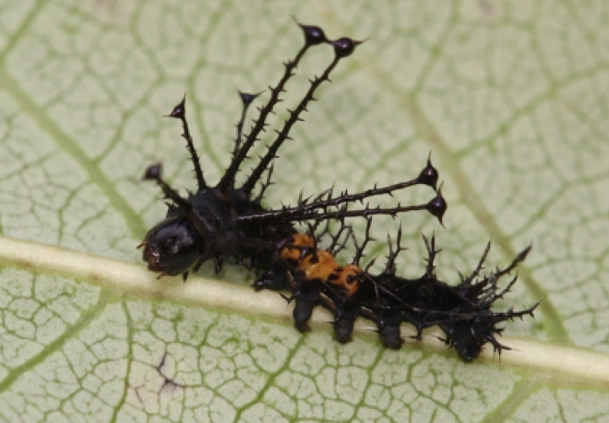
Step 2: The Food Source (This is Non-Negotiable)
Hickory horned devils are named for a reason, but their diet is broader than just hickory. They are specialists on trees in the walnut family (Juglandaceae). Here’s the hierarchy of preferred host plants, from most to least favored:
- Sweetgum (Liquidambar styraciflua) - This is the absolute favorite in my experience. They devour it and grow incredibly fast on it.
- Walnut & Butternut (Juglans spp.)
- Hickory & Pecan (Carya spp.)
- Persimmon (Diospyros virginiana) - A good alternative.
- Sumac (Rhus spp.) and Ash (Fraxinus spp.) are occasionally used.
The biggest mistake? Assuming "any green leaf" will do. Offering sycamore or oak will result in a caterpillar that refuses to eat and slowly starves. You must provide fresh cuttings from an acceptable tree. Rinse the leaves lightly to remove pesticides or bird droppings. Change the cuttings every day or two, inserting the stems into a small water pick (covered with foil or cotton so the caterpillar doesn't fall in and drown).
Step 3: Daily Maintenance and The Big Burrow
Keep the container clean. Remove frass (caterpillar poop) daily—it's surprisingly large and plentiful. Maintain slight humidity by occasionally misting the side of the container, not directly on the caterpillar or the soil.
When your caterpillar stops eating, turns a duller green, and starts wandering, it's time. This is where my first attempt failed. I didn't have enough soil. Ensure the substrate layer is at least 4-5 inches deep, packed loosely enough for it to burrow. It will disappear. Do not dig it up. Mark the container with the date and move it to a sheltered, unheated space like a garage or shed for the winter. It needs to experience the cold dormancy.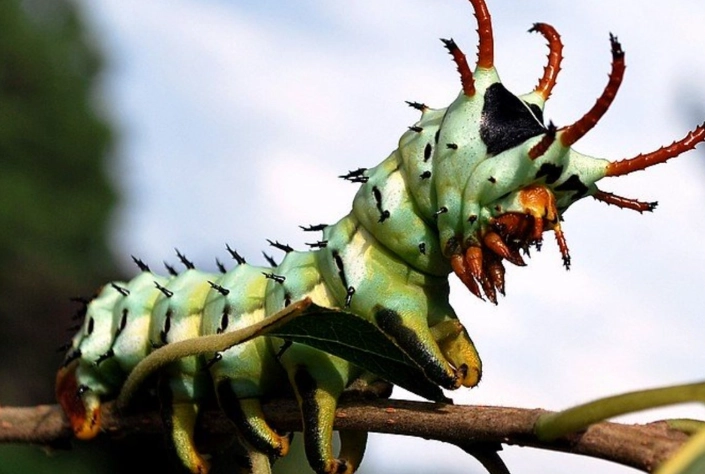
Step 4: The Emergence
In late spring or early summer, you might hear scratching from the container. The moth is emerging from its pupal case underground. It will crawl to the surface and need sticks to climb on to hang and inflate its wings. This process takes a few hours. Once its wings are dry and full, you have a stunning regal moth. The ethical choice is to release it near suitable habitat (woodlands with host trees) at dusk so it can find a mate.
Your Top Hickory Horned Devil Questions Answered
Finding and raising a hickory horned devil is a unique way to connect with a dramatic part of local ecology. It transforms something that looks frightening into a creature of delicate beauty and fascinating instinct. It teaches patience and respect for natural processes. Just remember to give it what it truly needs—the right leaves, the deep soil, and ultimately, its freedom.


Comments
Leave a Comment