If you've ever seen a picture of a Red Crested Turaco, that flash of crimson and green is unforgettable. But a photo can be deceiving. How big is this bird really? Is it crow-sized? Parrot-sized? The answer matters more than you might think, especially if you're a bird enthusiast, a potential aviculturist, or just trying to picture one in your backyard.
As someone who's spent years observing avian species, I can tell you that the "size" of the Red Crested Turaco (Tauraco erythrolophus) is a story told in three parts: its deceptively long body, its surprisingly modest weight, and the unique physical trade-offs that define its life in the Angolan treetops. Let's get past the basic stats and into what those measurements actually mean.
What You'll Learn in This Guide
What is the Actual Size of a Red Crested Turaco?
Let's cut to the chase with the hard data. The Red Crested Turaco is what I'd call a "medium-large" bird. It's not an eagle, but it's certainly not a finch. Its size is all about proportion.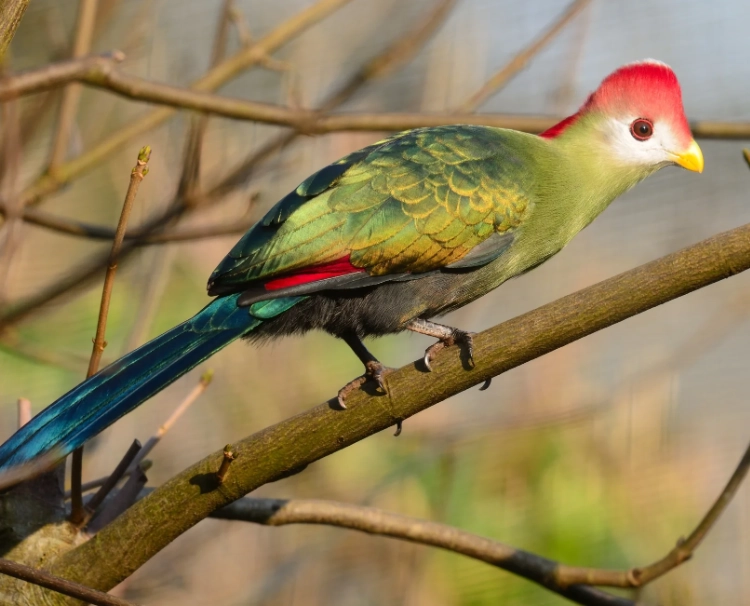
The Key Takeaway: Its most striking feature—the long tail—makes up nearly half its total length, creating an illusion of a much bulkier bird than it actually is. When you see one perched, you're mostly seeing tail and neck.
Breaking Down the Dimensions
Here’s a detailed breakdown you can reference. I’ve compiled this from authoritative sources like the Birds of the World database and the IUCN Red List species account, cross-referenced with observations from reputable aviaries.
| Measurement | Range | Average / Note |
|---|---|---|
| Total Body Length | 40 to 45 cm | About 16 to 18 inches from beak tip to tail tip. |
| Body Length (excluding tail) | 20 to 23 cm | This is the "core" body size, roughly the size of a large pigeon. |
| Weight | 210 to 325 grams | Avg. 250-280g (0.55 to 0.72 lbs). Lighter than most parrots of similar length. |
| Wingspan | Approx. 45-50 cm | Wings are rounded and shorter relative to body, suited for bursts through dense forest. |
| Tail Length | 18 to 22 cm | The showstopper. Provides crucial balance during acrobatic moves. |
| Beak Length | 2.5 to 3 cm | Short, stout, and bright red—perfect for its fruit-slicing diet. |
Notice the weight? That's the real surprise. At around 250-280 grams, it's remarkably light for its length. A similarly long Amazon parrot could weigh nearly twice as much. This light build is a direct adaptation to its lifestyle.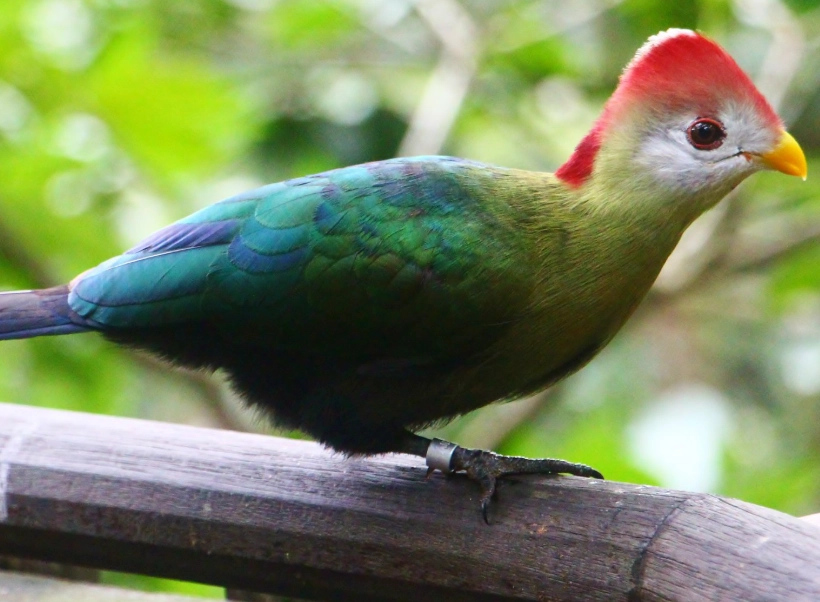
How Its Unique Build Affects Everything It Does
Size isn't just a static fact. It dictates behavior. The Red Crested Turaco's dimensions are a perfect toolkit for a life in the African rainforest canopy.
Flight: The Short-Distance Specialist. Those rounded wings and a light body aren't built for soaring or long migrations. They're for explosive, clattering take-offs and nimble weaving between branches. Their flight looks frantic and noisy—you'll hear the wingbeats before you see them. This is a bird that prefers to hop and climb, using its strong feet, only flying when it must.
Sound: The Built-in Megaphone. Ever wonder how its loud, guttural "korr-korr-korr" calls carry so far? A larger trachea and chest cavity, relative to its body weight, act as a natural resonance chamber. Its size supports its voice.
Diet & Foraging: The Lightweight Frugivore. Weighing under 300g allows it to perch on thinner, outer branches to reach ripe fruit (figs are a favorite) that heavier birds can't access. Its beak size is precise for slicing fruit, not cracking hard nuts.
Thermoregulation: The Surface Area Advantage. This is a subtle point most guides miss. A bird with a larger surface area-to-volume ratio (thanks to that long tail and slender build) loses heat more easily. In its warm Angolan habitat, this is an advantage. In a cooler climate, it becomes a significant stressor—a major reason they are challenging in captivity outside specialized environments.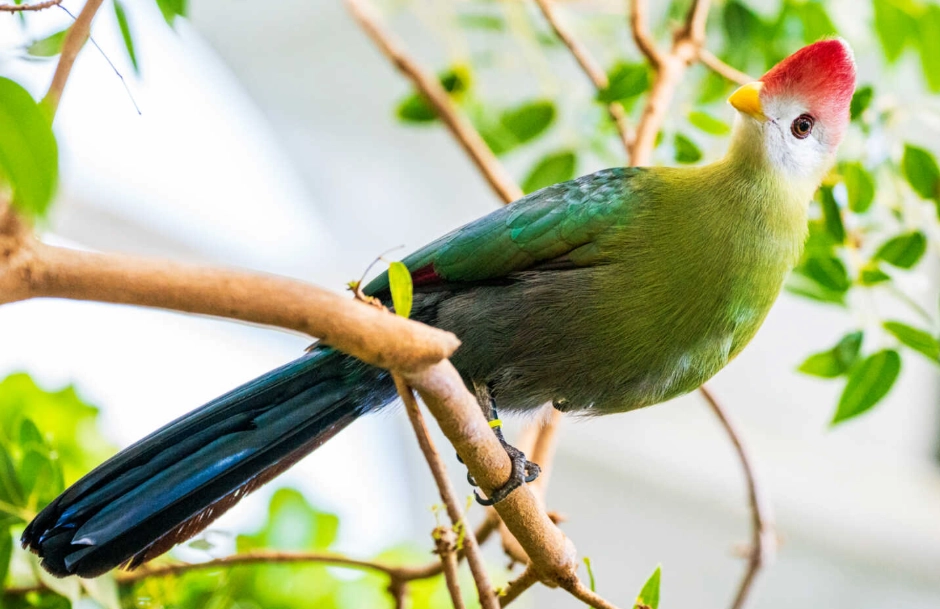
Size in Context: Red Crested Turaco vs. Everyday Birds
Numbers on a page can be abstract. Let's make it visual. Forget comparing it to obscure species. Here’s how it stacks up against birds you likely know.
- vs. A Common Crow: Similar in total length, but the crow has a more compact, powerful body and weighs significantly more (450-600g). The turaco appears sleeker and longer-tailed.
- vs. A Rock Pigeon: The turaco's body (minus tail) is comparable, but add that 20cm tail, and it appears dramatically larger and more elegant.
- vs. A Blue-and-yellow Macaw: No contest. The macaw is a giant in comparison: 80-90cm long and weighing over 1 kg. The turaco is dainty next to it.
- vs. A Red-tailed Hawk: This highlights the "lightweight" concept. They can be similar in length, but the hawk is a dense predator weighing 1-1.5 kg—four to six times heavier.
The closest common pet bird in feel might be a large conure in body bulk, but with the tail length of a small pheasant. It's a unique combination.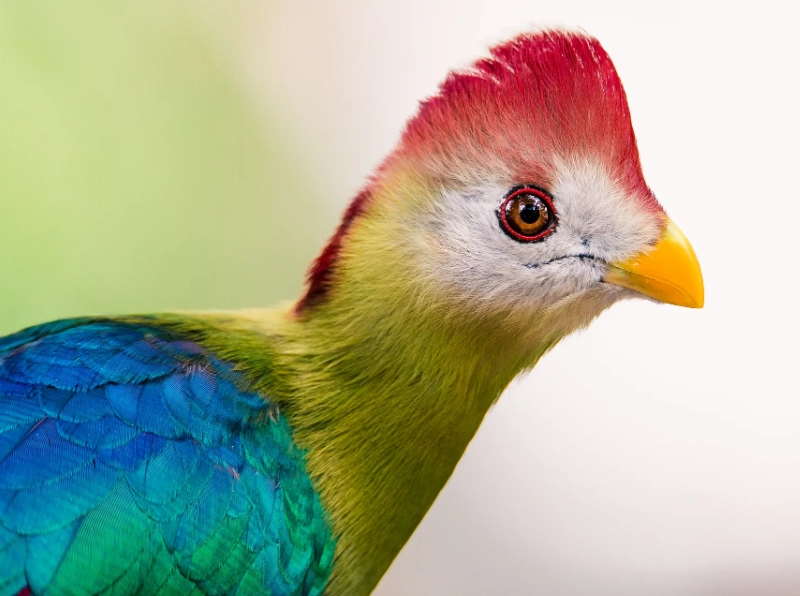
Considering a Pet Red Crested Turaco? Size is Your First Hurdle
I need to be blunt here. The dream of keeping a Red Crested Turaco is where its size becomes a monumental practical barrier. This isn't a parakeet.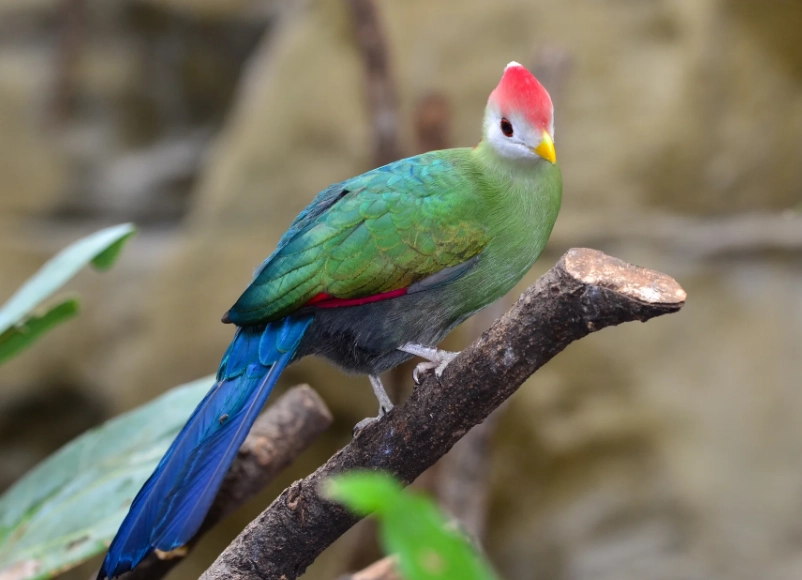
Most online forums gloss over the harsh realities. The size requirements aren't just about a "big cage." They're about volumetric space for that long tail and horizontal space for its hopping locomotion. A standard tall parrot cage is a terrible fit. It needs a large, walk-in aviary—think minimum 3 meters long, 2 meters wide, and 2 meters high (10' x 6.5' x 6.5'). Anything less is cruel and will lead to broken tail feathers, stress, and poor health.
The light body weight also masks a high metabolism. They need a constant supply of fresh, high-quality fruits and specialized softbill pellets. The food bill and waste are substantial.
Frankly, for 99.9% of people, the size and space needs of a Red Crested Turaco make it an unsuitable pet. They are observational birds, best appreciated in zoological institutions with the resources for proper housing or, ideally, in the wild. Their size dictates a freedom that a typical home cannot provide.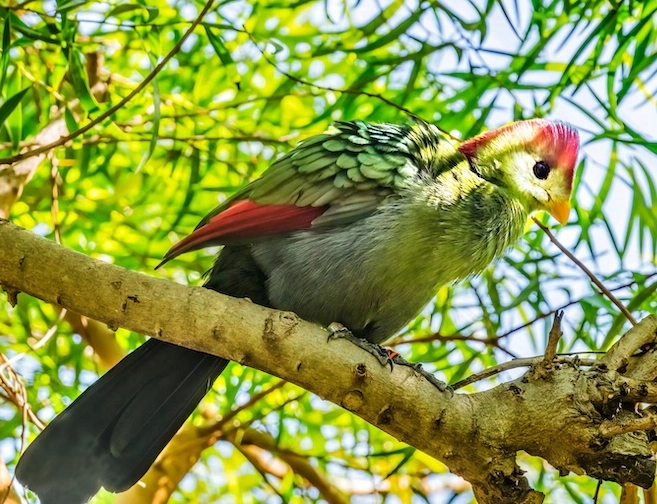
FAQ: Your Practical Questions About Red Crested Turaco Size
So, what's the final word on Red Crested Turaco size? It's a masterpiece of evolutionary design—a long, lightweight frame built for a specific niche. That beautiful size is precisely what makes it a wonder of the wild and a profound responsibility, far beyond a simple pet. Understanding its true dimensions is the first step in truly appreciating this remarkable bird.



Comments
Leave a Comment