You hear it before you see it. A loud, guttural "kha-kha-kha-kha-kow" echoing through the dense African forest canopy. That's the call of the Red-crested Turaco, one of the continent's most visually arresting and acoustically distinctive birds. But knowing its call is one thing. Knowing exactly where to go to find it is another challenge entirely. Its range isn't just a country name on a map; it's a specific set of forests, riverine galleries, and woodland mosaics across the heart of Africa. This guide cuts through the vague descriptions. I've spent over a decade tracking turacos across Central Africa, and here, I'll map the precise red-crested turaco range, detail the best spots within it, and give you the on-the-ground knowledge to plan a successful search.
In This Guide: Navigate the Forest
- Meet the Crimson Flash: More Than Just a Red Crest
- Mapping the Range: The Central African Stronghold
- Prime Habitat Breakdown: Where They Actually Live
- Top Sighting Locations: From Congo Basin to Scattered Woodlands
- Expert Finding Tips: Listen, Look Up, and Be Patient
- Conservation Status: A Range Under Pressure
- Your Questions Answered: The Deep Dive FAQ
Meet the Crimson Flash: More Than Just a Red Crest
Let's be clear. The "red crest" is just the headline. The Red-crested Turaco (*Tauraco erythrolophus*) is a full-body spectacle. Picture a pigeon-sized bird, but with the attitude of a tropical gem. That fiery red crest stands up like a punk-rock mohawk when the bird is excited. The body is a sophisticated mix of iridescent green, blue, and violet on the wings and back, contrasting with a pure white face and a deep crimson eye-ring that makes its gaze intense.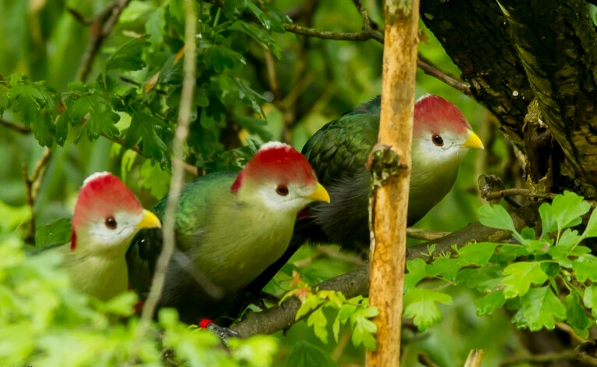
They're not shy, but they are canopy dwellers. You'll rarely see them on the ground. Their life is in the trees, hopping and clambering with a agility that seems clumsy until you realize how effective it is. They eat mostly fruit—figs are a favorite—and the pigments in their food give their wing feathers unique copper-based reds (turacin) and greens (turacoverdin) not found in any other bird family. It's a walking piece of biochemical art.
A Quick ID Tip Most Guides Miss: Don't just look for red. Listen. Their call is unmistakable—a series of loud, barking notes that accelerates into a crescendo. In mixed-species flocks, it's often this call that gives away their presence long before you get a visual. Relying solely on sight in a dense forest is a common beginner's mistake.
Mapping the Range: The Central African Stronghold
The red-crested turaco range is firmly anchored in the Congo River basin. This isn't a bird of open savannahs or East African acacia woodlands. Its world is defined by moisture, dense vegetation, and fruiting trees. The core of its distribution covers a massive swath of the Democratic Republic of the Congo (DRC), southern Central African Republic, northern Angola, and the Republic of the Congo.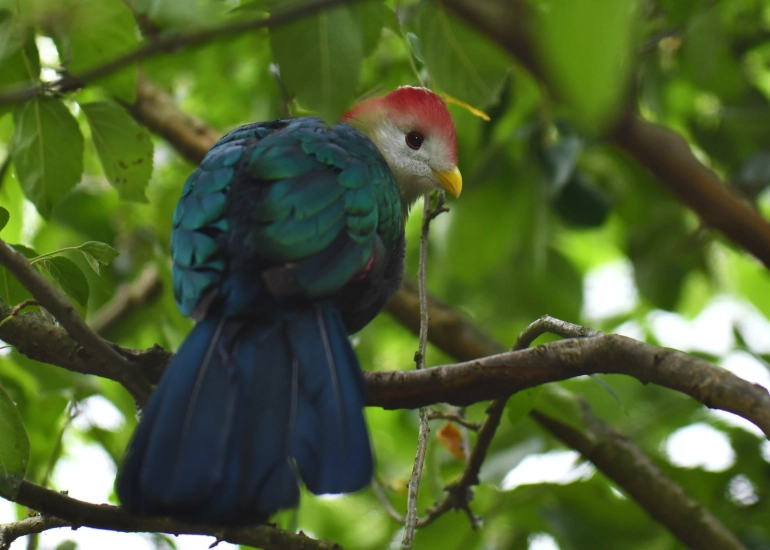
But here's where maps can be misleading. The range isn't a solid, green blob over these countries. It's patchy, dictated by the presence of suitable forest. It avoids the extensive swamp forests of the central Congo (the Cuvette Centrale) and the high-altitude regions of the Albertine Rift. You won't find it in completely logged-out areas or vast plantations either.
Think of it as a forest specialist with specific needs.
Prime Habitat Breakdown: Where They Actually Live
Within its broad geographic range, the Red-crested Turaco is picky. It needs three things: tall trees for cover and nesting, a reliable year-round supply of fruit, and water nearby. This translates into a few key habitat types.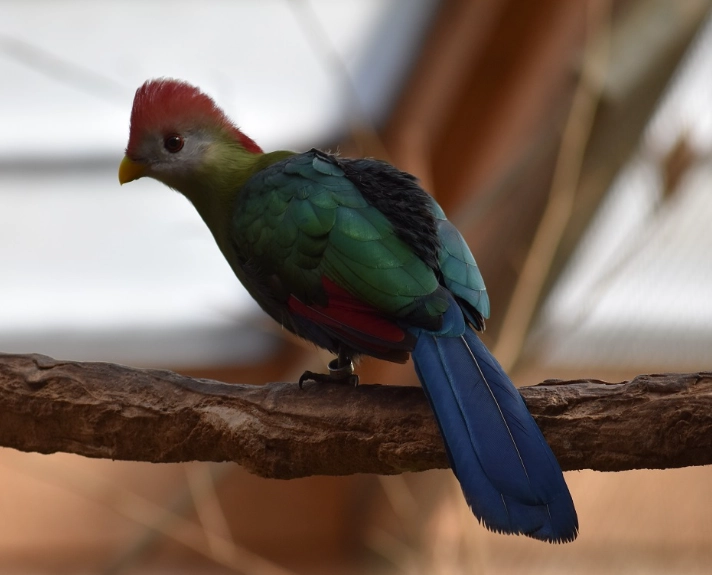
Primary and Secondary Rainforest
This is the classic home. Dense, humid, multi-layered forests with a closed canopy. They thrive here because the variety of fruiting trees is highest. You'll find them in the Ituri Forest of DRC, the Odzala-Kokoua forests in Congo, and the Mayombe forest belt. They prefer the middle to upper canopy.
Riparian (Riverine) Forest
Even in drier regions outside the main rainforest block, they cling to life along rivers. These green corridors act as highways through otherwise unsuitable savannah or woodland. In parts of northern Angola or southern DRC, finding a river with a good gallery forest is your best bet.
Moist Woodland and Forest-Savanna Mosaic
On the edges of their range, they inhabit areas where patches of dense forest mix with more open woodland. They'll use the forest patches for breeding and refuge, venturing out to feed. This adaptability helps them persist in fragmented landscapes.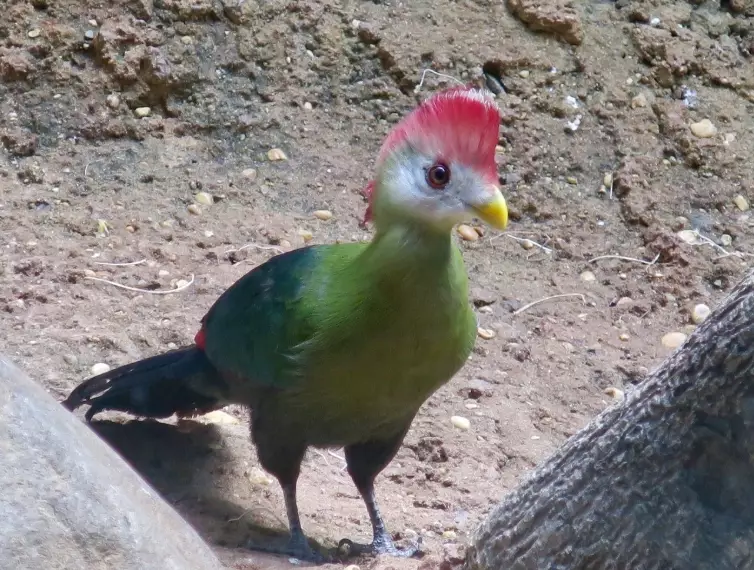
Top Sighting Locations: From Congo Basin to Scattered Woodlands
Okay, theory is fine. But where do you actually go? Based on accessibility, reliability of sightings, and infrastructure for visitors, here are the top-tier locations within the red-crested turaco range. I've ranked them by a combination of ease of access and likelihood of a good, prolonged view.
| Location & Country | Best Season | Typical Habitat | Observation Notes & Difficulty |
|---|---|---|---|
| Salonga National Park (DRC) | Dry Season (May-Sep) | Primary Lowland Rainforest | High difficulty. Remote, requires expedition logistics. Pristine habitat means birds are abundant but the forest is vast. Essential with a local guide. A true wilderness experience. |
| Odzala-Kokoua National Park (Republic of Congo) | Dry Season (Jun-Sep, Dec-Feb) | Rainforest & Bai (Forest Clearings) | Medium-High difficulty. Better tourist infrastructure than Salonga. Can be seen from forest camps and sometimes at forest clearings (bais) in early morning. Guided walks are productive. |
| Luki Biosphere Reserve (DRC - near Kinshasa) | Year-round | Secondary & Primary Forest | Medium difficulty. More accessible from a major city. Forest is fragmented but holds good populations. A good option for a shorter trip focused on central African endemics. |
| Kisangani Region Forests (DRC) | Dry Season | Medium difficulty. The forests along the Congo River and its tributaries here are reliable. Requires local knowledge to find specific patches. Less formal tourism, more independent travel. | |
| Northern Angolan Scarp Forests (Angola) | Cool Dry Season (May-Oct) | Moist Montane & Scarp Forest | Medium-High difficulty. An emerging birding destination. Forests like Kumbira are crucial for the southern population. Infrastructure is developing. A hotspot for range-restricted species. |
| Dzanga-Sangha Reserve (CAR) | Dry Season (Dec-May) | Medium difficulty. Part of the tri-national Sangha Trance. Excellent guided ecotourism. Often seen and heard around the research camp and along established trails. Gorilla tracking groups often encounter them. |
Notice a pattern? The dry season is almost universally better. Not because the birds move, but because trails are passable, mosquitoes are fewer, and birds can be more concentrated around remaining fruiting trees.
Expert Finding Tips: Listen, Look Up, and Be Patient
You're in the right forest. Now what? Finding a specific bird in a sea of green takes technique.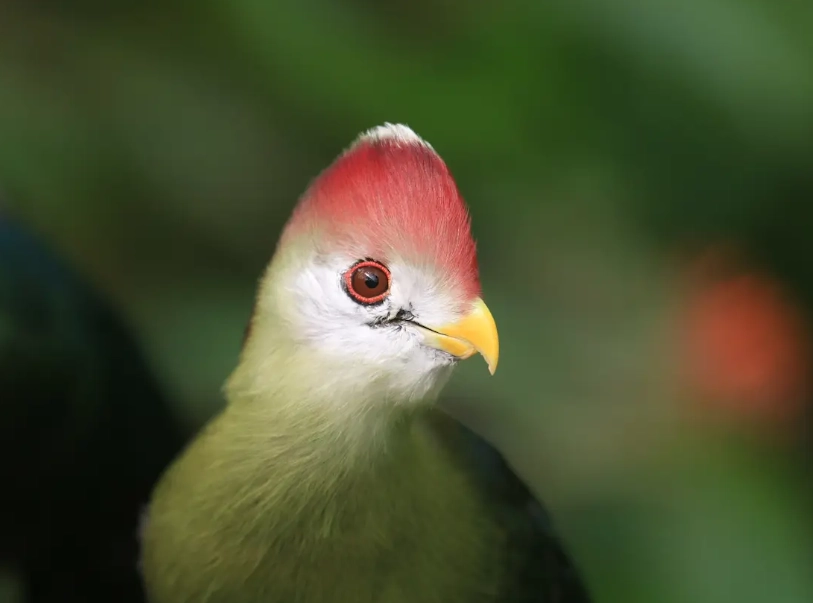
Dawn Patrol is Non-Negotiable. The first 3-4 hours after sunrise are golden. Birds are most active, calling frequently to establish territories. The light is also better for spotting color in the canopy. I've had far more luck between 6:30 and 10:30 AM than at any other time.
Master the Call. Download a recording of its call (resources like the Xeno-canto database are perfect). Listen to it before your trip. In the forest, stop walking every 15-20 minutes and just listen for a full minute. That barking chorus is your best homing beacon.
Look for Movement, Not Color. Scanning a static green canopy is exhausting. Watch for the shaking of branches or leaves as they hop and clamber. Their movement is often a series of quick hops followed by a pause.
Fruiting Figs are Magnets. If you find a fig tree (*Ficus* spp.) in fruit, stake it out. Sit quietly at a reasonable distance for 30-60 minutes. Virtually every frugivore in the forest will visit, and turacos are almost guaranteed. This is a classic pro strategy that most casual walk-bys miss.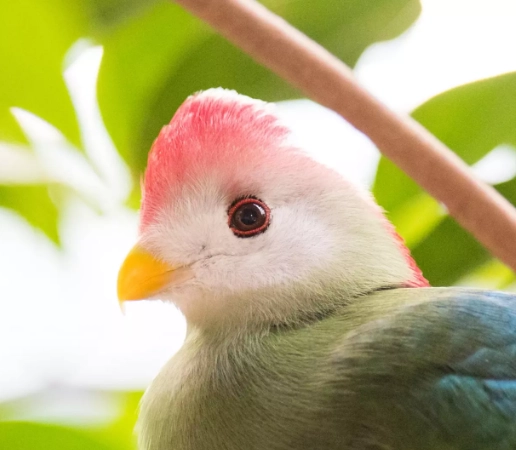
Patience isn't just a virtue here; it's the key tool.
Conservation Status: A Range Under Pressure
The Red-crested Turaco is currently classified as Least Concern by the IUCN. Its range is large. But that label can be dangerously comforting. Across Central Africa, deforestation for agriculture, logging, and mining is carving up its habitat. The range is not shrinking uniformly, but it's becoming increasingly fragmented.
In many areas, the birds are still common because they can use secondary forest. But the loss of large, contiguous primary forest blocks is a long-term threat. It reduces genetic diversity and makes populations more vulnerable to other shocks. Sustainable forestry practices and the protection of key national parks like Salonga and Odzala are critical for ensuring this bird's crimson flash remains a common sight in its range.
Supporting tourism in these parks sends a direct message that living forests have economic value beyond their timber.

Comments
Leave a Comment