Okay, let's cut to the chase. You've probably seen the pictures. Atheris hispida, the hairy bush viper, looking like a tiny, grumpy dragon with keeled scales that give it a spiky, almost prehistoric appearance. Or maybe it was Atheris squamigera, the variable bush viper, with its stunning green, yellow, or even reddish coloration that seems to glow against a dark branch. They're undeniably some of the most visually arresting snakes on the planet. And that's where the fantasy often begins. The thought creeps in: "Could I have one of those?" So you type it into Google: are bush vipers good pets?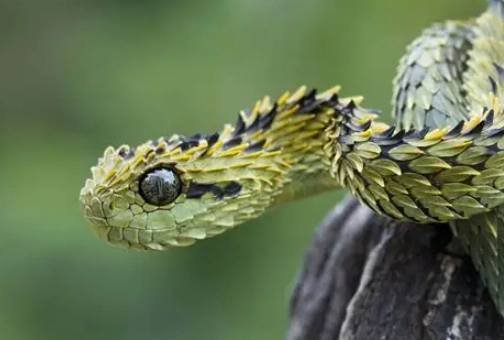
I'm here to give you the no-BS, unfiltered answer. The short version? Almost certainly not. For 99.9% of people asking this question, the answer is a hard, resounding no. But you didn't come here just for a yes or no, right? You want to know why. You want the details, the realities, the ugly parts they don't show in the glamour shots. Maybe you're a highly experienced keeper wondering if you're ready for the ultimate challenge. Or maybe you're just curious and need the fantasy thoroughly dismantled. Either way, let's walk through this, step by painful step.
The Core of the Matter: What Even Is a Bush Viper?
Before we can answer if they're good pets, we need to know what we're dealing with. Bush vipers aren't one single snake. They're a genus (Atheris) of venomous vipers found in the rainforests of Central and West Africa. They're arboreal, meaning they live in trees and bushes. They're ambush predators, sitting perfectly still for days waiting for a frog, lizard, or small mammal to wander by. And they're, well, vipers. That comes with a specific set of biological instructions.
I remember the first time I saw one in a reputable zoological collection. It wasn't in a pet store, thank goodness. It was behind multiple layers of security glass. The keeper didn't even open the enclosure for routine maintenance without a specific protocol and a second person present. That should tell you something. This wasn't for show; it was a genuine safety procedure for an animal that commands immense respect.
The Big Three Reasons "Are Bush Vipers Good Pets" is Usually the Wrong Question
We can break down the nightmare—sorry, the challenge—into three colossal categories. Think of these as the three pillars holding up the "NO" sign.
Pillar 1: The Venom. This Isn't a Game.
This is the most critical point, so I'm putting it first. Bush vipers possess a potent hemotoxic and possibly cytotoxic venom. We're not talking about a bee sting or a mildly uncomfortable bite from a rear-fanged snake. We're talking about a true medical emergency.
The research on specific Atheris venom is less extensive than for more common vipers, but case studies and reports indicate severe consequences. Pain, massive swelling, tissue necrosis (death), systemic effects like coagulation issues, and even the potential for fatality, especially without prompt and correct medical treatment. There is no universal antivenom that works for bush vipers. Treatment is primarily supportive and based on managing symptoms.
Ask yourself this: Is there a hospital within 30 minutes of you that a) has a stock of various antivenoms, and b) has a medical team that has ever even seen a bush viper envenomation? The answer for almost everyone is no. Your local ER doctor will be Googling frantically while you're in agony. This isn't a hypothetical risk. It's a guaranteed life-threatening scenario if you are bitten and envenomated.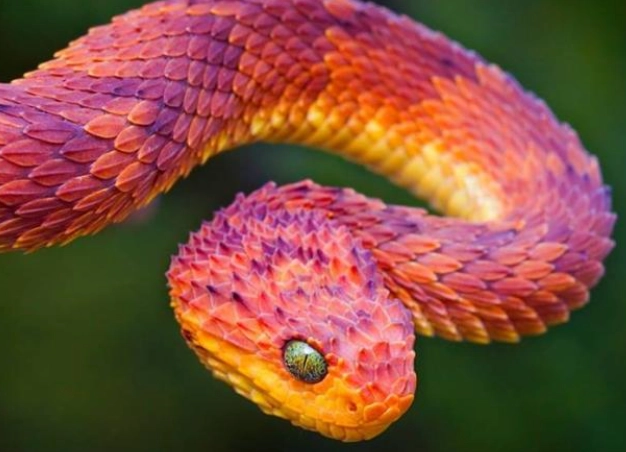
Some online forums have daredevils who talk about "tap training" or handling their hots (hot = venomous). This is, in my opinion, reckless beyond belief. It normalizes an extreme risk. A bush viper is a wild animal with lightning-fast strikes. It does not "tame down." It does not learn to enjoy your company. Its primary defense mechanism is to inject venom. Full stop.
Pillar 2: The Care is a Specialized Nightmare
Let's pretend the venom issue doesn't exist for a paragraph. Could you even keep one alive and healthy? The care requirements are incredibly specific and difficult to replicate.
Climate Control: These are animals from equatorial African rainforests. They need consistently high humidity (70-80%+) and a very specific temperature gradient with a warm spot and a cool spot, all without the enclosure turning into a mold factory. Achieving this requires expensive, reliable equipment—multiple thermostats, high-quality hygrometers, misting systems, and backup power solutions. A power outage in winter could kill the animal in hours.
Enclosure: They need vertical space, not horizontal. A tall, well-ventilated arboreal terrarium filled with sturdy, non-toxic branches and foliage for climbing and hiding. The setup needs to be secure enough to contain a determined, strong snake. Screen tops often won't cut it.
Feeding: Many bush vipers are notoriously finicky eaters in captivity. They may only accept live prey, or very specific prey items like certain species of frogs or lizards. You can't just run to the pet store for frozen mice. You may need to maintain a colony of feeder geckos or source tree frogs. Are you prepared for that? Are you prepared to watch a live animal be killed? It's a messy, visceral reality of keeping many predators.
Healthcare: Finding a veterinarian who can treat a venomous, exotic, fragile snake is a quest in itself. The stress of transport to a vet (who may be hours away) is a major risk. Many health issues become advanced before they're noticed because the animal is secretive and not handled for routine checkups.
Pillar 3: It's Probably Illegal, and It's Definitely Unethical (For Most)
This is the practical and moral wall.
Legality: In most countries, states, and municipalities, keeping venomous reptiles is heavily restricted or outright banned without specific permits. These permits usually require years of documented experience with non-venomous snakes, mentorship under a licensed venomous keeper, inspections of your facility (often called a "hot room"—a secure, dedicated space), and proof of a bite protocol with a local hospital. Do you have all that? If you're asking are bush vipers good pets as a novice, you don't. Keeping one illegally isn't just a fine; it could mean criminal charges, especially if someone else is hurt.
You must check your local laws. County and city ordinances are often stricter than state or national ones. The Association of Zoos and Aquariums (AZA) maintains strict standards for keeping such animals, which highlights the level of professionalism required.
Ethics & Sourcing: Where do you think most bush vipers in the private trade come from? The vast majority are wild-caught (WC). They are pulled from their native habitats in Africa, often suffering immense stress and high mortality rates during capture and transport. This depletes wild populations and delivers you a snake already loaded with parasites, injuries, and trauma, making its survival in captivity even less likely.
Captive-bred (CB) specimens are exceedingly rare. A few specialized breeders exist, but they are selective about who they sell to, often requiring proof of experience and facilities. If a seller online is eager to ship you a bush viper with no questions asked, it's almost certainly a wild-caught animal, and you're supporting a damaging trade. Reputable sources for species information, like the Reptile Database, can give you scientific context, but they won't sell you the animal.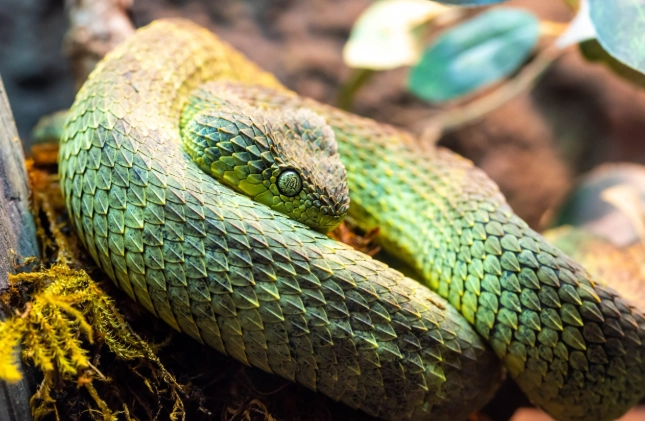
A Side-by-Side Reality Check
Let's make this visual. Here’s what you're signing up for with a bush viper versus a common beginner snake, like a corn snake.
| Consideration | Bush Viper (Atheris) | Corn Snake (Beginner Pet) |
|---|---|---|
| Venom | Potentially life-threatening hemotoxin. No specific antivenom. | Non-venomous. Bite is harmless (like pinpricks). |
| Temperament | Defensive, nervous, unpredictable. Strikes readily. | Generally docile, tolerates gentle handling well. |
| Care Difficulty | Extremely High. Precise humidity/temp, arboreal setup, finicky feeding. | Low. Forgiving temperature range, simple enclosure, eats frozen/thawed mice eagerly. |
| Veterinary Care | Extremely specialized vet required, hard to find. | Most exotic vets can treat them. |
| Legality | Heavily restricted/banned in most areas. Permits required. | Legal to own in most places with no permit. |
| Cost (Startup) | $500 - $2000+ for the snake, plus $1000+ for specialized secure enclosure, climate systems, safety gear. | $50 - $150 for the snake, $200-$400 for a complete simple setup. |
| Sourcing | Mostly wild-caught, high mortality. Few ethical breeders. | Abundant captive-bred stock, numerous ethical breeders. |
| Lifespan in Captivity | Often short (a few years) due to stress and poor acclimation. Can be 10+ if expertly kept. | Routinely 15-20 years with proper care. |
Looking at that table, it's hard to see how anyone could conclude bush vipers are good pets for anyone but a minuscule, expert minority.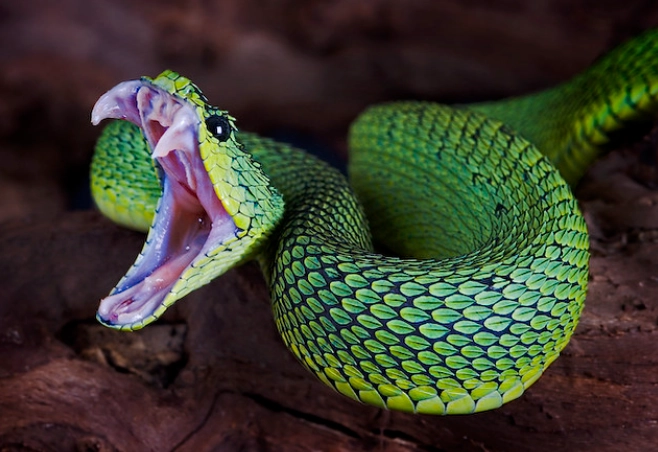
But What If You're the 0.1%? The "Expert Pathway"
Okay, let's say you've kept reptiles for 15 years. You've successfully maintained advanced species like emerald tree boas or mangrove snakes. You have a dedicated, lockable room for your animals. You have a relationship with a veterinarian who specializes in venomous reptiles. You've taken a venomous handling course. You still need to ask: are bush vipers good pets even for me?
The calculus changes, but it's still fraught. Here’s what that pathway *might* look like:
- Apprenticeship: Find a mentor who already legally keeps venomous snakes. This is non-negotiable. You need hands-on training under supervision.
- Legal Homework: Obtain all necessary local, state, and federal permits. This process can take over a year.
- Facility Prep: Set up a secure, inspected "hot room" with fail-safes. This includes bite-proof gloves, hooks, tubes, clear protocols, and a prominently displayed emergency contact/bite procedure sheet.
- Source Ethically: Find a captive-bred animal from a reputable breeder. Be prepared to be on a waiting list and be vetted yourself.
- Start with an "Easier" Hot: No one starts with a bush viper. Experts often recommend starting with a less venomous, more predictable species like a copperhead or a hog-nosed snake (which is mildly venomous but not considered dangerous) to build real skills.
I spoke to one such keeper once (online, in a professional forum). He had over two decades of experience. His take? "I keep a pair of A. squamigera. They are my most stressful animals by a mile. I don't enjoy them. I maintain them. It's a conservation project for me, not a pet. I would never recommend them to anyone." That stuck with me.
Answering Your Real Questions (The FAQ They Don't Talk About)
Let's tackle the specific things people wonder when they type are bush vipers good pets into search.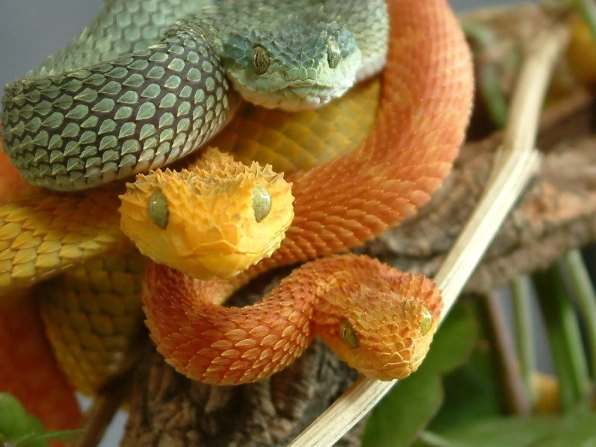
Can you handle a bush viper?
No. You should not. Handling for anything other than essential, safety-focused maintenance (using tools like hooks and shift boxes) is unjustifiable risk-taking. The goal is zero contact. The idea of "taking it out to hold it" is a fantasy that belongs in social media reels, not in responsible keeping.
How much does a bush viper cost?
The snake itself might cost $500 to $2000+ depending on species and rarity. But that's the cheapest part. The secure, bioactive-ready enclosure, professional-grade climate control systems, safety gear, and permits will run into thousands more. Then there's the cost of specialized food and potential vet bills. We're talking a $5,000+ initial investment, easily.
What do bush vipers eat?
In the wild: frogs, lizards, small mammals, birds. In captivity: a huge headache. Many refuse dead prey. You may be maintaining feeder anoles, tree frogs, or mice. Some might eventually accept scenting frozen/thawed mice with lizard smell. It's a constant challenge.
Are they aggressive?
Not aggressive in the sense of seeking you out to attack. They are extremely defensive and nervous. Any movement near their enclosure is perceived as a threat, prompting a defensive strike posture. They are always "on," always alert. It's a stressful existence for them in a home setting.
What are the alternatives if I love how they look?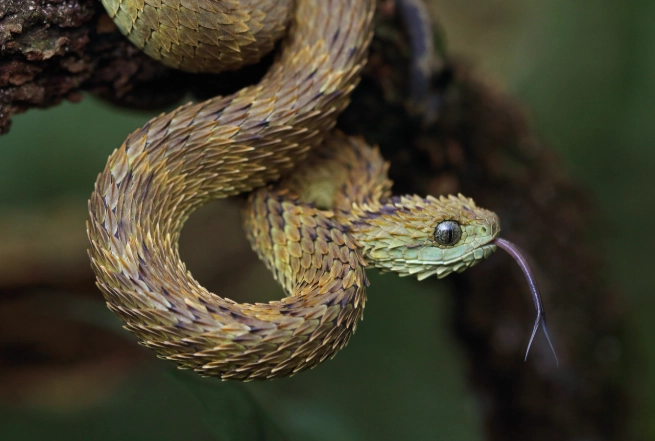
This is the best question! If you're captivated by the viper look or the arboreal lifestyle, there are amazing, non-venomous snakes that can be ethical, rewarding pets.
- Vine Snakes (Oxybelis, Ahaetulla): Incredibly slender, long, green arboreal snakes with grumpy faces. Non-venomous (rear-fanged with very mild venom harmless to humans) but require lizard-based diets. For advanced keepers, but safer.
- Asian Vine Snakes (Ahaetulla prasina): Stunning green, arboreal, with horizontal pupils. A big step up in care, but non-venomous.
- Rough Green Snake (Opheodrys aestivus): A gentle, slender, bright green North American native. Eats insects. Delicate but beautiful.
- Emerald Tree Boa (Corallus caninus): The classic "looks dangerous but isn't" snake. Requires expert-level humidity and care, but is non-venomous. Be prepared for a significant attitude, though.
- Green Tree Python (Morelia viridis): Similar niche to the emerald tree boa, slightly more captive-bred availability. Another advanced-care, non-venomous stunner.
These animals let you engage with the beauty and complexity of arboreal snakes without the life-or-death stakes. Master one of these first, over many years, and then revisit the venomous question if you must.
The Final Verdict: So, Are Bush Vipers Good Pets?
Let's wrap this up.
For the vast, overwhelming majority of people—including most experienced reptile enthusiasts—bush vipers are terrible pets. The combination of a dangerous venom, exceptionally difficult and specific care needs, major legal hurdles, and serious ethical concerns around sourcing creates a perfect storm of bad ideas.
The people who can keep them successfully are not treating them as pets. They are curators, specialists, and sometimes conservationists, maintaining them under conditions that resemble a professional zoological setting more than a home. It is a burden, not a hobby.
If your love for these animals is genuine, channel it productively. Support conservation efforts in their native African habitats. Visit them at accredited zoos and aquariums that can house them safely and contribute to species knowledge. Learn about them through documentaries and scientific literature. Become an expert on paper first.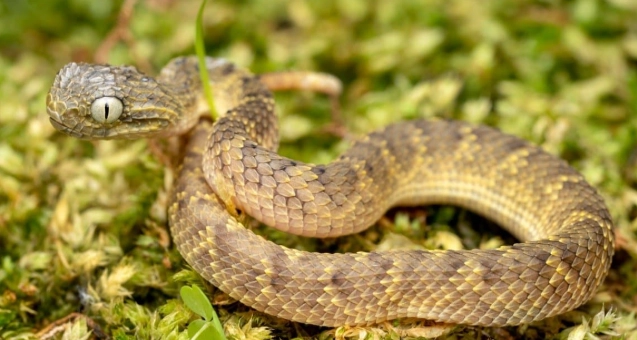
But please, don't try to make one a pet. The answer to "are bush vipers good pets" is almost always a clear, sober, and necessary no. It's a question that, when asked honestly, should lead you away from ownership and towards a deeper, safer appreciation from afar.
And honestly? That's okay. Some of the most beautiful things in nature are meant to be admired, not owned.
Comment