Okay, let's be real. If you've spent any time walking Florida's beaches, from the Panhandle down to the Keys, you've probably seen your share of starfish. Most are the classic orange or beige ones, maybe a bit bleached by the sun. But then, if you're lucky, you spot something different. Something that makes you stop and actually pull out your phone for a picture. It's got this striking color pattern, almost like it's dressed for a regal occasion. That, my friend, is what beachcombers and marine enthusiasts get excited about—the Royal Starfish in Florida. It's not your average sea star.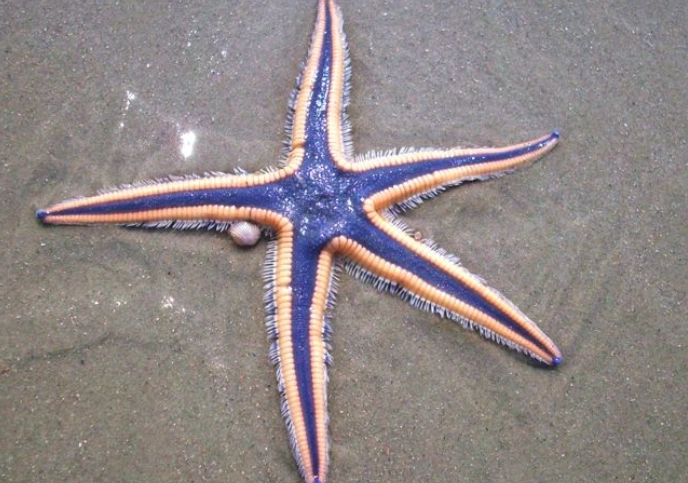
I remember the first time I saw one. It was on a quiet morning on Sanibel Island, famous for its shells. There it was, partly buried in the wet sand near a tidal pool. It wasn't the bright purple you see in some aquarium photos, but a deeper, more subdued burgundy and orange. What struck me was how crisp its shape was, unlike the sometimes shriveled or broken common starfish you find. It felt like finding a piece of living art. But here's the thing I didn't know then, and a lot of folks don't: that beautiful creature plays a specific role in the Gulf's ecosystem, and our fascination with it needs to come with a hefty dose of respect.
Quick Fact: The "Royal Starfish" common name most often refers to the species Astropecten articulatus. While it's a star attraction (pun intended) for Florida beachgoers, it's just one member of a diverse family of sea stars found in the state's coastal waters.
So, What Exactly Is a Royal Starfish?
Let's clear up the identification first, because that's usually the number one question. When people search for Royal starfish florida, they're often picturing a very specific look. The true Astropecten articulatus is known for its stunning and variable coloration. We're talking deep purples, vibrant oranges, rich reds, and sometimes a mix of all three arranged in a symmetrical pattern along its five arms. The arms are typically broad and flat, tapering to a point, and the edges are often lined with a fringe of small, pale spines or plates that can look almost like a border.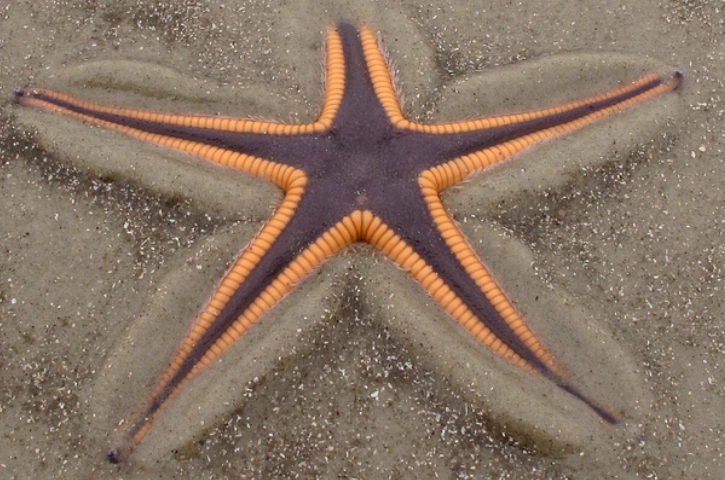
Its surface isn't smooth like some starfish; it has a granular texture, covered by small plates called paxillae. Underneath, you'll find its tube feet, but unlike the sticky-tipped feet of many sea stars used for climbing, the Royal Starfish's feet are pointed and adapted for digging. That's a key hint to its lifestyle—it's a burrower, a sand-dweller.
Now, a word of caution. The internet is full of gorgeous, saturated photos. In real life, on a Florida beach, colors can be more muted. A specimen washed ashore might be faded, or it might be a different but similarly colored species. The term "royal" sometimes gets applied loosely to any strikingly colored starfish. But for our purposes, when we talk about the Royal starfish in Florida, we're focusing on Astropecten articulatus and its close relatives that fit this regal description.
Where in Florida Are You Likely to Spot One?
This isn't a creature you'll find on every single beach every single day. It has preferred neighborhoods, so to speak. They thrive on sandy or muddy bottoms offshore, so beaches near such habitats are your best bet. The Gulf Coast of Florida is prime territory. Think:
- The Sanibel Island/Captiva Island area: A shelling paradise that also delivers on interesting marine life. Low tide around the sandbars and seagrass edges can be productive.
- Marco Island and the Ten Thousand Islands: The extensive mangrove estuaries and shallow sandy bays here create a perfect environment.
- Florida's Big Bend region: The expansive seagrass beds and sandy flats from Cedar Key northwards are known for diverse sea star populations.
- Panhandle Beaches: Less frequent, but possible, especially after storms or strong currents that dredge things up from deeper sandy bottoms.
The Atlantic Coast is less of a sure thing. You might get lucky in the Indian River Lagoon or on some beaches near inlets with sandy bottoms, but your odds are significantly higher on the Gulf side. Timing matters too. Early morning, right after high tide, is often the best beachcombing window. Winter and spring months, when water conditions change and storms can stir things up, sometimes lead to more sightings.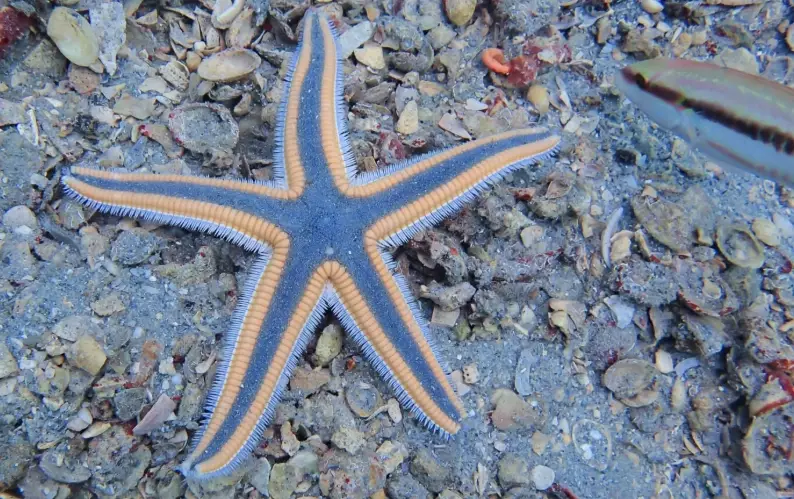
Pro Tip from a Local Beach Walker: Don't just stare at the dry sand. The real treasures are often in the wet, compacted sand near the water's edge or in shallow tidal pools. Look for a hint of color that doesn't match the sand. And always, always watch your step.
The Life of a Royal Starfish: Hunter of the Sandy Seafloor
This is where it gets fascinating, and why just taking one as a souvenir is such a bad idea (we'll get to that). The Royal starfish florida variant isn't just decoration. It's an active and important predator. It doesn't eat algae. It's a carnivore. Its menu consists of mollusks—clams, snails, and other small, soft-bodied creatures that live in or on the sand.
Here's how the hunt works: Using those pointed tube feet, it can partially bury itself in the sediment. It senses its prey, then uses its arms to dig and manipulate the sand. Once it finds a clam, it doesn't pry it open with brute force like the famous ochre star. Instead, it employs a different strategy. It can extrude its stomach out through its mouth (a wild concept, I know), envelop the prey, and digest it externally before sucking the liquefied meal back in. Efficient, if a bit gruesome.
This predatory habit makes it a key part of the ecosystem. It helps control populations of bivalves and other invertebrates, which in turn affects the composition of the seafloor community. Removing a significant number of these predators can have subtle but real ripple effects. They're also food for larger animals like certain fish, rays, and other starfish. It's a cycle, and they're a working part of it.
How Does It Stack Up Against Other Florida Starfish?
Florida waters are home to dozens of sea star species. To avoid confusion, here’s a quick comparison. This isn't an exhaustive list, but it covers the ones you're most likely to encounter or confuse with our royal subject.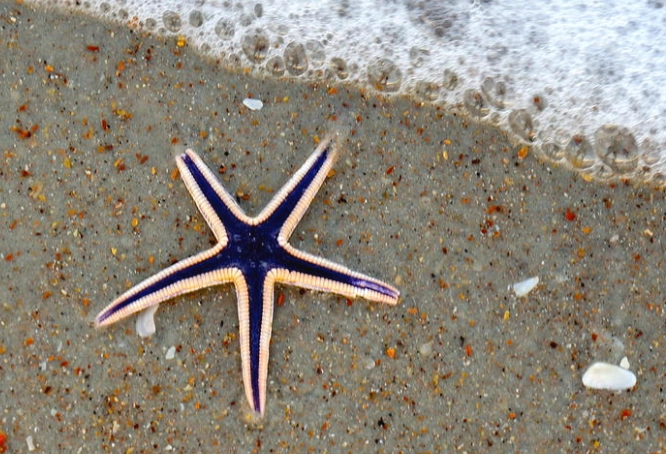
| Common Name | Scientific Name (Example) | Key Identifying Features | Typical Florida Habitat | Likelihood of Beach Find |
|---|---|---|---|---|
| Royal Starfish | Astropecten articulatus | Broad, flat arms. Vibrant purple, orange, red colors. Fringed edges. Granular surface. | Sandy/muddy seafloor, shallow to moderate depths. | Moderate (Gulf Coast) |
| Common Sea Star | Asterias forbesi | Five slender arms, rough texture. Usually orange, brown, or tan. Less vivid. | Rocky areas, pilings, seagrass, oyster beds. | High |
| Nine-Armed Sea Star | Luidia senegalensis | As the name says, usually 9 long, slender arms. Tan/brown color. | Sandy bottoms. | Moderate |
| Cushion Sea Star | Oreaster reticulatus | Short, thick arms, inflated appearance. Network pattern on surface. Can be large. | Seagrass beds, sandy areas. | Low (protected) |
| Brittle Star | Various (Ophiuroidea) | Central disc with long, thin, flexible arms that can break off easily. | Under rocks, in crevices, seagrass. | High (arms often detached) |
See the difference? The color and that distinct fringed, broad-arm look are the biggest giveaways for the Royal starfish in Florida. If it looks like it belongs in a palace, it's probably the one.
The Big, Important Question: Can You Take a Royal Starfish Home from a Florida Beach?
No.
Let me be even clearer: You should not. And in many cases, it's actually illegal. This is the most critical piece of information in this entire guide. That beautiful creature is almost certainly still alive, even if it's not moving much. Sea stars can survive out of water for extended periods, relying on the water stored in their tissues. Picking it up, taking a photo gently, and placing it back in a tidal pool or shallow water is one thing. Putting it in your bucket to dry out and die on your shelf is another.
The Legal and Ethical Lowdown: Florida has regulations protecting its marine life. While specific rules can vary, many counties and all state parks have strict prohibitions against collecting any live shellfish or marine invertebrates, which include sea stars. The Florida Fish and Wildlife Conservation Commission (FWC) regulates the taking of marine organisms. For personal collection, even of empty shells, there are often bag limits and restrictions on live specimens. When in doubt, the safest and most ethical rule is: look, admire, photograph, but leave it exactly where you found it. The FWC website is the ultimate authority for current regulations.
Beyond the law, there's the ecology. As we talked about, each Royal starfish florida resident is a working part of the coastal system. Removing them disrupts that. Plus, let's be practical—a dried sea star loses all its color and beauty. It becomes a brittle, smelly, faded shadow of what it was. It's a terrible souvenir. A photograph is infinitely better. I've seen too many kids (and adults) crying because their "cool find" started to stink up the car on the ride home. It's just not worth it.
What to Do If You Find One (The Right Way)
- Observe: Take a moment to appreciate it. Look at the color patterns, the texture. Notice how it's adapted to its sandy home.
- Photograph: Get your picture! Use the natural light. Try a top-down shot and maybe a low-angle one with the water in the background. This is your keepsake.
- Handle with Care (If at all): If you must touch it, wet your hands first. The oils and salts on dry skin can harm their delicate tissues. Gently lift it, support its body, and avoid bending the arms.
- Return Gently: Place it back exactly where you found it, or if it's in the dry hot sand, move it to a nearby moist, shaded area or a shallow tidal pool. Don't "rescue" it by throwing it far out into the waves—it might be exactly where it wants to be.
- Report (Optional but Cool): Consider logging your sighting on a citizen science app like iNaturalist. This helps scientists track populations and distribution of species like the Royal starfish in Florida.
It's really that simple. Be a good guest in their home.
Answering Your Royal Starfish Florida Questions
I get a lot of questions from readers and fellow beach walkers. Here are the most common ones, straight from my inbox and from forums where people are genuinely curious.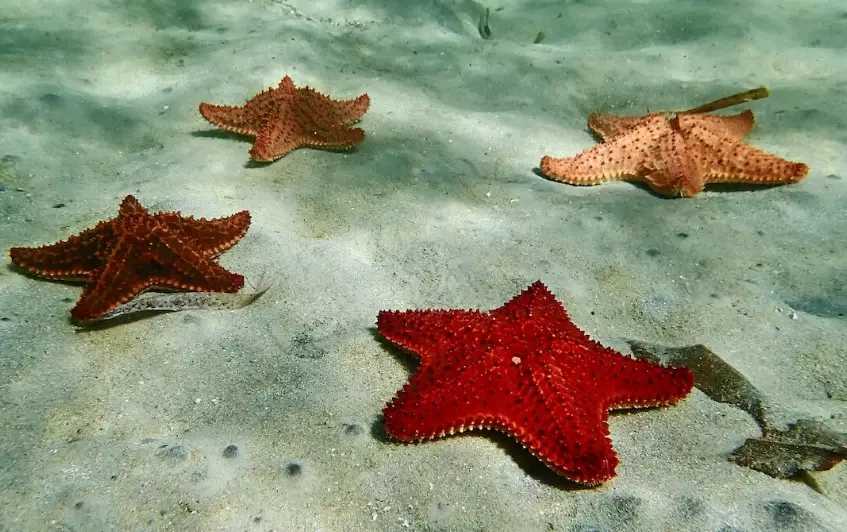
Are Royal Starfish in Florida rare?
Not rare in terms of population, but they can be uncommon to find washed up perfectly intact on popular tourist beaches. They live offshore, so a find is always a bit of a special event. In their preferred Gulf Coast habitats, a knowledgeable beachcomber might see a few over a season.
Can they sting or hurt you?
No. Sea stars are not venomous to humans. They don't have a mechanism to sting or bite us. The primary concern is you hurting them. Just avoid poking your eyes or mouth after handling, and wash your hands—standard beach hygiene.
How can I tell if it's alive or dead?
This is tricky. If the arms are rigid and completely stiff, it's likely dead. If there's any flexibility, if the tiny tube feet on the underside respond to touch (slowly retract), it's alive. A strong, foul odor is a clear sign of death. When in doubt, assume it's alive and treat it as such.
What's the difference between a starfish and a sea star?
They're the same thing! "Sea star" is the scientifically preferred term because they aren't fish. I use both interchangeably, just like most people do. No need to stress over it.
Can I keep one as a pet in a saltwater aquarium?
This is a complex one. Theoretically, yes, but it's not recommended for beginners. Astropecten articulatus has specific needs: a deep sand bed to burrow in, excellent water quality, and a steady supply of live clams or snails. They can be sensitive and are expert escape artists. Furthermore, you should only acquire one from a reputable aquarium livestock supplier that practices sustainable collection, never take one from the wild. It's a challenging pet that often doesn't end well in home tanks. Honestly, I'd advise against it unless you're a very experienced marine aquarist.
Beyond the Beach: Conservation and Why It Matters
Look, I love a beautiful beach find as much as anyone. The thrill of discovery is real. But with creatures like the Royal starfish florida is known for, our appreciation has to be informed. These animals face pressures beyond souvenir collectors. Water quality degradation, habitat loss from coastal development, and even climate change affecting ocean temperatures and acidity can impact them.
Organizations like the Smithsonian Ocean Portal have fantastic resources that explain the broader challenges marine ecosystems face. When we understand that the starfish on the sand is connected to the health of the seagrass, the quality of the water, and the future of the beach itself, it changes how we act.
So the next time you're walking a Florida beach, keep your eyes peeled. That flash of purple might just be your royal encounter. Take the photo. Share the story. But let the starfish continue its story in the sand where it belongs. That's how we ensure future generations get to have that same moment of wonder, looking for the Royal starfish in Florida.
Happy (and respectful) beachcombing.
Comment