Let's cut right to the chase. You typed that question into Google, maybe after seeing a wild picture or a snippet in a documentary. A snail with a shell made of iron? Living in total darkness by boiling-hot underwater chimneys? It sounds like something straight out of a science fiction novel. I had the exact same reaction when I first stumbled upon it. Total disbelief. My brain immediately flagged it as internet nonsense, another "mermaid skeleton" or "tree octopus" waiting to be debunked.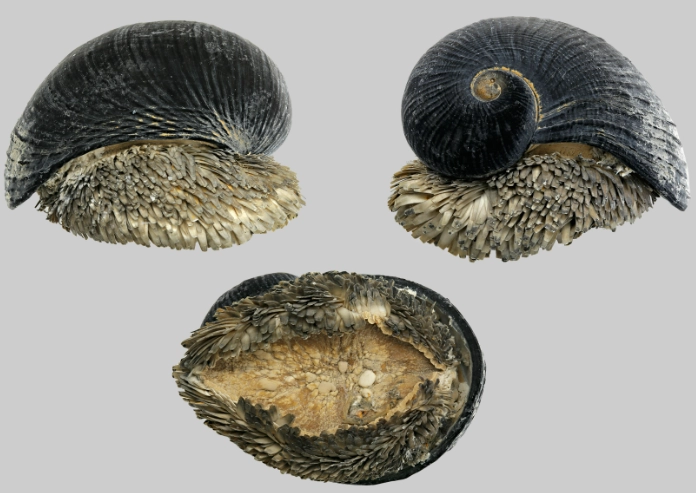
But here's the thing. I dug deeper, and what I found completely rewired my understanding of what's possible in nature. So, is the scaly-foot gastropod real? The answer is a resounding, scientifically verified, absolutely fascinating YES. It's not only real, but it's also one of the most extraordinary animals discovered in the last few decades. Its existence challenges a lot of what we thought we knew about life, adaptation, and survival. This isn't a cryptid or a hoax; it's a bonafide marvel of evolution, hiding two and a half kilometers beneath the waves.
Why Does It Seem So Unreal? Breaking Down the "Myth"
I think the reason the question "Is the scaly-foot gastropod real?" pops up so often is because its features read like a superhero's origin story. Let's break down why it feels so unbelievable.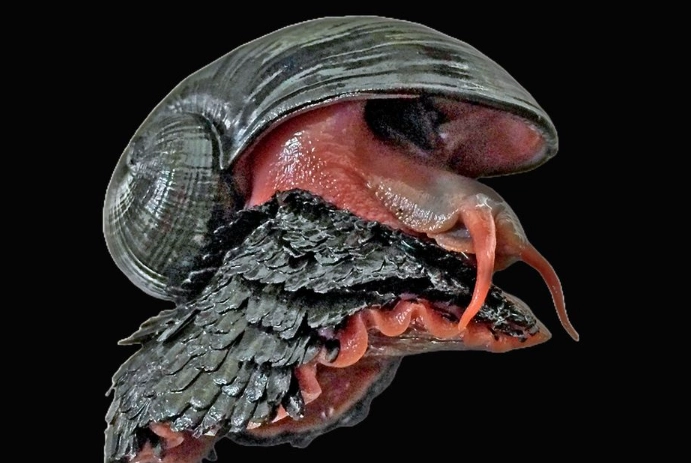
First, the iron armor. Animals using minerals for structure isn't new—think clam shells with calcium carbonate. But incorporating iron sulfides (like greigite) into their hard parts? That's a biological power move rarely seen. It's like if our bodies decided to grow tiny iron plates under our skin for protection. The snail incorporates these minerals from its extreme environment, creating a shell that's incredibly resistant to the crushing pressures of the deep sea and, scientists suspect, the attacks of predators like crabs.
Then there's its home. We're talking about hydrothermal vents, often called "black smokers." These are geysers on the ocean floor that spew superheated, mineral-rich water that can reach over 400°C (750°F). The water around them is toxic to most life, laden with hydrogen sulfide and heavy metals. The idea that a complex, multicellular animal not only survives here but thrives is mind-bending. It's an ecosystem powered not by sunlight, but by chemosynthesis—bacteria converting chemicals into energy. The scaly-foot gastropod is a key part of this otherworldly food web.
Finally, its appearance. The photos are startling. It's not a "pretty" snail. Its foot is covered in those dark, overlapping sclerites (the "scales"), giving it a rugged, almost dragon-like texture. The shell itself has a unique, often dark metallic sheen. It looks engineered, not evolved. When you combine all these factors, the question "Is the scaly-foot gastropod real?" transforms from one of doubt into one of awe. How on Earth (or rather, under it) does this thing even work?
Getting to Know the Real Scaly-Foot Gastropod
Okay, so it's real. Let's move past the yes/no and get to know this deep-sea celebrity a bit better. Its official name is Crysomallon squamiferum. The name itself is descriptive: "chryso" meaning gold (referring to the pyrite-like minerals) and "squamiferum" meaning scale-bearing.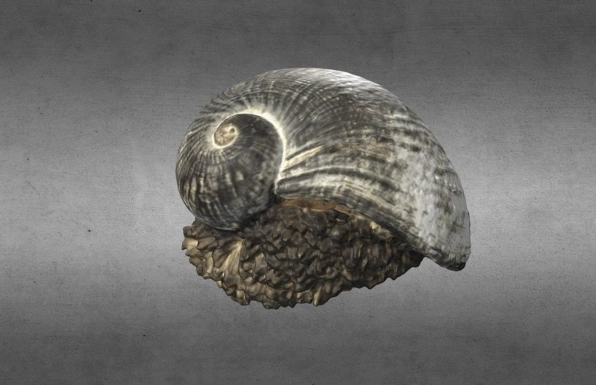
Anatomy of an Iron-Clad Wonder
What makes its armor so special isn't just the material, but the ingenious design. Research has shown its shell is a masterpiece of natural engineering:
| Layer | Material | Primary Function | Analogy |
|---|---|---|---|
| Outer Layer | Iron sulfide (greigite) granules | Crush resistance; abrasion protection; possibly deters predators with its hardness. | A hard, ceramic-like outer plate. |
| Middle Layer | Soft, organic periostracum (a protein layer) | Acts as a shock absorber. Dissipates energy from impacts, like a padded layer. | The squishy foam inside a helmet. |
| Inner Layer | Calcium carbonate (aragonite) | Provides the core structural strength, like a traditional snail shell. | The strong inner frame of a car. |
This three-part structure is a big deal. It's so effective that material scientists and engineers have studied it for inspiration in designing better body armor, lightweight protective coatings, and even new types of ceramics. Think about that—a snail is teaching us how to build better stuff. The scales on its foot (the sclerites) are made of the same tough iron sulfides, providing an extra layer of defense for its soft, exposed foot as it moves across the rocky vent surfaces.
Home Sweet Hellscape: Life at the Hydrothermal Vents
You can't understand this snail without understanding its neighborhood. The only known populations are around three hydrothermal vent fields in the Indian Ocean: the Kairei, Longqi, and Solitaire fields. We're talking depths of about 2,400 to 2,800 meters (around 1.5 to 1.7 miles down).
No sunlight penetrates here. It's perpetually dark, cold (except near the scorching vent fluid), and the pressure is crushing—over 250 times that at sea level. The lifeblood of this ecosystem is the vent fluid, which is rich in chemicals like hydrogen sulfide. This is toxic to us, but it's breakfast, lunch, and dinner for chemosynthetic bacteria.
Here's the cool symbiotic twist: The scaly-foot gastropod doesn't directly eat these bacteria. It farms them inside its own body. It has a large, specialized organ called an esophageal gland (a fancy term for part of its gut) that is packed with these symbiotic bacteria. The snail provides a safe home and possibly chemicals; the bacteria convert vent chemicals into organic nutrients that feed the snail. It's a perfect, closed-loop partnership in the abyss.
The Sobering Reality: Conservation and Threats
This is where the wonder gets tinged with worry. When you ask "Is the scaly-foot gastropod real?", you also have to ask "...and will it stay that way?" Its very uniqueness makes it incredibly vulnerable.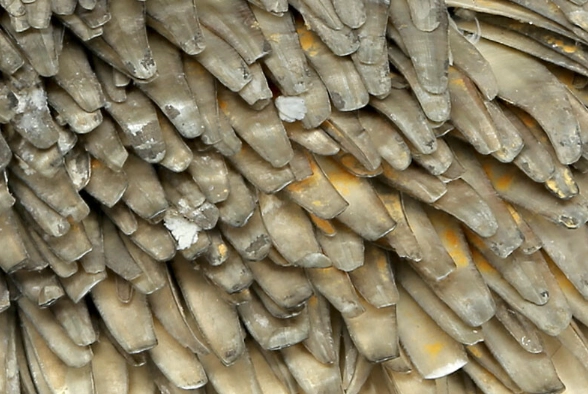
The International Union for Conservation of Nature (IUCN) has listed Crysomallon squamiferum as Endangered on its Red List of Threatened Species. This isn't a casual classification. It's the first deep-sea hydrothermal vent snail to ever receive this status, and for serious reasons.
Its entire known world is incredibly small—just a few vent fields. Imagine if the entire human population lived in three small towns. Now imagine a threat coming to one of those towns. That's the situation here. The primary looming threat is deep-sea mining. The very hydrothermal vents it calls home are rich in valuable polymetallic sulfides—deposits containing copper, zinc, gold, and silver. The snail's iron armor is a direct result of these minerals being in the water.
Mining these vents would involve using giant machines to scrape the seafloor, directly destroying its habitat. The process would also create massive, sediment-laden plumes that could smother life for miles around, choking the delicate vent ecosystems. For a species with such a limited range and specialized needs, this could be catastrophic. The scientific community is deeply concerned, arguing that we risk extinguishing unique species before we even fully understand them. You can read the detailed assessment on the IUCN Red List website.
Scientific Significance: More Than Just a Cool Snail
Beyond the "wow" factor, why do scientists get so excited about this animal? It's a living textbook on extreme adaptation.
- Materials Science: As mentioned, its layered, iron-reinforced armor is a blueprint for next-generation protective materials. Research papers dissect its structure for insights.
- Symbiosis: Its relationship with its internal bacteria is a prime example of how life can exploit chemical energy in the absence of sunlight, informing our search for life on other worlds (like Jupiter's moon Europa, which may have a subsurface ocean).
- Evolution in Isolation: Vent fields are like isolated islands. Studying species like the scaly-foot gastropod helps us understand how evolution works in these unique, pressurized "islands" on the seafloor.
It's a keystone species for understanding a whole realm of biology we're just beginning to explore. Losing it would be like losing a key chapter in the story of life on Earth.
Common Questions About the Scaly-Foot Gastropod
Let's tackle some of the other questions swirling in your head. These are the things I found myself wondering after I got past the initial "Is the scaly-foot gastropod real?" shock.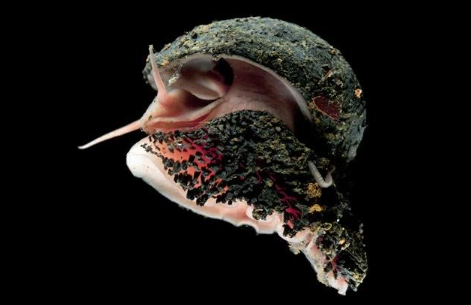
Can you keep one as a pet?
Absolutely not. This is perhaps the most important point to stress. The conditions required to keep this animal alive are impossible to replicate in a home aquarium, or even in most professional aquariums. We're talking about simulating the intense pressure of 2,500 meters of water, the specific chemical cocktail of hydrothermal vent fluid, the precise temperature gradients, and cultivating its unique food source (the symbiotic bacteria). It's a non-starter. They belong in the deep sea, and any attempt to remove them would almost certainly be fatal and highly ecologically damaging.
Is it dangerous to humans?
No. Unless you are a deep-sea crab trying to crack it open for lunch, the scaly-foot gastropod poses zero threat to humans. We will never encounter one in its natural habitat without incredibly sophisticated (and expensive) submersibles. It doesn't have venom, it doesn't bite, and it's not aggressive. It's a slow-moving snail that grazes on bacterial films and relies on its armor for defense.
How was it discovered?
The first specimens were collected in 2001 during a Japanese research expedition to the Kairei hydrothermal vent field in the Indian Ocean, using the submersible Shinkai 6500. It was formally described and named in 2003. Its discovery was a major event in deep-sea biology, adding a completely new and bizarre creature to the vent ecosystem roster. You can explore records of its classification in databases like the World Register of Marine Species (WoRMS).
So, there you have it.
Are there other animals like it?
Other vent snails exist, like the "vent limpet," but none have the distinctive iron-mineralized sclerites on the foot. The scaly-foot gastropod's specific combination of armor and symbiosis appears to be unique. It stands alone as the only known animal to incorporate iron sulfides into its skeletal structure in such an extensive way.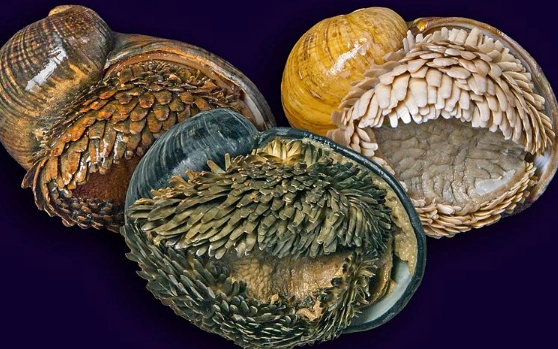
Final Thoughts: From Myth to Reality to Responsibility
So, is the scaly-foot gastropod real? I hope by now you feel like you've journeyed from skepticism to understanding. It's a real, documented, and profoundly strange animal that pushes the boundaries of biology. It's a testament to life's relentless ingenuity in colonizing every conceivable niche, even the most hellish ones we can imagine.
But learning about it comes with a sense of responsibility. Knowing that this real, incredible creature is classified as Endangered on the IUCN Red List changes the conversation. It's not just a cool science fact anymore; it's a poster child for the fragility of deep-sea ecosystems. The debate around deep-sea mining isn't abstract—it's about whether we preserve unique habitats that give us animals like Crysomallon squamiferum, or risk wiping them out for minerals we might be able to source elsewhere or recycle more effectively.
The next time you see that picture of the weird, iron-scaled snail and wonder, "Is the scaly-foot gastropod real?" you can confidently say yes. And you'll know that its reality is far more fascinating, and far more precarious, than any myth could ever be.
Comment