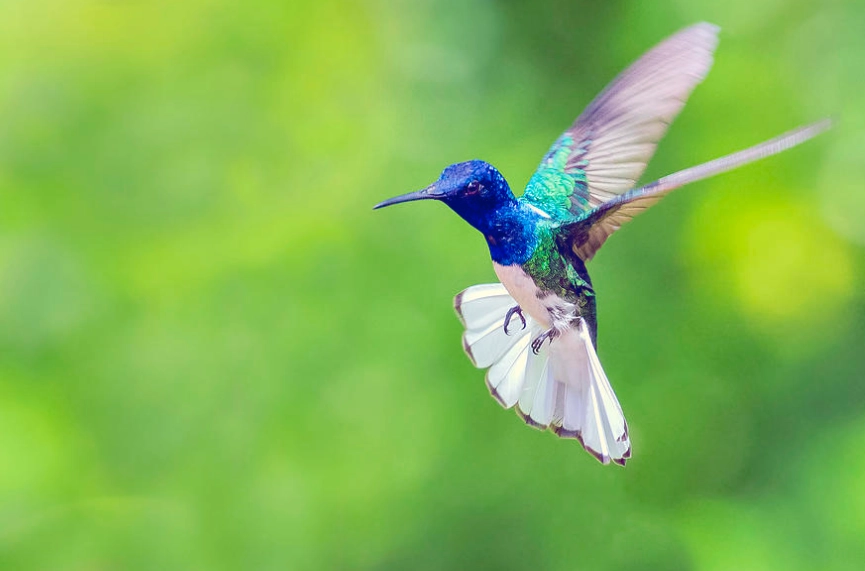
I was in Costa Rica, binoculars glued to my face, when a local guide pointed excitedly at a flash of white and blue. "Look, a Jacobin!" he whispered. My heart skipped. I'd read about the stunning White-necked Jacobin hummingbird. But what I saw perched on the branch wasn't hovering, didn't have a needle-like bill, and was about three times the size I expected. That's when my confusion, a confusion shared by countless birders and nature lovers, began to unravel. So, is a Jacobin a hummingbird? The short, messy answer is: it depends entirely on which "Jacobin" you're talking about, and this naming overlap is a classic trap in bird identification. Bird names aren't always logical. They come from history, appearance, and sometimes pure whimsy. The word "Jacobin" originally referred to a Dominican friar, known for their black-and-white robes. This visual stuck for anything with a stark contrast. In the bird world, this label got slapped on two completely different families because they both sport a dramatic white-and-dark color pattern. Here's the core of the mix-up. When a seasoned birder in the Americas says "Jacobin," they're almost certainly talking about the White-necked Jacobin (Florisuga mellivora), a dazzling hummingbird found from Mexico to Brazil. But travel to South Asia or parts of Africa, mention "Jacobin" to a local, and they'll likely point you to the White-breasted Kingfisher or White-throated Kingfisher (Halcyon smyrnensis), which is locally and colloquially called the "Jacobin Cuckoo" in some older texts or regional parlance. It's not a cuckoo either, by the way. It's a kingfisher that rarely eats fish. The naming is a mess. Let's meet the true hummingbird that rightfully holds the name. The White-necked Jacobin is a mid-sized hummer, a bird of the tropical lowlands. The male is unforgettable. Imagine a head and back of deep, shimmering green. Then, a brilliant white crescent on its nape and a clean white belly and tail. The contrast is stark, like a piece of jewelry. Females and younger birds are duller, mostly green above with scaled white underparts, which can trip up new observers. They don't visit feeders as often as some other hummers; they prefer to hawk insects in mid-air or sip from flowering canopy trees. Their call is a sharp, metallic "tink." If you're in a rainforest and see a white-and-green bullet zipping between tree crowns, that's probably your guy. You won't find this bird in your backyard unless you live in its range. Prime locations include the Osa Peninsula in Costa Rica, the Amazon basin lodges in Peru, or the Atlantic Forest in Brazil. They like edges—forest borders, riversides, and tall second growth. Don't just stare at feeders. Look up. Listen for that sharp call. A good pair of binoculars is essential, as the gorgeous white neck patch is the key field mark. Now, for the bird that causes all the trouble. The White-breasted Kingfisher is a common sight across India, Sri Lanka, and parts of the Middle East. It's not small. It's about the size of a pigeon, with a loud, laughing call you can't miss. Its plumage is a riot of color: a chocolate-brown head and back, a brilliant electric-blue wing and tail patch, a stark white throat and breast, and a massive, bright red bill. It perches conspicuously on wires, fence posts, and bare branches. It eats large insects, lizards, even small rodents. It's a kingfisher that hunts in grasslands, not over water. The "Jacobin" nickname comes from the white breast contrasting with the dark hood, reminiscent of those friar's robes. This is where the online searches go haywire. Someone in Ohio searching "Jacobin bird" gets images of this large, colorful kingfisher and thinks it's a type of hummingbird. The size difference alone should be a dead giveaway, but without scale in a photo, the confusion persists. Forget trying to remember all the details. This table breaks down the critical differences. Print it, save it, use it before your next birding trip. See? They share almost nothing except a name and some contrasting plumage. Calling them the same is like calling a dolphin a shark because they both live in the ocean. You might think it's just semantics. Who cares if a name is shared? For casual interest, maybe it doesn't. But for birders, especially those submitting sightings to databases like eBird run by the Cornell Lab of Ornithology, accuracy is everything. Misidentifying a kingfisher as a hummingbird (or vice versa) corrupts scientific data used to track populations and conservation status. It also saves you embarrassment. I've been in online forums where someone proudly posts a photo of a White-breasted Kingfisher labeled "exotic hummingbird," only to be gently corrected. It's an easy mistake, but knowing the context—the location being India—immediately rules out any New World hummingbird. I saw a picture of a "Jacobin" online, but it was big and had a red bill. What did I actually see? You almost certainly saw the White-breasted Kingfisher, commonly and confusingly called a Jacobin in parts of Asia. The red bill and large size are the giveaways. Hummingbirds have thin, dark bills for nectar. The bird you saw uses that robust red bill to smash large insects and lizards. I'm planning a birding trip to Costa Rica. How can I ensure I see the real Jacobin hummingbird? Target the right habitat. Book a lodge in Caribbean lowland rainforest (e.g., La Selva Biological Station) or the Osa Peninsula. Don't just camp at the feeder station. Take a guided walk at dawn along forest trails or river edges. Ask your guide specifically for the White-necked Jacobin. Listen for its sharp call—guides often find birds by ear first. A good guide knows their local patches and can often lead you right to a territorial male. Absolutely. "Robin" is a classic. The American Robin is a thrush, while the European Robin is an Old World flycatcher. They look vaguely similar but aren't closely related. "Blackbird" in Europe refers to Turdus merula, a thrush, while in the Americas, it refers to birds in the Icterid family (like Red-winged Blackbird). Always check the scientific name. That's the universal, unambiguous key. A resource like the IOC World Bird List is the authority for clearing up these naming tangles. My birding app shows a "Jacobin Cuckoo" that looks like the kingfisher. Is that a third bird? No, it's the same White-breasted Kingfisher causing more trouble. The name "Jacobin Cuckoo" is an old, misleading colloquial name that persists in some regions and older literature. It's not a cuckoo. Modern taxonomy and apps like Merlin or eBird list it correctly as a kingfisher. This is why relying on local nicknames without scientific backing is a recipe for misidentification. Stick to the standardized common names used by major ornithological bodies. So, is a Jacobin a hummingbird? The answer is a definitive "sometimes." It's a perfect example of why common names can be misleading. The White-necked Jacobin is a glorious hummingbird of the Neotropics. The bird often called a Jacobin in Asia is a charismatic kingfisher. They're separated by an ocean, a hundred grams in weight, and entirely different lifestyles. The confusion teaches us a valuable lesson in birding: look beyond the name. Observe the size, the shape, the bill, the behavior, and most importantly, the location. That's how you move from confusion to clarity, and truly see the bird in front of you.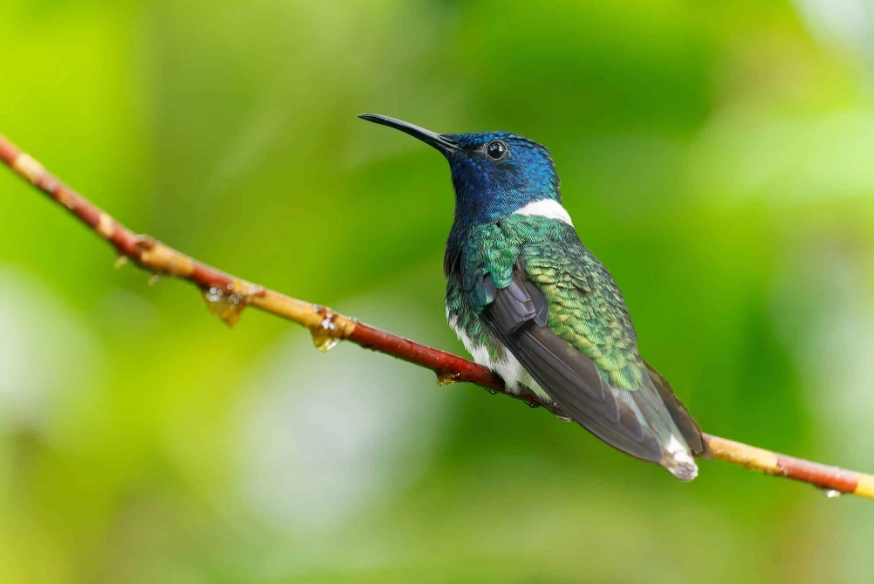
What's Inside?
The Great Bird Name Mix-Up: Why "Jacobin" Causes Confusion
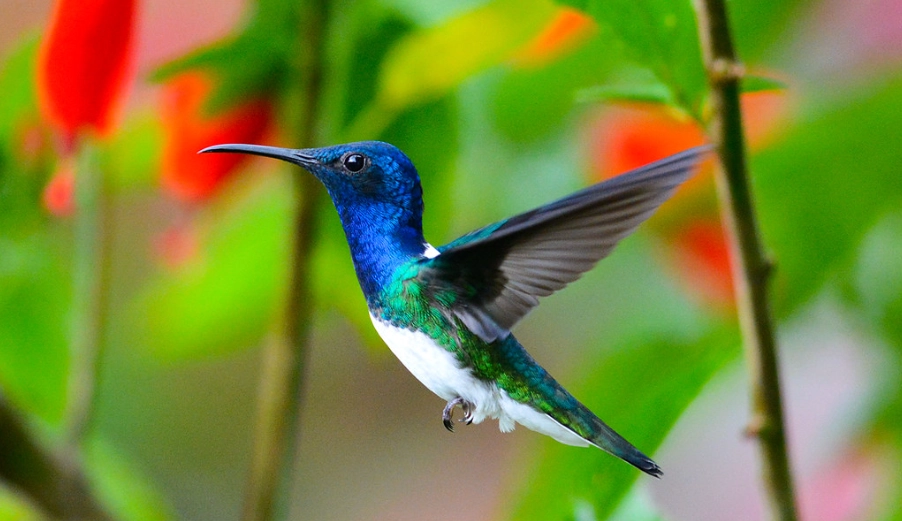
The Real Jacobin Hummingbird: A Flash of Emerald and White
Where and How to Spot the Hummingbird Jacobin
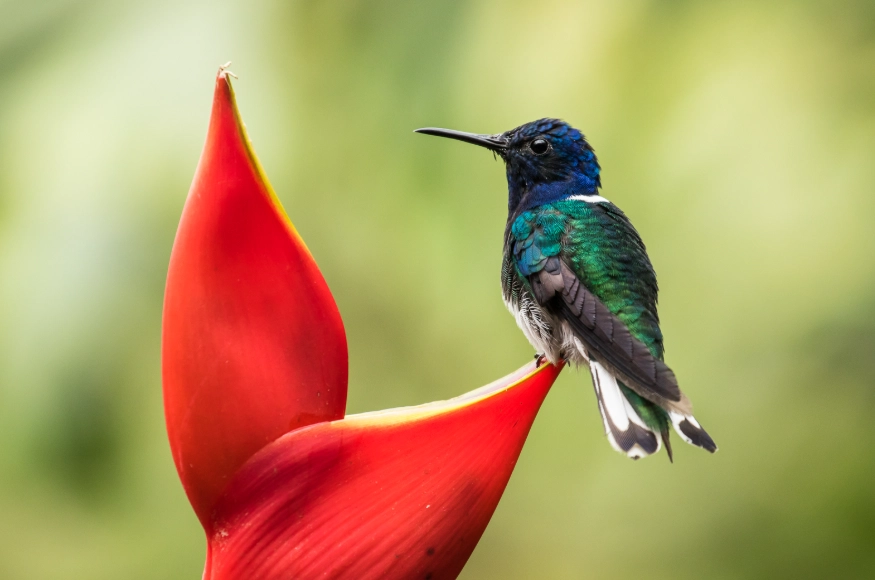
The "Other" Jacobin: Meet the White-breasted Kingfisher
Jacobin vs. Jacobin: Your Quick-Reference Identification Table
Feature
White-necked Jacobin (Hummingbird)
White-breasted Kingfisher ("Other Jacobin")
Family
Trochilidae (Hummingbirds)
Alcedinidae (Kingfishers)
Size
Small. ~10-12 cm (4-4.7 in). Weighs 6-8 grams.
Large. ~27-28 cm (10.5-11 in). Weighs 70-90 grams.
Bill
Long, slender, straight, and black. For sipping nectar.
Very long, heavy, dagger-like, and bright red. For catching prey.
Primary Colors
Shimmering green back, white nape and belly. Iridescent.
Chocolate head/back, electric blue wings/tail, white breast.
Behavior
Hovers at flowers. Fast, direct flight. High-pitched calls.
Perches upright and still. Slow, undulating flight. Loud, laughing "kee-kee-kee" call.
Habitat
Neotropical rainforests, forest edges, canopy.
Open country, agricultural land, gardens, near water bodies in South Asia.
Range
Southern Mexico through Central America to Brazil.
Middle East through the Indian subcontinent to Southeast Asia.
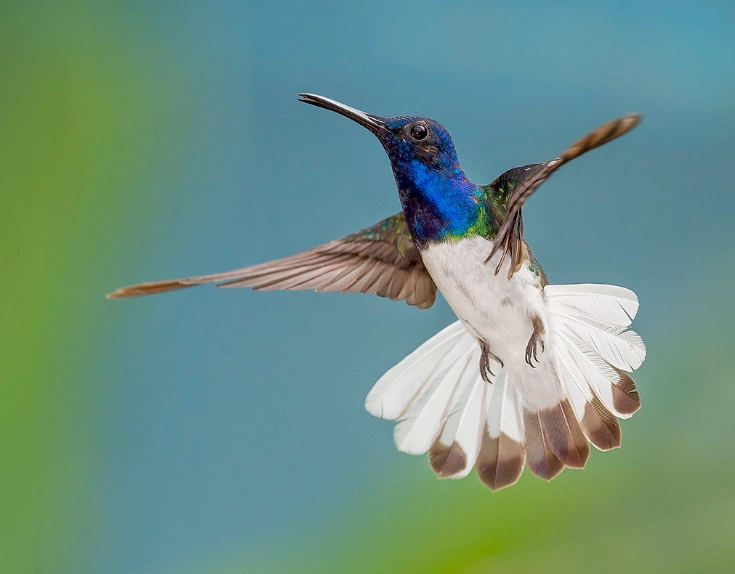
Why Getting This Right Matters for Birders
Your Bird ID Questions Answered
 Are there other bird names that cause this kind of widespread confusion?
I've seen field guides in India that still use "Jacobin" for the kingfisher, while modern apps like eBird have standardized to avoid this confusion. It's a relic term that won't die, creating a perfect storm for misidentification.
Pro Tip from the Field: The single fastest way to settle the "Is it a hummingbird?" question is location. No hummingbirds naturally occur in Asia, Africa, Europe, or Australia (except a few vagrants). If you're looking at a bird in India called a Jacobin, it's 100% the kingfisher. Geography is your first and best filter.
Comment