Key Sections at a Glance
Let's talk about that flash of blue. You see it in a pet store, or maybe in a nature documentary, and it just stops you. A lizard with a tail so vividly blue it looks almost unreal. It's not one single animal, you see. That's the first thing to get straight. "Blue lizard tail" isn't a species name. It's a description that fits a handful of incredible reptiles, each with its own story and needs. I remember the first time I saw a blue-tailed skink in the wild—just a glimpse as it vanished under a log. That image stuck with me for years.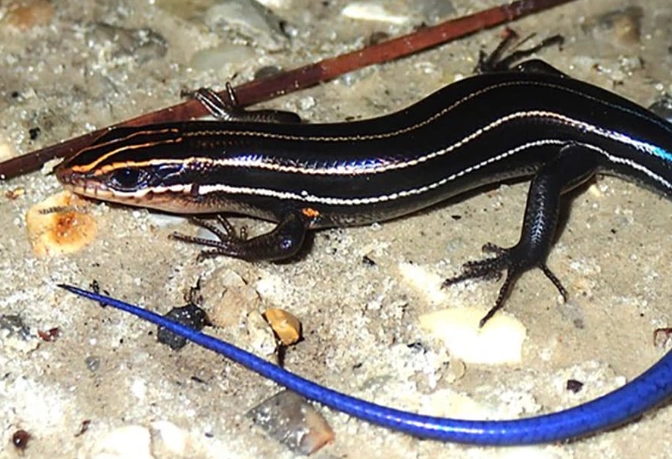
This guide is for anyone who's been captivated by that color. Maybe you're thinking of getting one as a pet. Maybe you're a wildlife enthusiast who wants to know more. Whatever your reason, we're going to dig deep. We'll cover the main lizards known for their blue tails, bust some myths, and if you're leaning towards keeping one, I'll give you the real, unfiltered scoop on what that takes. It's not always as simple as the pretty pictures make it seem.
Quick Truth: That brilliant blue tail is often a juvenile trait. In many species, like the famous American five-lined skink, the dazzling blue fades to a more subdued brown or gray as they become adults. It's nature's way of saying "I'm young and quick, don't eat me!" to predators.
What Lizards Actually Have a Blue Tail?
So, who are we really talking about? When someone searches for info on a blue lizard tail, they're likely encountering one of a few common reptiles. It's crucial to know which one, because their care is worlds apart.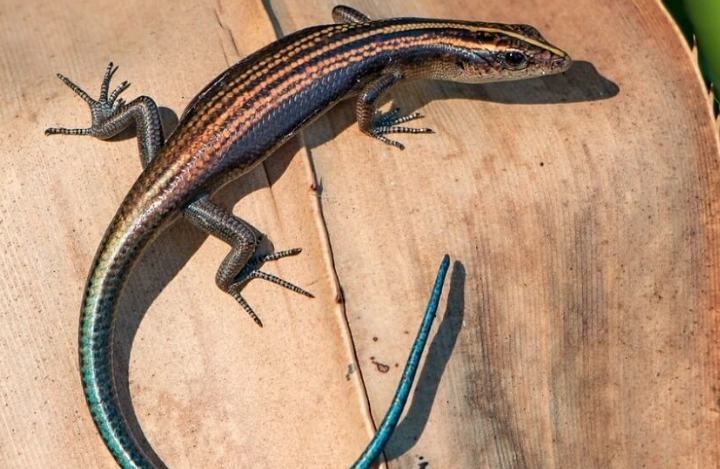
The Classic: Blue-Tailed Skinks (Plestiodon & More)
These are probably the most common culprits. In North America, the young of the Five-lined Skink (Plestiodon fasciatus) and the Broad-headed Skink (Plestiodon laticeps) sport those iconic, electric blue tails. They're widespread in eastern forests. You'll find similar species in other parts of the world, too. They're diurnal, love to climb, and are insect-munching machines. That bright blue lizard tail is a classic example of caudal autotomy—a fancy term for a tail that breaks off easily to distract predators. The wriggling blue piece becomes the main event, letting the lizard escape.
But here's the thing. In the U.S., many native skinks are protected, and collecting them from the wild is often illegal and always ecologically questionable. They also don't always transition well to captivity, becoming stressed and reclusive. For reliable pet information, looking at captive-bred relatives is better.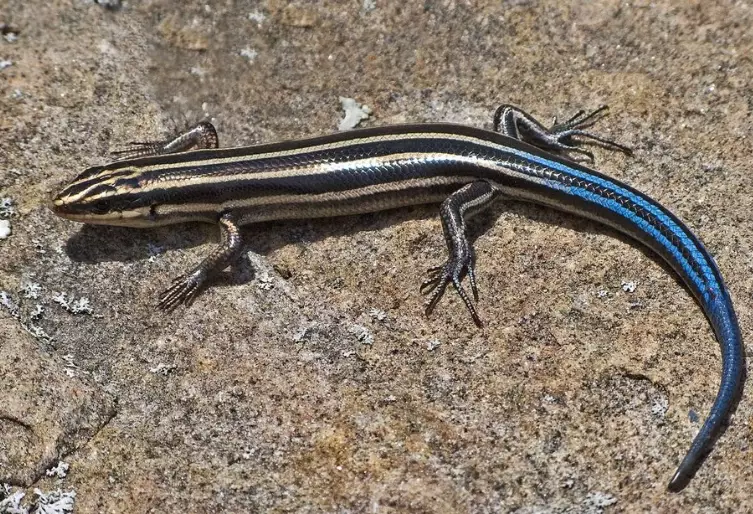
The Showstopper: Electric Blue Geckos (Lygodactylus williamsi)
Now, this is a lizard where the blue isn't just for the tail—the males are an almost unbelievable, solid electric blue all over. They're tiny, stunning day geckos from a very specific area in Tanzania. Their popularity exploded, leading to severe over-collection. Today, the vast majority available are captive-bred, which is the only ethical way to acquire one. Their care is specialized. They need vertical space, precise humidity, and UVB lighting. That breathtaking blue comes with responsibility. You can't just stick them in a fish tank.
My Two Cents: I've kept Electric Blue Geckos. They're mesmerizing, but they're not beginner pets. They're fast, can be fragile, and watching their color literally fade if their setup is wrong is heartbreaking. That vibrant blue is a direct reflection of their health and happiness.
The Other Contenders
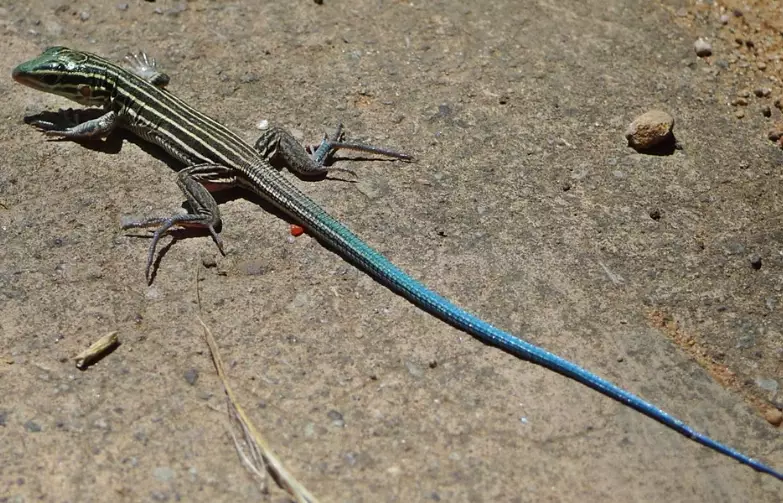
You might also come across the Blue-Tailed Monitor (Varanus doreanus) or certain blue-tailed forest dragons. These are larger, more advanced reptiles. The monitor is a powerful, intelligent animal that needs enormous space. It's not a casual pet. Always, always research the specific species, not just the color of its tail.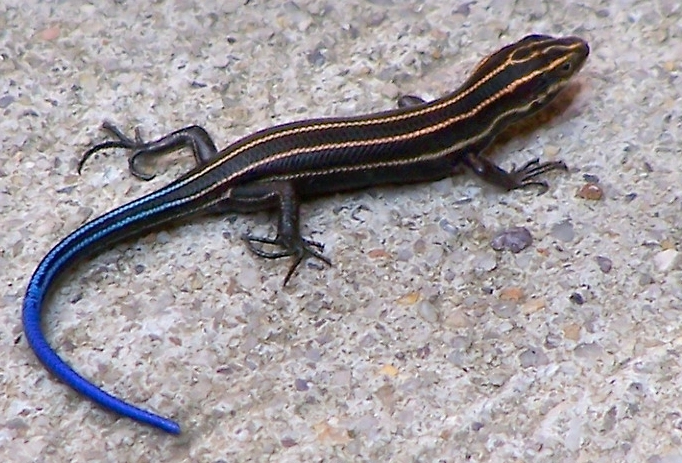
| Common Name | Scientific Name (Example) | Blue Tail On... | Typical Adult Size | Care Level |
|---|---|---|---|---|
| Five-lined Skink | Plestiodon fasciatus | Juveniles only | 5-8.5 inches | Intermediate (Wild-caught not recommended) |
| Electric Blue Gecko | Lygodactylus williamsi | Entire body (males), incl. tail | 3-4 inches | Intermediate to Advanced |
| Blue-Tailed Fire Skink | Lepidothyris fernandi | Red body with blue tail stripes | 14-15 inches | Beginner to Intermediate |
| Monkey-Tailed Skink | Corucia zebrata | Prehensile tail often has blue/green hue | 24-32 inches | Advanced |
So, You Want to Care for a Blue-Tailed Lizard?
Alright, let's get practical. Assuming you've identified a specific, captive-bred species you're interested in (please, let it be captive-bred), here's what you're signing up for. This isn't a goldfish. A proper setup costs money and time before the animal even comes home.
The Non-Negotiable Habitat Setup
The cage is everything. It's their whole world. For an active species like a skink or the Electric Blue Gecko, bigger is always better. A 20-gallon long tank is often the bare minimum for a single small skink, but I'd go larger. For the arboreal Electric Blue, a tall terrarium (18x18x24" or bigger) is essential.
- Substrate: This depends heavily on the species. For humid-loving lizards like Fire Skinks, a deep mix of coconut fiber, soil, and moss holds moisture. For drier species, a soil/sand mix or even reptile carpet can work. Avoid plain sand for most—it can cause impaction if ingested.
- Heating & Lighting: This is where most beginners mess up. Lizards are ectotherms. They need a heat gradient. One side of the tank should have a basking spot (reached via a lamp, not a hot rock) that's species-specific—often between 85-95°F. The cool side should be 70-75°F. At night, heat usually isn't needed unless your house gets very cold. Crucially, most diurnal lizards require UVB lighting to synthesize vitamin D3 and process calcium. Without it, they get Metabolic Bone Disease (MBD), a painful, crippling condition. A linear fluorescent UVB tube (like a T5 HO) is best. Change it every 6-12 months, as the UV output declines.
- Decoration & Hides: Clutter is good. Rocks, cork bark, branches, and plenty of hiding places (at least one on the warm end, one on the cool end) make a lizard feel secure. Live or artificial plants add enrichment and cover.
Biggest Mistake I See: People buy the lizard first, then figure out the tank. It should be the opposite. Set up the enclosure completely, let it run for a week to stabilize temperatures and humidity, then bring the animal home. A trip to the pet store with a lizard already in a box is a recipe for a stressed-out, sick pet.
Diet & Feeding: You Are What You Eat
Most blue-tailed lizards are insectivores. That means a diet of live bugs. It's not for the squeamish.
- Staple Feeders: Crickets, dubia roaches, black soldier fly larvae are excellent staples. Mealworms and waxworms are like junk food—high in fat, use as occasional treats.
- Gut-Loading & Dusting: You can't just throw in a cricket from the pet store. You need to "gut-load" the feeders by feeding them nutritious veggies 24-48 hours before offering them. Then, you must lightly dust them with a calcium powder (with D3 if your UVB is weak, without D3 if you have strong UVB) at most feedings, and a multivitamin powder once or twice a week. This supplements the lizard's nutrition.
- How Often? Juveniles eat daily. Adults usually eat every other day or 3-4 times a week. Offer only as many insects as they can eat in 10-15 minutes.
Some larger skinks, like the Monkey-Tailed Skink, are primarily herbivorous as adults. Always research the specific dietary needs.
The Science & Behavior Behind That Blue Tail
Why blue? It's not just for our amusement. In nature, color is a tool.
For juvenile skinks, that bright blue tail is a defensive adaptation. It's a target. When a predator attacks, the tail breaks off with minimal blood loss due to pre-formed fracture planes in the vertebrae. The detached tail wiggles violently, acting as a decoy while the lizard flees. The blue color enhances the distraction. Over time, they can regenerate a new tail, though it's often shorter, darker, and made of cartilage, not bone. You can read more about this fascinating process in autotomy from authoritative sources like the Australian Museum's reptile resources.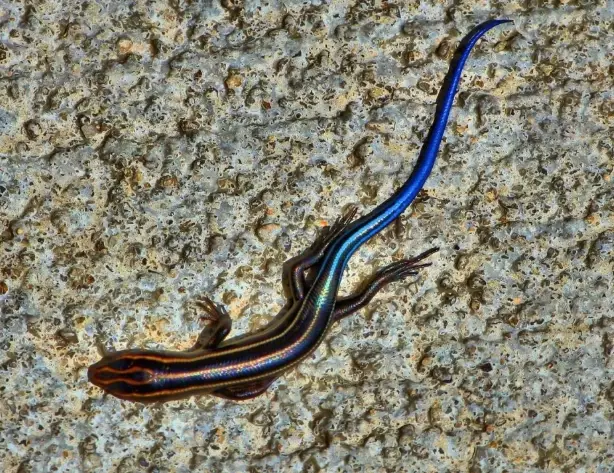
In species like the Electric Blue Gecko, the color is for communication. Males display their vivid blue to attract females and warn rival males. Their color intensity can fluctuate with mood, health, and environmental factors.
Think of the tail as a multi-tool: a balance aid, a fat store, a weapon, and sometimes, a sacrificial offering.
Common Health Issues to Watch For
Lizards are good at hiding illness. By the time they look sick, they're often very sick. Here's what to vigilantly watch for in your blue-tailed pet:
- Metabolic Bone Disease (MBD): The big one. Symptoms include soft, rubbery jaw, bowed legs, tremors, difficulty climbing. Caused by lack of UVB, calcium, or improper diet. It's preventable but often fatal if advanced.
- Stuck Shed: Especially around toes and the tail tip. Incomplete sheds can constrict blood flow and lead to loss of digits or tail tips. Proper humidity and a rough surface (like a rock) to rub against are key.
- Parasites: Internal parasites (worms, protozoa) cause weight loss, lethargy, and abnormal stools. A fecal exam by an exotic vet is a good idea for any new reptile.
- Tail Loss (Autotomy): If your lizard drops its tail, don't panic. Move it to a clean, simple enclosure with paper towel substrate to prevent infection. The wound usually heals quickly. The new tail will grow back differently.
Pro Tip: Find an exotic veterinarian before you have an emergency. Not all vets see reptiles. Having one lined up is part of responsible ownership. The Association of Reptilian and Amphibian Veterinarians (ARAV) has a helpful find-a-vet tool.
Your Blue Lizard Tail Questions, Answered
Final Thoughts: Respect Over Impulse
That flash of blue is a powerful draw. I get it. But the animal behind that blue lizard tail is a complex, living creature with very specific needs. The worst thing you can do is buy one on impulse because it's pretty.
Do the research—*real* research, not just watching a few YouTube videos. Join species-specific forums, talk to breeders, read care sheets from reputable sources like Reptifiles or university herpetology departments. Set up the habitat first. Budget for not just the animal, but the tank, lights, thermostat, food, and potential vet bills.
If you do it right, caring for one of these animals is incredibly rewarding. Watching a skink hunt, or seeing an Electric Blue Gecko bask in its full glory, is a unique experience. But it's a privilege earned through preparation and respect. Don't just chase the color. Understand the life attached to it.
And if you decide it's too much commitment? That's perfectly okay. Admire them in photos, support conservation efforts for their wild habitats, or visit a reputable zoo or reptile expo to see them in person. Sometimes, the best way to love an animal is to leave it to the experts.
Comment