Navigate This Guide
So you've seen a picture. Maybe it was on social media, a flash of impossible, electric blue clinging to a green leaf. Your first thought was probably "Is that even real?" Let me tell you, it is. The blue anole, specifically Anolis gorgonae, is one of those creatures that feels like it shouldn't exist outside of a fantasy novel. But it does, and it comes with a whole set of realities that aren't always covered in those glamour shots.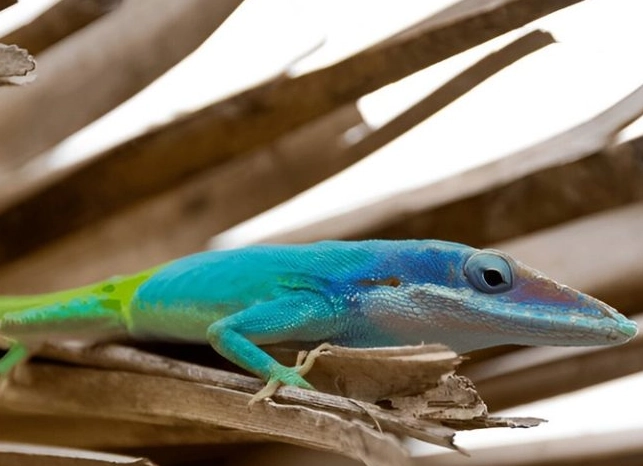
I remember the first time I dug into information about keeping one. It was frustrating. Bits and pieces here and there, mostly just repeating the same basic facts: it's blue, it's from an island, it's rare. Not much on the how of actually providing a good life for one. That's what we're going to fix today.
What Exactly Is a Blue Anole?
First, let's clear up a major point of confusion. When people search for "blue anole," they might be picturing a few different things. There's the famous, truly blue species, and then there are others that can show blue hues. We need to split them up.
The Real Deal: Anolis Gorgonae
This is the celebrity. The lizard that causes all the fuss. Anolis gorgonae is endemic to Gorgona Island, a small, isolated piece of land off the Pacific coast of Colombia. Endemic means it's found nowhere else on Earth. That right there is your first big clue about its care—it's adapted to a very specific, unique environment.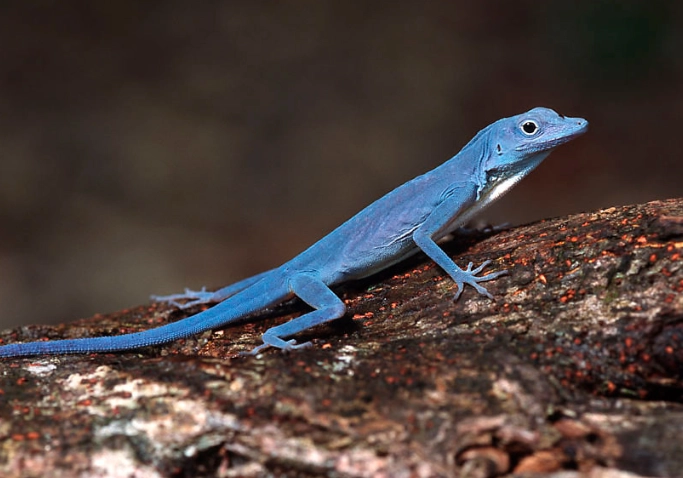
Males of this species are a stunning, almost neon cerulean blue. Females are more of a duller, grayish-blue or even brown with hints of blue. The color isn't from blue pigment. Think of it like the blue sky or a blue jay's feather—it's structural. Tiny nanostructures in their skin cells reflect blue light. It's a trick of the light, and it can be affected by their health, mood, and even the angle you're looking from.
Their conservation status is a major concern. Due to their tiny, isolated habitat and potential collection pressures, they are considered vulnerable. The IUCN Red List is the go-to place for the most current conservation status of species like this. Always check there for the latest scientific assessment.
The "Other" Blue Anoles
Here's where it gets messy. Other anole species can display blue coloration, especially during displays or in certain lights. The Cuban knight anole (Anolis equestris) can have blue around its eyes. Some male brown anoles (Anolis sagrei) show blue dewlaps (the throat fan). But these are not the "true" blue anole. Calling them that is like calling any orange cat a Garfield. It leads to mix-ups, especially when people buy a lizard expecting a sapphire jewel and get something else.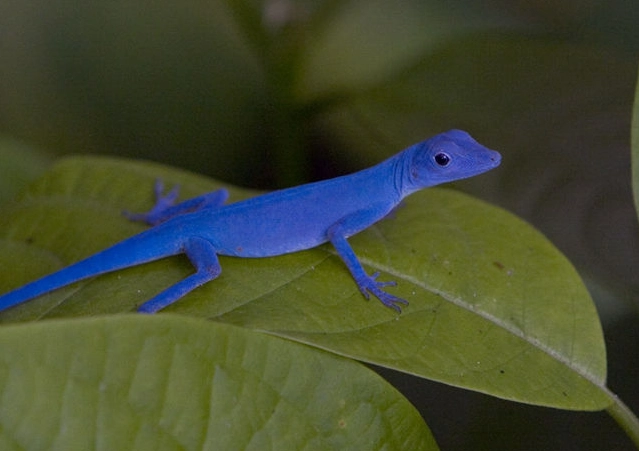
To keep things crystal clear, here's a quick breakdown:
| Common Name | Scientific Name | Primary Blue Feature | Native Range | Typical in Pet Trade? |
|---|---|---|---|---|
| True Blue Anole | Anolis gorgonae | Entire body of males (structural blue) | Gorgona Island, Colombia | Extremely Rare/Virtually Never |
| Cuban Knight Anole | Anolis equestris | Blue patches around eyes, possible shoulder spots | Cuba | Yes, occasionally |
| Blue Anole (a common mislabel) | Often Anolis allisoni (Blue-headed Anole) | Brilliant blue head & shoulders on males | Cuba & nearby islands | Yes, more common |
See the problem? If someone is selling you a "blue anole," you must ask for the scientific name. Anolis gorgonae is the true blue anole. Anything else is a different beast with different needs.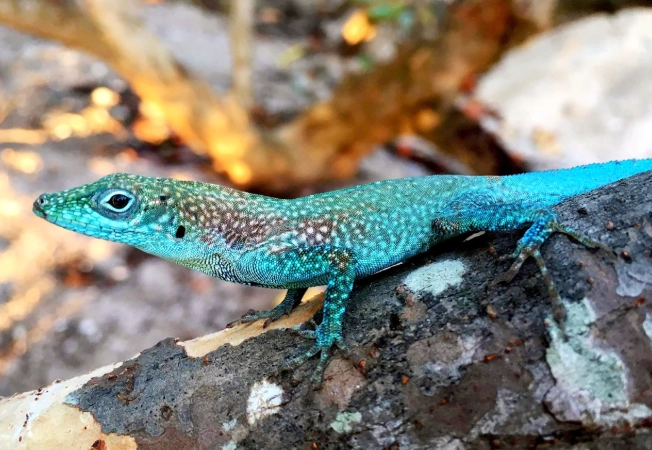
Setting Up the Perfect Blue Anole Habitat
Okay, let's say you're fascinated by the idea of the blue anole and want to create a habitat suitable for anoles with similar needs, or you're doing research for the sake of knowledge. The principles here are gold for many arboreal (tree-dwelling) anoles. For Anolis gorgonae, think vertical, humid, and planted.
The Enclosure: Think Tall, Not Wide
These are climbers. A standard fish tank on its side is a terrible home. You need height. For a single anole, a minimum of 18"x18"x24" (Height) is a good starting point, but bigger is always, always better. I'd lean towards a 24"x18"x36" front-opening terrarium for any serious setup. Front-opening is crucial—reaching in from above makes you look like a giant predator. It scares them.
Ventilation is a tightrope walk. You need high humidity (70-80% is the sweet spot), but also need fresh air to prevent mold and respiratory issues. A mesh top combined with fans or strategic venting on a custom-built enclosure is the goal. Screen tops let all the humidity out. It's a constant battle.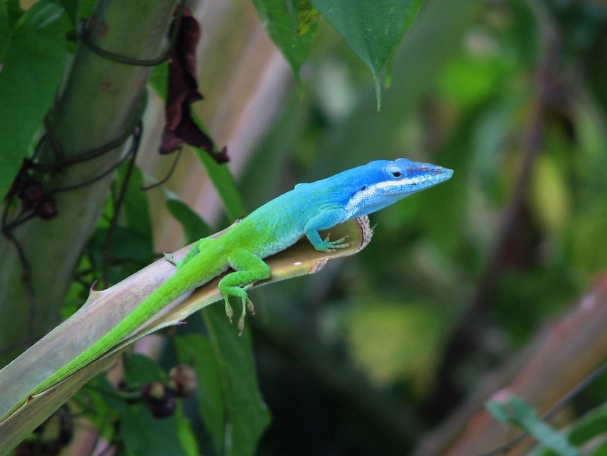
Climate Control: Heat, Light, and Moisture
Gorgona Island is a tropical rainforest. Your job is to mimic that microclimate.
- Temperature: Create a gradient. A basking spot at the top of the enclosure should hit 85-90°F (29-32°C). The middle/cool zone should be 75-80°F (24-27°C), and the bottom can dip to 70-75°F (21-24°C) at night. Never use heat rocks. They cause burns. Use a ceramic heat emitter or a low-wattage basking bulb on a thermostat.
- Lighting: This is non-negotiable. They need UVB light to synthesize vitamin D3 and metabolize calcium. A linear T5 HO UVB bulb (like a ZooMed Reptisun 5.0 or Arcadia Forest 6%) covering about half the enclosure length is essential. Replace it every 10-12 months, even if it still lights up—the UV output fades. A regular LED or plant light for a day/night cycle completes the setup.
- Humidity: This is where most people fail. You'll need a combination of deep, moisture-retaining substrate (a mix of coconut fiber, orchid bark, and sphagnum moss), live plants, and a misting system. Hand misting twice a day might work, but an automatic misting system set to go off for 45 seconds at dawn and dusk is a game-changer. A fogger at night can help too. Get a digital hygrometer—the cheap analog ones are garbage.
Interior Design: The Bioactive Approach
The best thing you can do for any anole, and the closest you can get to replicating the blue anole's natural home, is a bioactive setup. It's not just aesthetic; it's functional.
- Drainage Layer: Start with 1-2 inches of clay balls or lava rock at the bottom for water to drain into.
- Substrate Barrier: A mesh screen to keep soil out of the drainage layer.
- Substrate: 3-4 inches of a rich, ABG mix (typically orchid bark, tree fern fiber, charcoal, peat, and sphagnum).
- Clean-up Crew: Add isopods (like dwarf whites or powders) and springtails. They eat waste, mold, and decaying plant matter.
- Plants, Plants, Plants: Go for sturdy, humidity-loving plants. Pothos, Philodendron, Snake Plants (Sansevieria), Ficus pumila, and Bromeliads are all great. Plant them densely. The blue anole is a shy creature that needs cover.
- Hardscape: Use cork bark rounds and branches of varying diameters to create a highway system from top to bottom. They need perches at different temperatures and humidity levels.
A bioactive tank almost manages itself once established. It holds humidity better, processes waste, and reduces your cleaning to just glass wiping and occasional spot checks. It's more work upfront, but it's the only way to go for long-term success.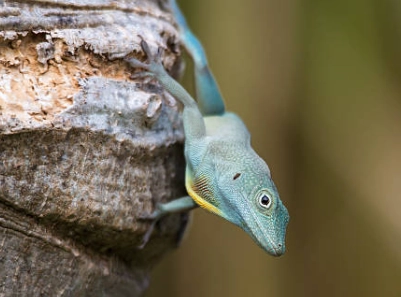
The Day-to-Day: Feeding and Behavior
Let's talk about what a blue anole actually does.
Diet: They're Insectivores
In the wild, their diet consists of small insects and other arthropods. In captivity, variety is everything. A staple of gut-loaded crickets is fine, but you must rotate in other feeders:
- Small Dubia roaches (excellent nutritional profile)
- Black soldier fly larvae (great calcium source)
- Flightless fruit flies (for young anoles)
- Small silkworms or hornworms (for hydration)
"Gut-loading" means feeding your feeder insects nutritious food (like sweet potato, leafy greens, commercial gut-load) 24-48 hours before offering them to your lizard. You are what you eat, and so is your anole. Dust the insects with a high-quality calcium powder (without D3) at most feedings, and a calcium with D3 or a multivitamin powder once or twice a week. The schedule depends on your UVB setup.
How often? For an adult, every other day is plenty. Offer 3-5 appropriately sized insects (no bigger than the space between their eyes) per feeding. Watch to see if they eat them all. Don't leave uneaten crickets roaming—they can bite and stress your anole.
Understanding Their Behavior and Stress
Anoles are not cuddly pets. They are display animals—beautiful living art. The blue anole, in particular, is known to be shy and easily stressed. Stress manifests in a few ways:
- Color Loss: That brilliant blue will fade to a dull brown or gray if they're scared, sick, or uncomfortable. It's the first sign something is wrong.
- Hiding Constantly: If you never see them out basking or exploring, the enclosure might be too open, or there's too much activity around the tank.
- Glass Surfing: Frantically scratching at the glass walls. This can mean stress, a desire to escape poor conditions, or sometimes males seeing their own reflection.
- Loss of Appetite: A big red flag.
Their behaviors are fascinating though. Males will do push-up displays and extend their dewlap (though the blue anole's dewlap isn't as flashy as some species) to communicate territory or attract females. They are visual hunters, sitting and waiting for prey to wander by before striking with lightning speed.
Common Health Issues and How to Spot Them
Prevention is 99% of reptile healthcare. Get the habitat right, and most problems never appear. But you need to know what to look for.
Metabolic Bone Disease (MBD)
The big one. Caused by insufficient calcium, vitamin D3, or UVB exposure. Symptoms include soft, rubbery jawbones, bowed legs, tremors, difficulty climbing, and lethargy. It's preventable and treatable if caught early, but severe cases are heartbreaking and often fatal. Your UVB light and supplementation schedule are your shields against this.
Respiratory Infections
Often due to incorrect temperatures or chronic low humidity. Look for mucus around the nose or mouth, wheezing, open-mouth breathing, and lethargy. This requires a veterinarian who specializes in reptiles. A regular cat-and-dog vet usually won't cut it.
Parasites
Internal parasites (worms, protozoa) can come from wild-caught feeders or an infected animal. Symptoms are weight loss despite eating, runny or smelly stools, and general poor condition. A fecal exam by a vet can diagnose this.
Skin Issues and Shedding Problems
Incorrect humidity is the usual culprit. A healthy shed comes off in large pieces. If you see stuck shed, especially constricting toes or the tail tip, that's a problem. It can cut off circulation. Boost humidity and provide rough surfaces (like cork bark) for them to rub against. In bad cases, a shallow, lukewarm soak can help.
The best thing you can do? Find an exotic vet before you have an emergency. Have their contact info ready. Observe your anole daily during feeding or misting. Know what "normal" looks like for your lizard.
Your Blue Anole Questions Answered (FAQ)
Let's tackle the stuff people are actually typing into Google.
Hopefully, this gives you a much clearer, grittier, and more honest picture than the average flashy article. It's not about just owning a blue lizard; it's about whether you can build and maintain the world it needs to truly thrive. That's the real question to ask yourself.
Comment