Let's be honest, the name "violin crab" sounds like something out of a fantasy novel. I remember the first time I heard it, I pictured a tiny crustacean with a miniature fiddle. The reality is both less musical and far more interesting. If you're here, you're probably curious about this little guy – maybe you saw a picture, heard a friend mention one, or are just diving into the world of unique aquatic pets. You're in the right place.
This isn't just another quick pet profile. We're going deep. We'll untangle the confusion around its name, figure out exactly what it needs to thrive (spoiler: it's not your average fish tank setup), and answer the questions you didn't even know you had. By the end, you'll know if a violin crab is the right quirky companion for your home.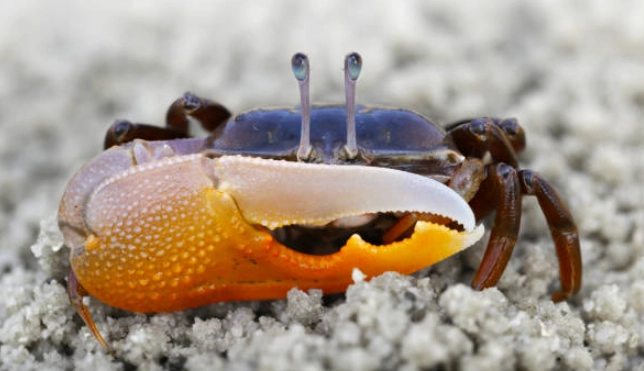
What Exactly Is a Violin Crab? Clearing Up the Confusion
This is where things get tricky, and a lot of online info gets it wrong. "Violin crab" isn't the official scientific name for a single species. It's more of a common name, a nickname that gets slapped on a couple of different small, semi-terrestrial crabs that share a similar, elegant shape. The name usually refers to small species within the broader fiddler crab family (genus Uca), but it's applied pretty loosely.
The "violin" part comes from the shape of the crab's carapace (its main shell). If you look at it from above, the body has a narrow, waisted appearance that supposedly resembles the body of a violin. It's a bit of a stretch if you ask me, but once someone points it out, you can kinda see it. The most likely candidates you'll find sold under this name are certain Uca species from Southeast Asia or the Indo-Pacific.
Key Point: When shopping, don't just trust the label "violin crab." Ask for more details or look for specific species names. You might be looking at a Uca vocans, a Uca triangularis, or another similar fiddler crab. The care requirements are broadly similar, but it's good to know.
I made the mistake early on of not checking. Bought a "violin crab" from a general pet store that knew nothing about it. Treated it like a fully aquatic creature. It did not go well. Lesson learned the hard way.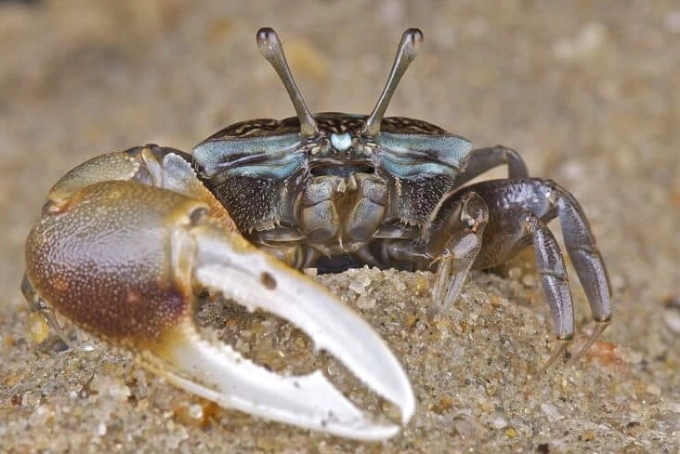
Violin Crab vs. Your Average Fiddler Crab: Spotting the Difference
All violin crabs are essentially a type of fiddler crab, but not all fiddler crabs get called violins. Think of it like squares and rectangles. The violin crab label is usually reserved for the smaller, more delicately built species. Here’s a quick breakdown to help you tell what you might be looking at:
| Feature | Typical "Violin Crab" (e.g., small Uca sp.) | Common Larger Fiddler Crab |
|---|---|---|
| Size (Carapace Width) | Often 1-2 cm (0.4-0.8 inches) – quite tiny! | Can be 3-5 cm (1.2-2 inches) or more |
| Build | More slender, pronounced "waist," delicate legs | Stockier, broader carapace |
| Claw (Chela) Dimorphism | Yes, males have one hugely enlarged claw. | Yes, same dramatic claw difference. |
| Common Colors | Often more muted – tans, browns, greys, sometimes with purple or blue hints on claws. | Can be very vibrant – bright reds, oranges, yellows, and electric blues. |
See? The violin crab is the more refined, miniature cousin. That smaller size is a big part of its appeal for nano-tank enthusiasts, but it also means they can be a bit more sensitive.
The Non-Negotiables: Setting Up the Perfect Violin Crab Home
This is the most important part, and where most first-time owners fail. You cannot just plop a violin crab into a standard aquarium. They are not fully aquatic. They are semi-terrestrial or intertidal. In the wild, they live in mangrove forests, muddy riverbanks, and sandy shores. They need land and water. Period.
Ignoring this is a death sentence for the crab. I feel strongly about this because I see so many bad setups advertised online.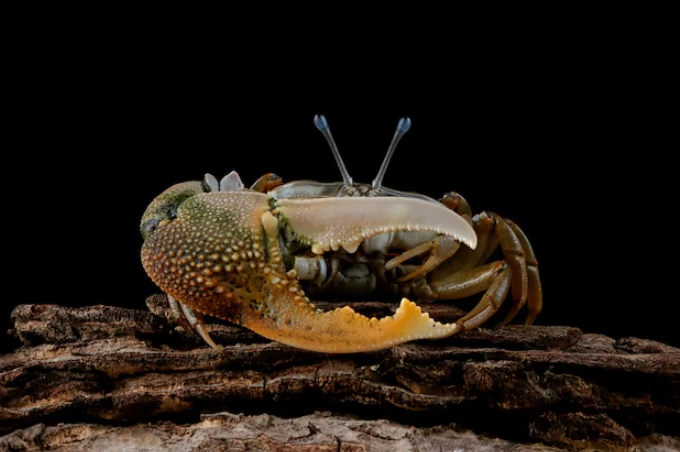
The Paludarium: Your Only Real Option
You need a paludarium – a tank that combines water and dry land areas. A simple 10-gallon tank can work for a small group, but bigger is always better. The land area should be at least 50-70% of the tank's footprint. They spend most of their time foraging, digging, and waving their claws on land.
- Land Section: Use a deep substrate (5+ inches) of sand and coconut fiber mix. They love to dig and create burrows, which is crucial for their molting process and sense of security. Slope it so it's above the water line. Include pieces of driftwood, smooth rocks, and maybe some hardy plants like mosses for them to climb on.
- Water Section: This isn't for swimming. It's a shallow pool. Make it no more than 1.5 times the crab's body depth (so, very shallow). They need to be able to easily enter and exit to wet their gills and replenish moisture. Use dechlorinated freshwater. Some argue for brackish water (slightly salty), and while some Uca species prefer it, many violin crab species found in the trade do okay in fresh if they have proper mineral access. When in doubt, very slightly brackish is safer. You can use marine salt mix at about 1/4 the strength for a marine tank.
- Lid & Humidity: A tight-fitting lid is mandatory. They are escape artists. It also helps maintain high humidity (70-80%), which is critical for their breathing. A small misting bottle is your friend.
Pro Tip: Create a "beach" area where the land slopes gently into the water. This mimics their natural habitat and gives them easy access. Use smooth, flat stones to line the transition so the substrate doesn't constantly wash into the water.
Water, Heat, and Food: The Supporting Cast
Okay, you've got the structure. Now for the details.
Water Parameters: Stability is more important than chasing perfect numbers. They're tough in their own way, but swings in conditions are bad.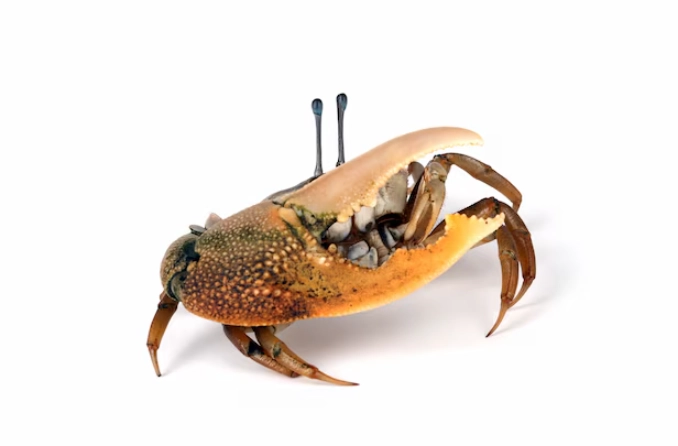
| Parameter | Ideal Range | Why It Matters |
|---|---|---|
| Temperature | 75°F - 82°F (24°C - 28°C) | They're tropical. Too cold slows metabolism and activity. |
| pH | 7.5 - 8.5 | Slightly alkaline helps with shell health. |
| General Hardness (GH) | Moderate to High | Provides calcium and magnesium for molting. |
A small submersible heater in the water section can help maintain ambient warmth. Use a thermometer!
Diet: The Little Scavenger
Violin crabs are not picky. They're detritivores and opportunistic scavengers. In the wild, they sift through sand and mud for algae, bacteria, decaying plant matter, and tiny organisms. In captivity, you need to replicate that variety.
- Staple Foods: High-quality sinking algae wafers, shrimp pellets, and fish flakes. Crush them up a bit.
- Essential Supplements: Calcium. This is non-negotiable for building a new shell after molting. Offer cuttlebone (like for birds) in the land area, or sprinkle calcium powder on their food.
- Treats & Enrichment: Blanched zucchini, spinach, or cucumber. Tiny pieces of fish, shrimp, or bloodworms (freeze-dried or frozen). They go nuts for these.
Feed small amounts once a day, preferably in the evening when they're most active. Remove uneaten food after 24 hours to keep things clean.
Friends or Foes? Tank Mates for the Violin Crab
This is a big question. Can you keep a violin crab with other creatures? The short, honest answer is: it's risky, and often not worth the stress.
Violin crabs are peaceful with their own kind (if there's enough space and resources), but they are tiny, slow-moving scavengers. They are potential food for anything bigger or faster. Their delicate legs and claws are easy targets. Also, they might nibble on very slow or sleeping fish.
Warning: Never, ever house a violin crab with any kind of fish that is aggressive, nippy, or large enough to fit the crab in its mouth. This includes most cichlids, bettas (their long fins are tempting to pinch!), barbs, and larger tetras. It usually ends badly for the crab.
If you absolutely must try a community, the only remotely safe options are: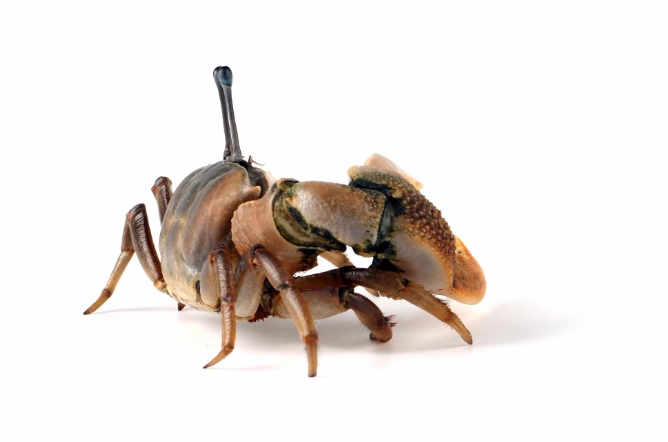
- Other very peaceful, small, top-dwelling fish: Think tiny livebearers like Endler's, or small, fast surface fish like zebra danios that stay in the water column and won't bother the crab's territory on the bottom/land. Even this is a gamble.
- Peaceful shrimp: Larger shrimp like Amano or Ghost shrimp might coexist, but there's always a chance of conflict over food or the crab deciding the shrimp is a snack.
- Snails: Nerite or Mystery snails are usually safe. The crab might investigate them but can't harm a healthy snail.
Honestly?
The best tank mate for a violin crab is another violin crab. A small group of 3-4 in a properly sized paludarium is fascinating to watch. You'll see social interactions, claw-waving displays, and shared burrows. Just make sure there are multiple hiding spots and feeding areas to prevent bullying.
The Fascinating Stuff: Behavior and What to Expect
Owning a violin crab isn't like owning a fish that just swims around. Their behavior is the main event.
The Famous Claw Wave: The males have one large claw (the "fiddle") and one small feeding claw. That big claw isn't for fighting—it's primarily for communication. Males perform an intricate waving dance to attract females and intimidate rival males. The pattern, speed, and height of the wave are like a language. It's mesmerizing to watch. The female violin crab has two small, equal-sized claws used for feeding.
Digging and Burrowing: They are engineers. They will rearrange your substrate, dig complex tunnels, and create little caves. This isn't them being destructive; it's essential natural behavior. Provide deep, diggable sand so they can do this properly.
Molting – The Critical Phase: To grow, crabs must molt. They shed their entire hard exoskeleton and emerge in a soft, vulnerable new one. Before a molt, your violin crab will become lethargic, stop eating, and hide away for days or even weeks. It will then dig a secure burrow or find a very safe spot to perform the molt.
CRITICAL: Do NOT disturb a molting crab. Do not remove the old, empty shell (the exuvia). The crab will eat it to recycle the precious calcium and minerals. During this soft-shell period, which lasts several days, the crab is defenseless. Ensure it has absolute privacy and security. This is the most dangerous time in a crab's life, even in captivity.
After the molt, you might see a brighter, more vibrant crab. Their colors are most intense right after a new shell hardens.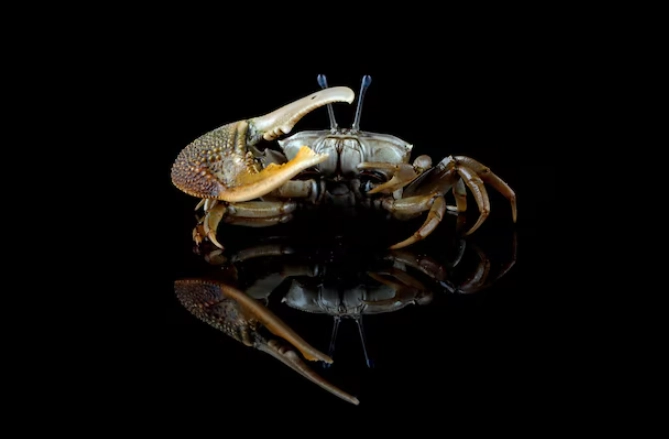
Your Violin Crab Questions, Answered
I've gotten a ton of questions over the years. Here are the big ones.
Q: Are violin crabs easy to care for?
A: I wouldn't call them "easy" for a complete beginner. They're not like a betta fish in a bowl. They have very specific habitat needs (the land/water mix). If you can nail the paludarium setup and maintain stable conditions, their daily care is simple. But getting that setup right is the hurdle. They're "intermediate" level pets.
Q: How long do violin crabs live?
A> In ideal captive conditions, you can expect a lifespan of 2 to 3 years, sometimes a bit more. Their life in the wild is often much shorter due to predators.
Q: Can they be handled?
A> It's not recommended. They are fragile, can drop legs if stressed (a defense mechanism called autotomy), and those little claws can deliver a surprisingly sharp pinch. Observe, don't handle. They are watchable pets, not cuddly ones.
Q: Why is my violin crab always hiding?
A> This is normal, especially during the day. They are often more crepuscular (active at dawn/dusk) or nocturnal. If it's hiding constantly and never comes out even at night, check your environment. Is it too bright? Not enough hiding spots? Are there aggressive tank mates? Stress is the usual culprit.
Q: Where can I buy a violin crab?
A> You won't find them at every big-box pet store. Look for specialized aquarium stores, reptile/exotic pet shows, or reputable online invertebrate vendors. Always ask about the specific species and their origin. Avoid wild-caught specimens if you can, as they come with more stress and parasites. Captive-bred is ideal but rarer.
Going Deeper: Conservation and Responsible Keeping
This part doesn't get talked about enough. Many fiddler crabs, including those sold as violin crabs, are collected from wild mangrove habitats. These ecosystems are critically important and under threat worldwide.
As a hobbyist, you have a responsibility. If you decide to keep a violin crab, commit to giving it the best possible life for its entire lifespan. Do the research (you're doing it now!), set up the tank correctly before you buy the animal, and source it ethically when possible.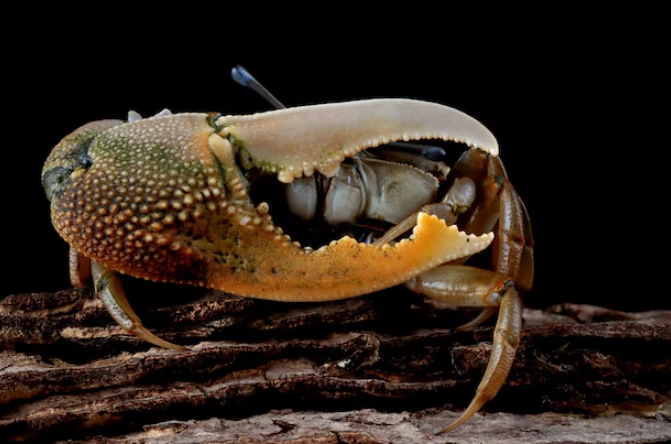
Learning about them can also foster appreciation. Understanding the biology of species like the violin crab highlights the complexity of intertidal zones. For authoritative information on crab taxonomy and biology, institutions like the Smithsonian's Department of Invertebrate Zoology provide a scientific foundation. Broader biodiversity projects, such as those cataloged by the Census of Marine Life, show just how much life depends on these coastal margins.
It's about respect.
These aren't just disposable decorations. They're intricate little animals with specific needs. The violin crab, with its quiet digging and rhythmic claw waves, offers a unique window into a world between land and sea. If you're willing to build that world for them, they repay you with endless fascination.
So, what's the verdict? Is the violin crab for you? If you're intrigued by behavior over color, enjoy creating miniature landscapes, and don't mind a pet you watch more than touch, then absolutely. Dive in, do it right, and enjoy one of the hobby's most interesting little characters.
Comment