Let's be honest, most groundbreaking science doesn't happen in a shiny lab with billion-dollar equipment. Sometimes, it happens in a muddy forest with a bunch of stuffed toys. That's pretty much the story of the Woolly Rat Experiment. If you're into ecology, conservation, or just love a good story about how clever thinking solves big puzzles, you've come to the right place. This experiment is a classic, but its lessons are more relevant today than ever. We're going to peel back the layers on this iconic study, figure out what it really found, and see why ecologists are still talking about it decades later. I remember first reading about it in grad school. It sounded almost silly. They used toy rats? To study forests? But the brilliance of it hit me later. It was one of those elegantly simple ideas that cuts through the noise of complex nature and gives you a clear answer. It wasn't about fancy tech; it was about asking the right question in the right way. Core Concept in a Nutshell: The Woolly Rat Experiment was a field study designed to untangle a specific mystery: To what extent do seed-eating rodents (like rats and mice) influence which trees survive and where forests grow? Researchers used artificial, wool-stuffed "rats" as decoys to experimentally test how the fear of predators changes rodent behavior, and how that behavior, in turn, shapes the forest floor. To get why the Woolly Rat Experiment was such a big deal, you need to understand the problem ecologists were wrestling with. For a long time, people observed that seeds from trees like oaks and palms just don't sprout everywhere. You'd have a tree dropping thousands of seeds, but seedlings only pop up in certain spots, often far from the parent tree. Why? The obvious suspects were the rodents. Mice, rats, squirrels—they're famous for hoarding and eating seeds. But proving it was tricky. Just because you see a rat near seeds doesn't mean it's the main reason seeds disappear. Maybe insects are eating them. Maybe the soil is bad. Maybe fungi are killing them. It was a classic correlation-vs-causation headache. Researchers needed a way to experimentally manipulate the rodent threat. They couldn't just remove all rodents from a forest (that's nearly impossible and ethically messy). So, they got creative. What if they could make rodents think there was a higher danger, and see if that changed their seed-eating habits? Enter the woolly rat. The central tool of the Woolly Rat Experiment was, well, the woolly rat. These weren't complex robots. They were simple, life-sized models of a rat predator, like a cat or a fox, made from wire frames stuffed with wool. The idea was to use the scent and silhouette of a predator to create a "landscape of fear" for the real rodents. The setup went something like this. Researchers would pick a forest plot. They'd set out trays with a known number of seeds—often large, tasty nuts that rodents love. Then, they'd create different experimental conditions: They'd leave the seeds for a set period—maybe 48 hours or a week—then come back and count what was left. Did seeds disappear slower near the woolly rat decoy? The beauty of this woolly rat experiment design was its directness. It isolated one variable: perceived predation risk. Now, was it perfect? No experiment is. Some critics wondered if the toy rats were convincing enough long-term (rodents are smart). Others noted that using just one type of seed might not tell the whole story. But these limitations are part of the scientific conversation, and later studies have built on this foundation, using camera traps and other methods to refine the findings. So, what happened when they crunched the numbers? The results were clearer and more impactful than many expected. This woolly rat experiment provided solid evidence for a concept called risk-sensitive foraging. Here’s the breakdown of the key takeaways: My take on it: The real genius of the finding wasn't just "scare rats, save seeds." It demonstrated that predators don't just affect prey populations by killing them. Their mere presence, their scent, their shadow—it alters the prey's behavior. And that behavioral change ripples out to affect completely different parts of the ecosystem, like which plants get to grow. That's a profound shift in how we see nature's connections. You might think, "Cool story, but that was then." Here's the thing: the principles laid bare by the Woolly Rat Experiment are now cornerstones in modern conservation and ecology. Let's connect the dots to today's issues. Wolves in Yellowstone are the famous example. They don't just eat elk; they change where elk go and how they browse. This allows willow and aspen saplings to recover in areas elk now avoid—a direct parallel to the seed survival in the woolly rat experiment. The experiment gave us a small-scale, controllable model for understanding these massive landscape-scale changes. The U.S. National Park Service's research on wolf restoration effects documents this trophic cascade beautifully. Many large-seeded trees rely on animals to move their seeds. But what if those animals are scared? Research inspired by the woolly rat experiment framework has shown that in fragmented forests or near human activity, increased fear can cause rodents and birds to alter their seed-carrying behavior, potentially stifling forest regeneration. The USDA Forest Service has numerous studies on how mammal behavior influences oak regeneration, touching on these very themes. Some modern conservation projects are literally using "fear" as a tool. In places where introduced rodents are devastating island ecosystems, conservationists have experimented with artificial predator scents or even drone-flown predator models to create safe zones for endangered plants or nesting birds. It's a high-tech descendant of the woolly rat idea. The lesson is clear: you can't manage a forest by just looking at trees. You have to understand the fears and hungers of its smallest inhabitants. Let's tackle some of the specific questions people searching for this topic probably have. I've heard these come up again and again. This is a fair ethical question. From everything documented, the woolly rat experiment was considered non-invasive and low-impact. The real rodents were never trapped, handled, or harmed. They were simply presented with a visual and olfactory cue (the dummy and scent) in their natural environment and allowed to behave as they wished. Their choice to avoid the area was a natural behavioral response. Most modern ethics boards would view this as a minimal-interference study. It was arguably less disruptive than live-trapping or tagging animals. Absolutely! It's a fantastic, hands-on ecology project. The core idea is simple: compare seed removal rates in two areas, one with a "scary" object (a plastic owl, a stuffed toy cat, even a cut-out silhouette) and one without. Use something like peanuts in the shell or large sunflower seeds. Count them after a day or two. You won't publish in a journal, but you'll see the principle in action. Just be mindful of local wildlife and don't use anything that could actually trap or injure an animal. This is a common point of confusion. The name "Woolly Rat Experiment" refers to the dummy, which was often a model of a rat predator. The actual subjects of the study—the seed-eaters—were typically native rodents like mice, voles, and sometimes actual rats, depending on the forest. The experiment has since inspired similar studies with dummy birds of prey to scare off seed-eating birds, or dummy crabs to influence snail behavior. It's a methodological template. It's all about resilience. Forests under climate stress need to regenerate and maybe even shift their ranges. That requires seeds to travel and survive. If predator populations are out of whack (e.g., mesopredator release where medium-sized predators boom), or if human activity creates a pervasive "landscape of fear," it can throw a wrench into these natural recovery processes. Understanding these behavioral threads is crucial for predicting how ecosystems will respond to bigger changes. Beyond the Forest: The implications of the woolly rat experiment logic extend to grasslands, wetlands, and even marine environments. Wherever there are predators, prey, and resources the prey consume, this dynamic of fear shaping behavior and resource use is likely at play. Researchers have looked at similar effects with spiders and grasshoppers, or fish and their invertebrate prey. Looking back, the woolly rat experiment's legacy isn't a single graph or number. It's a way of thinking. It forced ecology to take animal behavior seriously as a driver of ecosystem structure. Before, a forest might have been modeled as trees, soil, and animals that eat each other. After, it had to include the psychology of its inhabitants—their perceptions, their trade-offs between food and safety. This has direct, practical impacts. Let's say you're a land manager trying to restore a degraded oak woodland. Old-school thinking might just say "plant acorns." But knowledge from the woolly rat experiment and related work would make you ask: That's a much smarter, more effective restoration plan. It's holistic. For instance, the International Union for Conservation of Nature (IUCN) frequently highlights the interconnectedness of species and the cascading effects of losing predators, which aligns perfectly with the foundational insight of this experiment. Was the woolly rat experiment the final word? Of course not. Science never is. But it was a brilliantly clear flashlight shone into a dark corner of ecology. It showed that sometimes, to understand the fate of a mighty forest, you need to start with a tiny, fake rat and a very clever question. And honestly, I think that's pretty awesome. It reminds us that you don't need all the answers to start asking better questions. You just need to observe, think creatively, and maybe, just maybe, be willing to put a stuffed toy to work for science.Key Highlights
Where Did This All Start? The Seed Predation Puzzle
Unpacking the Experiment: Design, Dummies, and Data
Experimental Plot Type
Key Feature
What It Was Testing
Predator-Present Plot
Had one or more woolly rat dummies placed nearby, sometimes with added predator scent (like fox urine).
Does the perceived risk of predation cause rodents to spend less time foraging here, leading to higher seed survival?
Predator-Absent Plot (Control)
Just the seed tray, no dummy predator.
The baseline. How many seeds do rodents normally eat when they feel safe?
Open vs. Sheltered
Some trays were in the open, others under bushes or near logs.
How does physical cover (which also offers safety from predators) interact with the rodent's foraging decisions?
The Big Reveal: What the Woolly Rat Experiment Actually Found
Why This Old Experiment Still Matters Today
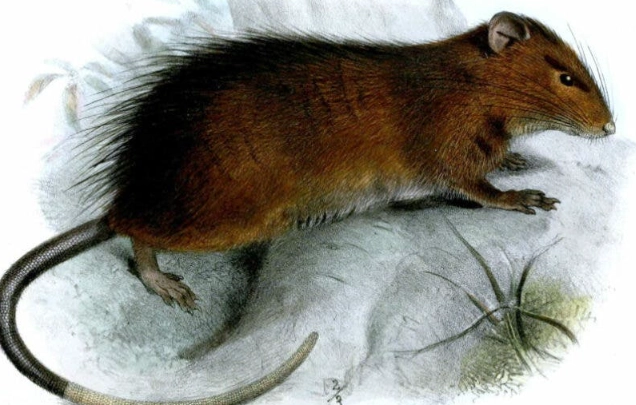
1. Rethinking Predator Reintroduction
2. The Plight of Seed Dispersers
3. Applied Pest Management... in Nature
Common Questions About the Woolly Rat Experiment
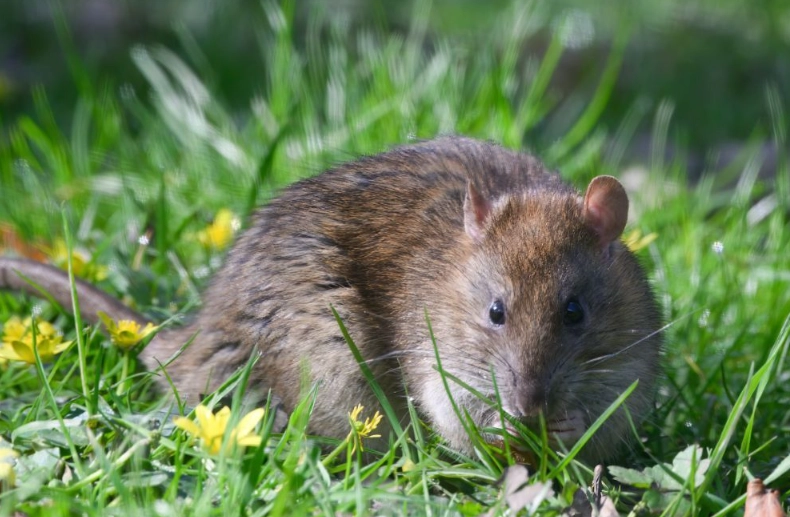
Was the experiment cruel to the real rats?
Can this experiment be replicated in my backyard or for a school project?
Did this experiment only involve rats?
How does this relate to climate change?
The Bigger Picture: From Toy Rats to Ecosystem Management
"The 'landscape of fear' isn't just poetic. It's a real, measurable force that shapes ecosystems from the ground up. The Woolly Rat Experiment gave us one of the cleanest tools to map it." – A sentiment echoed by many behavioral ecologists.
Comment