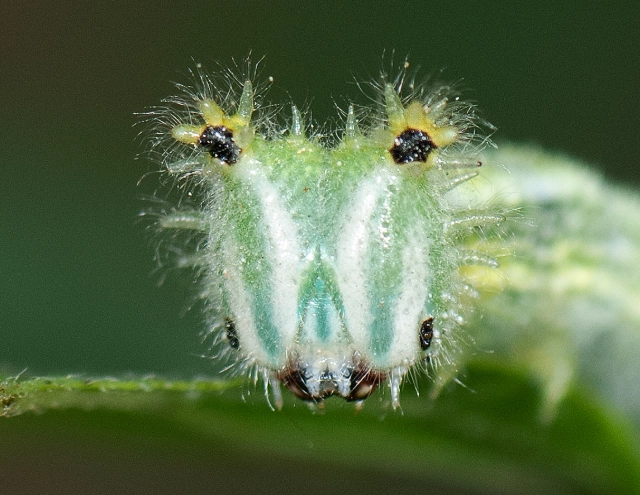
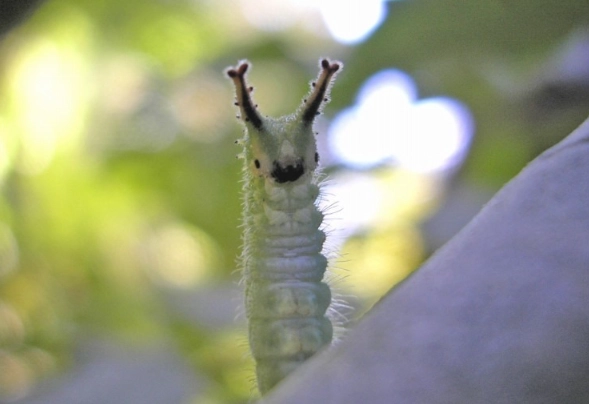
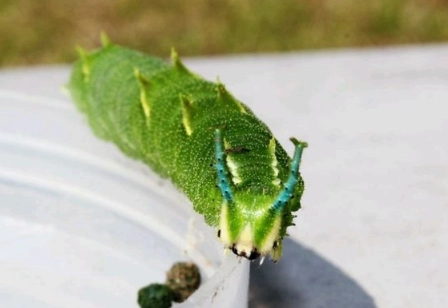
You're out in the garden, maybe in Japan or even in a similar climate where these guys have shown up, and you spot this incredible-looking caterpillar. It's big, it's got these wild tufts of hair, and colors that make it look like a tiny alien creature. The Saturnia japonica, or Japanese Emperor moth caterpillar. It's hard to look away. But then your brain kicks in with a very practical question: is it safe to touch? Is the Japanese Emperor caterpillar poisonous? That's the million-dollar question for anyone who's stumbled across one, especially if you've got kids or pets who are equally curious. I remember the first time I saw one. I was hiking, and my immediate thought wasn't about its scientific name, it was a much simpler "Wow, cool!" followed very quickly by "Should I be backing up?" There's a lot of confusion and some outright scary stories online about hairy caterpillars. Let's cut through the noise and get the real facts. Here's the thing. The term "poisonous" gets thrown around a lot with insects, but it's often used incorrectly. When people ask if the Japanese Emperor caterpillar is poisonous, they usually mean one of two things: 1) Can touching it make me sick or give me a rash? or 2) If my dog eats it, will it die? We need to separate those ideas. Strictly speaking, the Japanese Emperor caterpillar is not "poisonous" in the sense that it contains toxins that will cause systemic poisoning if ingested (like some frogs or plants do). However, and this is a big however, it is often considered urticating. That's the key word you'll want to remember. Urticating hairs or spines are a defense mechanism that can break off and cause skin irritation, rashes, and a painful, itchy sensation. It's a mechanical and sometimes mild chemical irritation, not a full-blown venom injection like a snake. Before we dive into the itchy details, let's get to know our subject. The Japanese Emperor caterpillar is the larval stage of the stunning Saturnia japonica moth. This isn't some tiny, anonymous bug. The moth is large and beautiful, and the caterpillar lives up to that reputation. You'll usually find them munching on the leaves of oak, cherry, willow, or chestnut trees. They're most active from late spring through summer. In their later stages (instars), they become real showstoppers. Knowing what you're looking at is half the battle. Misidentification causes a lot of unnecessary panic. Here’s a breakdown: It's a breathtaking creature, honestly. The combination of green, black tufts, and blue spots is unmistakable once you know it. But those good looks are a warning sign in the animal kingdom. Okay, let's get to the heart of the matter. What actually happens if you touch one? The primary risk from the Japanese Emperor caterpillar comes from its setae – those tiny, hair-like spines that cover its body, particularly the shorter ones among the longer tufts. These spines are barbed and fragile. When something brushes against the caterpillar, these spines can easily detach and embed themselves in skin. This causes a condition sometimes called caterpillar dermatitis or lepidopterism. It's not unique to this species; many moths and butterflies in the Saturniidae family (the giant silkworm moths) have caterpillars with similar defenses. Reactions can vary a lot from person to person. Some people might barely feel a thing, while others, especially those with sensitive skin or allergies, can have a stronger response. Here’s a typical progression: I had a mild brush with a related species once. It felt like I had fiberglass insulation on my forearm. Not fun. Itched for a good day and a half. This is a huge concern for pet owners, and rightly so. Dogs, in particular, use their noses and mouths to explore. A curious sniff or, worse, a chomp on a Japanese Emperor caterpillar can lead to trouble. Cats are generally more cautious but not immune. The principle is the same. If you suspect your pet has interacted with one, monitor them closely and call your vet for advice. Don't wait for symptoms to get bad. Okay, let's say it happened. Don't panic. Here's a step-by-step guide for dealing with contact from a potentially poisonous Japanese Emperor caterpillar. To put the Japanese Emperor caterpillar's poisonous potential in context, it helps to see where it stands compared to other notorious caterpillars. Not all irritants are created equal. As you can see, the Japanese Emperor caterpillar isn't in the top tier of danger like the Puss caterpillar, but it's certainly not harmless like a Monarch. It sits firmly in the "annoying and painful, handle with great care" category. Finding one of these in your garden doesn't mean you need to declare chemical warfare. They are important parts of the ecosystem and turn into magnificent moths. The goal is smart coexistence, not eradication. Honestly, I think they're worth having around just for the spectacle. Watching one munch a leaf or eventually find a spot to pupate is a cool nature lesson. You just have to respect its personal space. No. There are no documented cases of a death directly caused by contact with a Saturnia japonica caterpillar. The irritation it causes is localized to the skin. The risk of a life-threatening anaphylactic reaction is theoretically possible for anyone with extreme allergies, but it is exceedingly rare from caterpillar contact alone. The fear of death is vastly overblown by internet lore. First, wash your hands immediately and thoroughly with soap and water, under the nails too. The spines and body fluids can still contain irritants. Avoid touching your face or eyes before washing. If any got on your clothing, change and wash the clothes separately. The main risk is transferring the irritants from your hands to a more sensitive area. No, the adult Japanese Emperor moth is harmless. It has no stingers, biting mouthparts, or urticating hairs. Its entire defense strategy is invested in the caterpillar stage and its camouflaged cocoon. The moth is a gentle giant focused on reproduction. The combination of large size, vibrant green body, distinct black tufts, and most importantly, the rows of bright blue or bluish spots along its sides is fairly unique. Many caterpillars have two of these features, but the full package is a strong indicator of Saturnia japonica. When in doubt, take a photo (from a safe distance!) and consult a reliable source like the iNaturalist platform, where experts can help with ID. No, because it's not a venom in the true sense. Treatment is purely supportive and symptomatic: spine removal, cleansing, and managing the itch and inflammation as described in the first aid section. There's no special shot or medicine that neutralizes the irritant. So, is the Japanese Emperor caterpillar poisonous? The most accurate answer is that it is an irritant, not a poison. It possesses urticating spines that can cause a nasty, itchy rash upon contact. It's a defensive adaptation, not an offensive weapon. The risk to healthy adults is primarily one of significant discomfort. The risks to children and pets are more concerning due to their thinner skin and behaviors, warranting greater caution. The narrative shouldn't be one of fear, but of informed respect. These caterpillars are fascinating examples of evolution and natural beauty. Their very appearance—those striking colors and tufts—is nature's way of saying, "I'm defended. Admire me from over there." We can absolutely appreciate them, photograph them, and even feel lucky to see one without needing to touch it. Keep your gloves on in the garden, teach the kids the rules, and know what to do just in case. That way, everyone—you, your family, and the incredible Japanese Emperor caterpillar—can go about your business safely. I've learned to give them a wide berth, but I always stop to look. That mix of emerald green and sapphire blue is still one of the most amazing things you can find on a leaf. Just look with your eyes, not your fingers.Quick Navigation
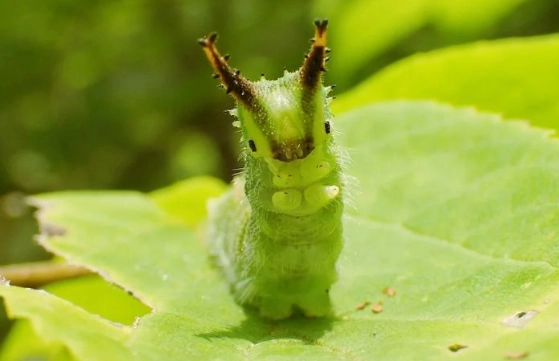
Meet the Japanese Emperor Caterpillar: More Than Just Fuzz
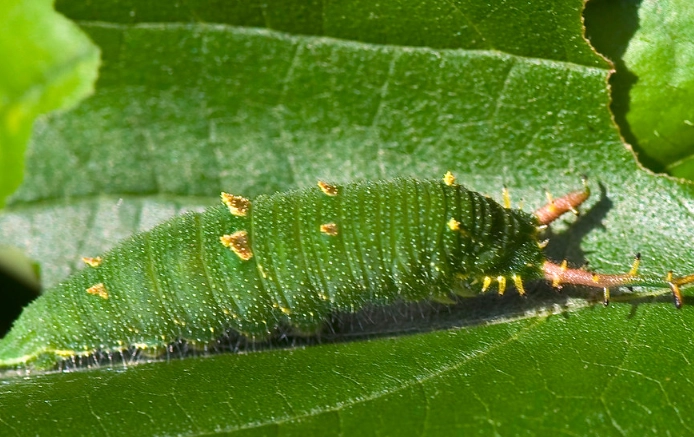
What Does It Look Like? Your Visual ID Guide
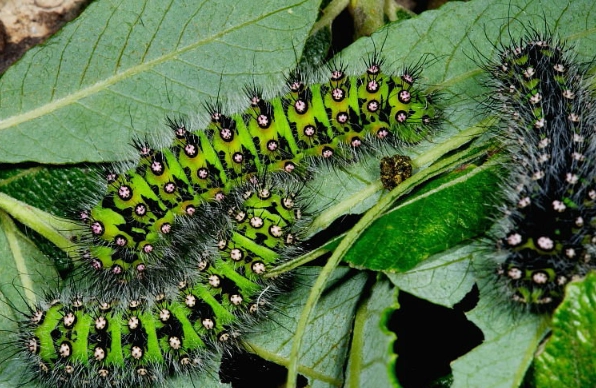
The Real Deal on the "Poisonous" Nature: Irritation vs. Toxicity
What Does a Reaction Look and Feel Like?
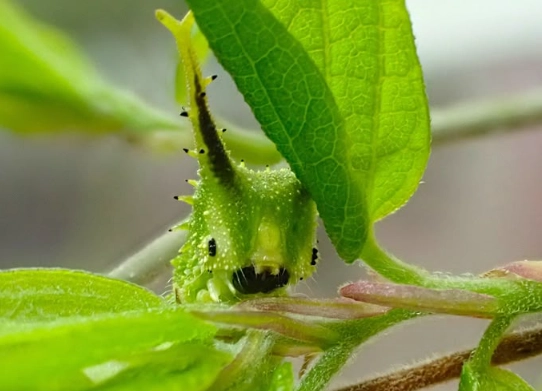
What About Pets? The Dog and Cat Question
First Aid: What to Do If You或 Your Pet Touches One
For Humans:
For Pets:
Comparing Caterpillar Risks: How Bad Is It Really?
Caterpillar Name
Typical Reaction Severity
Key Danger
Notes
Japanese Emperor Caterpillar (Saturnia japonica)
Mild to Moderate
Urticating spines causing rash & itching
Painful irritation, but usually not medically dangerous. A "look, don't touch" specimen.
Puss Caterpillar (Southern US)
Severe
Extremely painful sting, likened to a broken bone or severe burn.
One of the most venomous caterpillars in North America. Requires medical attention.
Saddleback Caterpillar
Moderate to Severe
Potent sting from spines on "horns" and body.
Causes immediate, sharp pain and swelling. Can trigger allergic reactions.
Gypsy Moth Caterpillar
Mild
Skin and respiratory irritation from hairs.
Hairs can become airborne, causing rash or breathing issues in sensitive individuals.
Monarch Butterfly Caterpillar
None (for touch)
Cardiac glycosides if ingested by predators.
Perfectly safe to handle. Its defense is being poisonous to eat, not to touch.
Safe Gardening and Coexistence: Keeping Your Space Safe
Your Questions, Answered (FAQ)
Your Questions, Answered (FAQ)
Can a Japanese Emperor caterpillar sting kill you?
What should I do if I accidentally squished one?
Are the moths poisonous or dangerous?
How can I tell this apart from other green, hairy caterpillars?
Is there an antivenom or specific treatment?
Wrapping It Up: Respect, Don't Fear
The short, upfront answer? It's complicated.
Important Distinction: "Venomous" means it actively injects toxins (like a wasp sting). "Poisonous" means you get sick from touching or eating it. "Urticating" means its hairs cause irritation on contact. For this caterpillar, "urticating" is the most accurate term for the risk it poses to touch.
Pro Tip: If you're trying to confirm an ID, a great resource is the Lepiforum or the database of the National Institute for Environmental Studies (Japan). These sites provide authoritative, scientifically verified images and data for insect identification, far better than random social media posts.
Severe Reactions Are Rare But Possible: While most encounters result in a local skin issue, individuals with severe insect allergies could potentially experience a more systemic reaction, like swelling beyond the contact site, dizziness, or difficulty breathing. This is extremely uncommon with caterpillar contact alone, but it's a reminder that everyone's biology is different. If you have known severe allergies, be extra cautious.
My Personal Go-To: I keep a small roll of duct tape in my garden first-aid kit specifically for this kind of thing. It's not just for fixing hoses! For pets, having your vet's emergency number saved in your phone is the real lifesaver.
The bottom line? Knowledge is your best defense.
Comment