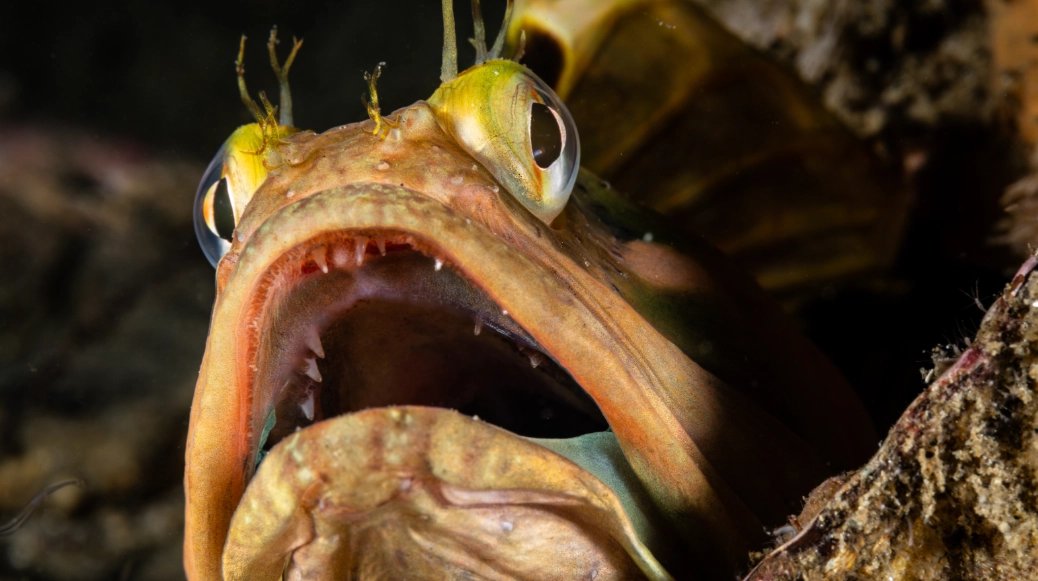
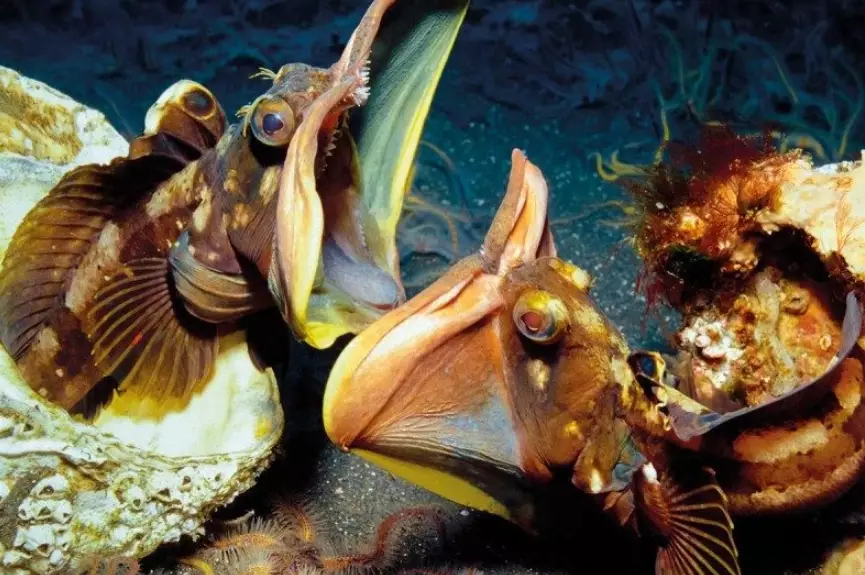
Let's cut to the chase. The Sarcastic fringehead (*Neoclinus blanchardi*) isn't just a fish with a funny name and a terrifying face. Its entire bizarre existence—from that cavernous, ribbon-fringed mouth to its notoriously aggressive personality—is a direct result of one thing: its diet. Most articles will tell you it's a "carnivore" and list a few prey items. That's like saying a Formula 1 car "has wheels." It misses the point entirely. Understanding what fuels this fish explains why it behaves the way it does, why it looks like a nightmare puppet, and why you'll almost never see one in a home aquarium, no matter how experienced you are. Its feeding strategy is a masterclass in low-energy, high-impact survival in the murky world off the Pacific coast.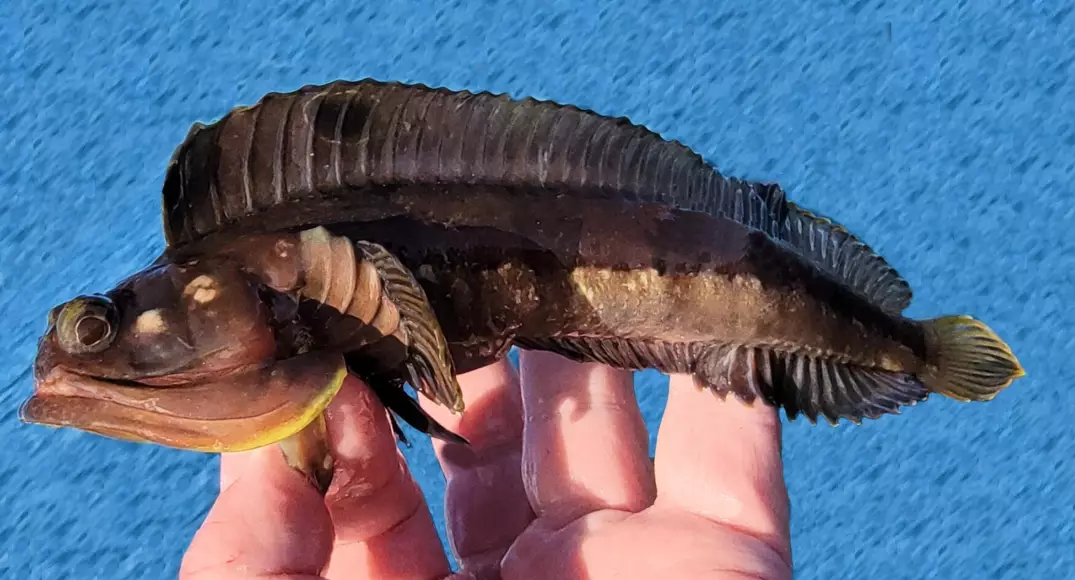
Dive Into This Guide
What Exactly Does a Sarcastic Fringehead Eat?
Think of the fringehead as the ultimate ambush predator of the rubble zone. It doesn't chase. It waits. Its menu is dictated by what's small, slow, or dumb enough to wander past its front door. Based on gut content studies and observations from researchers at institutions like the Monterey Bay Aquarium, their diet is a practical list of bottom-dwelling opportunists.
The primary staples are small crustaceans. We're talking about:
- Crabs (especially small porcelain crabs and hermit crabs): These are like slow-moving burgers drifting by. A fringehead's powerful jaws can make quick work of a small crab's shell.
- Shrimp and Mysids: The smaller, swarming crustaceans that drift in the currents near its burrow.
- Amphipods and Isopods: Tiny, abundant "sea bugs" that crawl around the sand and shell debris.
But it's not just crustaceans. Their diet expands to include:
- Small Fish: Juvenile rockfish, gobies, or other tiny fish that venture too close to the lair. This is where the lightning-fast strike is critical.
- Polychaete Worms: Worms wriggling in the sediment make for an easy, squishy meal.
- Mollusks: The occasional small clam or snail, though these are less common due to the extra work required.
The "Fringehead Grocery List" at a Glance
Here’s a quick breakdown of their typical prey, ranked by how commonly they appear in studies:
| Prey Type | Examples | Hunting Method | Frequency in Diet |
|---|---|---|---|
| Crustaceans | Small crabs, shrimp, amphipods | Ambush from burrow | High (Primary Food Source) |
| Small Fish | Gobies, juvenile rockfish | Lightning-fast strike | Medium (Opportunistic) |
| Worms | Polychaete worms | Grab from substrate | Medium |
| Other Invertebrates | Small mollusks | Opportunistic grab | Low |
A key point most sources miss is the size limitation. A fringehead's mouth is huge proportionally, but the actual fish is only about 6-10 inches long. It can't swallow anything wider than its head. So, while it looks like it could eat a puppy, its prey is almost always measured in inches, not feet.
How Do Sarcastic Fringeheads Hunt Their Prey?
This is where the magic happens. The fringehead's diet isn't about active foraging; it's about extreme energy conservation. They are the ultimate homebodies.
The Lair is Everything
A fringehead doesn't just find a hole. It claims a burrow—often an abandoned clam or worm tube, a crevice in a bottle, or a space under a rock—and defends it with psychotic fervor. This burrow is its entire world: home, fortress, and dining room. From here, it employs a two-phase feeding strategy.
Phase 1: The Passive Filter. It sits with its massive mouth open at the burrow entrance. Those fleshy "fringes" (cirri) around its jaws might help sense vibration or even lure curious prey. Small drifting organisms simply get sucked in with a gentle inflow of water. It's like setting up a net.
Phase 2: The Explosive Ambush. When something more substantial, like a small crab or fish, comes within range—we're talking a few inches—it unleashes its famous strike. The jaw extension is one of the fastest in the fish world. It's not just opening its mouth; it's unfolding a complex set of bones that literally launches its jaws forward to engulf the prey. The attack is over in milliseconds. After capture, it retreats instantly back into its burrow to swallow.
A Real-World Scenario: The Crab Mistake
Imagine a small porcelain crab, maybe an inch wide, scuttling across the sandy bottom near a piece of rubble. It's looking for detritus. It feels a slight current coming from a dark hole—the fringehead's burrow. The crab, unaware, moves closer to investigate. In a blur of motion and expanding flesh, the dark hole becomes a gaping maw that envelops it. The crab is gone. The hole is just a hole again. The entire interaction took less than a second, and the fringehead never left its home.
This method is brutally efficient. It minimizes exposure to predators (like larger fish, octopuses, or harbor seals) and maximizes the chance of catching something with minimal effort. Every calorie saved is a win in the cold Pacific.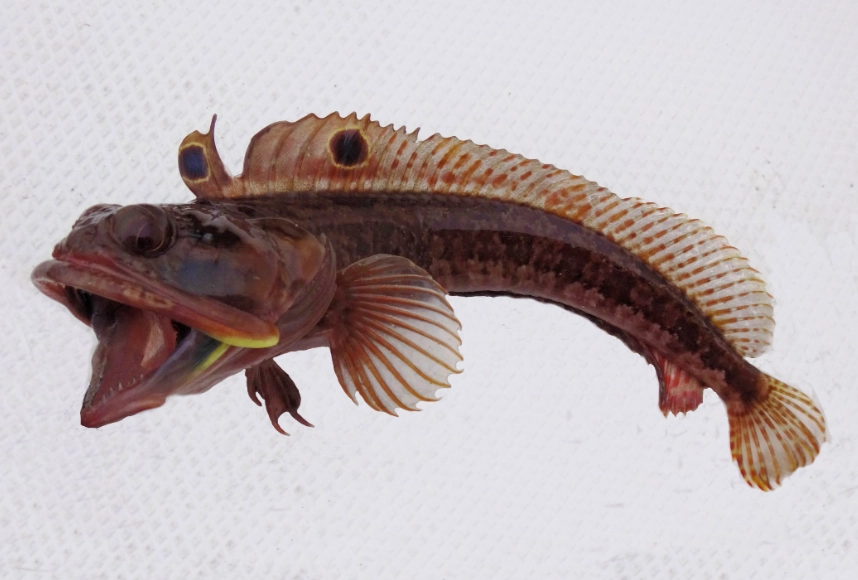
How Its Diet Shapes Its Bizarre Behavior
You can't separate the fringehead's diet from its personality. Its infamous aggression is directly tied to food security.
That burrow isn't just a hunting blind; it's a strategic food patch. Currents bring nutrients and small organisms past it. Abandoning it means starting from scratch, finding a new territory, and possibly going hungry. When another fringehead or a trespassing fish like a blenny approaches, the resident isn't just defending a home—it's defending its sole source of sustenance. The dramatic, mouth-gaping displays are a warning: "This productive feeding station is mine. Back off, or I will literally bite your face off."
The diet also explains their terrible suitability as pets. In an aquarium, even a large one, you can't replicate the constant, natural drift of live prey past a fixed point. You'd have to target-feed it directly, which removes the need for its ambush anatomy. More critically, without a territory to defend, a key part of its behavioral drive is unfulfilled. It often leads to chronic stress or aggression directed at tankmates. Most attempts end poorly, which is why reputable sources like the California Department of Fish and Wildlife don't regulate them for aquarium trade—they're considered a "look, don't touch" species.
Common Misconceptions About Their Feeding
Let's clear up some frequent errors I've seen even in otherwise decent articles.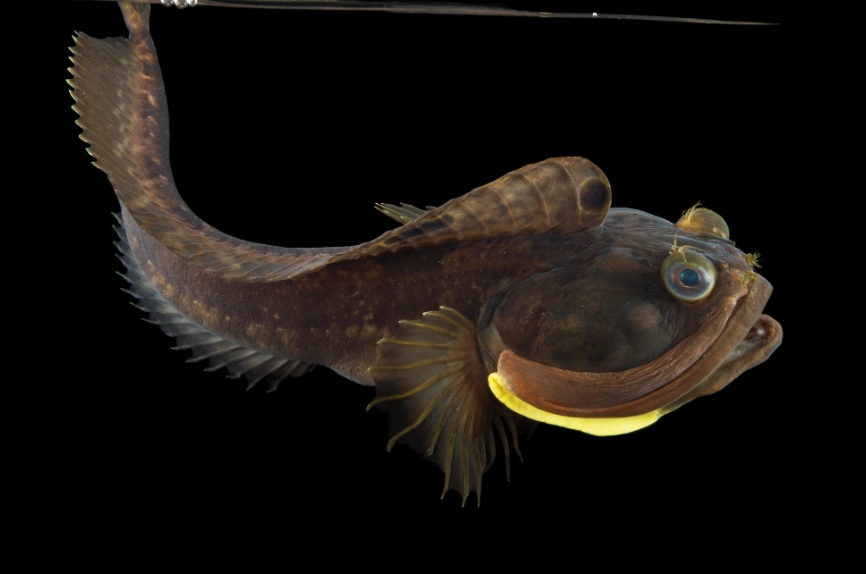
Misconception 1: They are active hunters that roam the seafloor. Absolutely false. Roaming wastes energy and exposes them. They are sedentary ambush specialists. If you see video of one "swimming," it's almost always a male briefly leaving its burrow to chase off a rival or a fish that has been forcibly evicted.
Misconception 2: They can eat prey nearly their own body size. This is an exaggeration born from seeing their gape. While the strike is for large prey relative to their head, physics and gut capacity limit them. A 10-inch fringehead isn't swallowing a 7-inch fish. It's targeting prey 1-3 inches in length.
Misconception 3: Their main weapon is their bite force. It's not about brute crushing power like an eel. It's about speed and engulfment. The strike is so fast and the mouth cavity so large that prey is sucked in before it can react. The teeth are small and needle-like, perfect for holding slippery prey, not crushing shells. For hard-shelled crabs, they likely use a combination of suction and a few strategic bites to disable them.
Your Fringehead Diet Questions Answered
I keep a coldwater marine tank. Can I sustain a Sarcastic fringehead's diet with frozen food?
Technically, you could get it to eat thawed shrimp or krill if you wiggle it right in front of its burrow with tongs. But you're missing the point. You'd be circumventing its entire evolved feeding behavior. The act of waiting, sensing, and explosively striking is a core part of its mental stimulation. Removing that can lead to a lethargic, stressed animal. It's not just about nutrition; it's about behavioral fulfillment. Most experts would strongly advise against it for this reason alone.
Are Sarcastic fringeheads a threat to divers or swimmers?
Zero threat. Their world is measured in inches from their burrow. They have no interest in, or capability to, attack a human. The only way you'd ever get bitten is if you deliberately put your finger right at the entrance of its burrow and wiggle it. Even then, the worst you'd get is a minor pinch. Their dramatic display is purely for intruders their own size.
 How does the diet of a male and female fringehead differ?
There's no evidence the diet itself differs. However, the priority does. A male guarding a burrow with eggs (yes, males are the dedicated parents) is under even more pressure. He cannot leave to find a new home if food runs low. This makes him exponentially more aggressive in defending his territory. His survival and the survival of his offspring depend on that specific spot remaining a reliable food source. A female, after laying eggs, can move on, so her attachment to a single burrow might be slightly less intense, though still strong.
What's the biggest predator on a Sarcastic fringehead?
Their sedentary nature makes them vulnerable to predators that can extract them. Octopuses are a prime candidate—an intelligent, flexible hunter perfectly suited to reaching into burrows. Larger fish like cabezon or kelp greenling might also prey on them if they can catch them out in the open, which is rare. Their best defense is staying deep in their hole, which is why their defensive display is so focused on keeping threats at the entrance.
If they're so territorial, how do they find mates without getting eaten?
The courtship is a delicate, cautious dance. A receptive female will slowly approach a male's burrow. The male will display, but it's less violently aggressive than towards a rival male. He'll flare, but may also perform quicker, shimmying movements. If she's interested, she'll enter the burrow, lay her eggs, and then leave. He then fertilizes and guards them. The entire process is risky, which is why it's brief and why the male's parental investment is so high—it's his only shot.
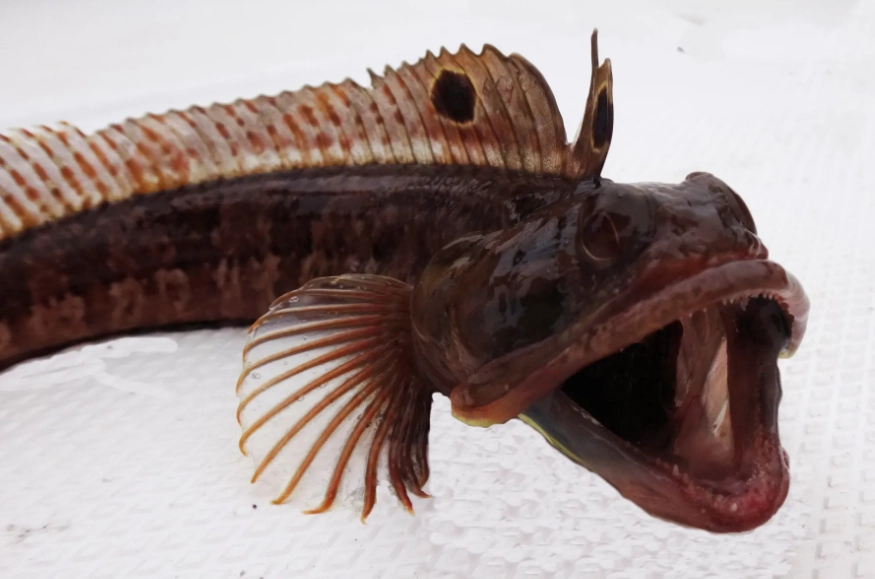 So, the next time you see that viral video of a fringehead flaring its colossal mouth, remember: you're not just looking at a weird face. You're looking at a highly specialized feeding apparatus, honed by evolution to exploit a very specific niche. Its diet of small, passing crustaceans and fish dictates its sedentary life, its explosive temperament, and its unforgettable appearance. It's a perfect example of how in nature, you are what you eat—and where you eat it.


Comments
Leave a Comment