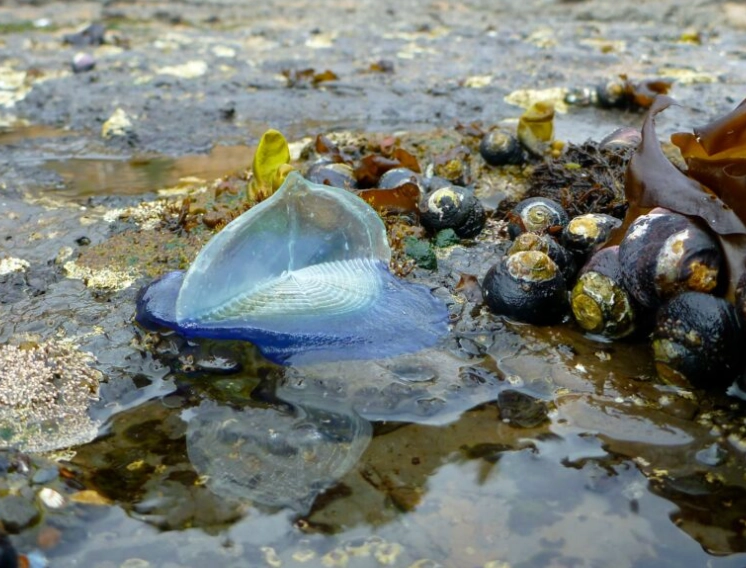
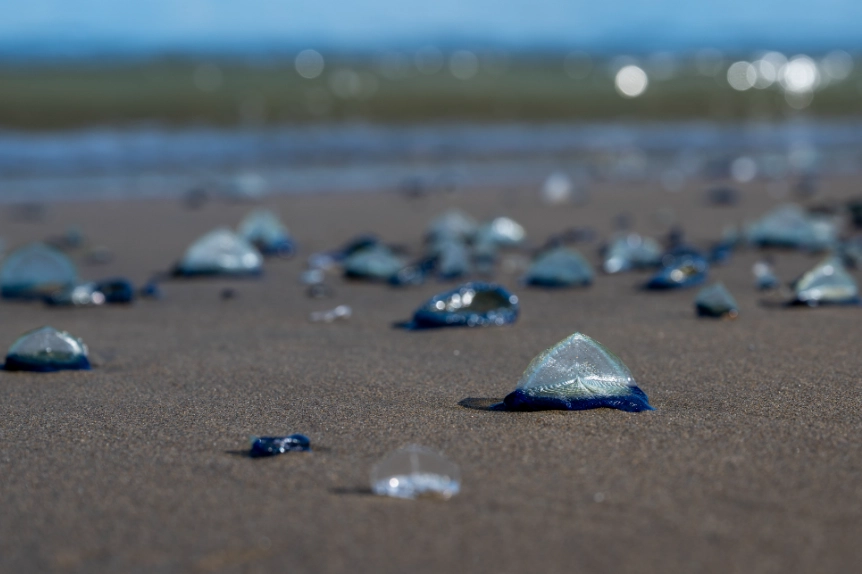
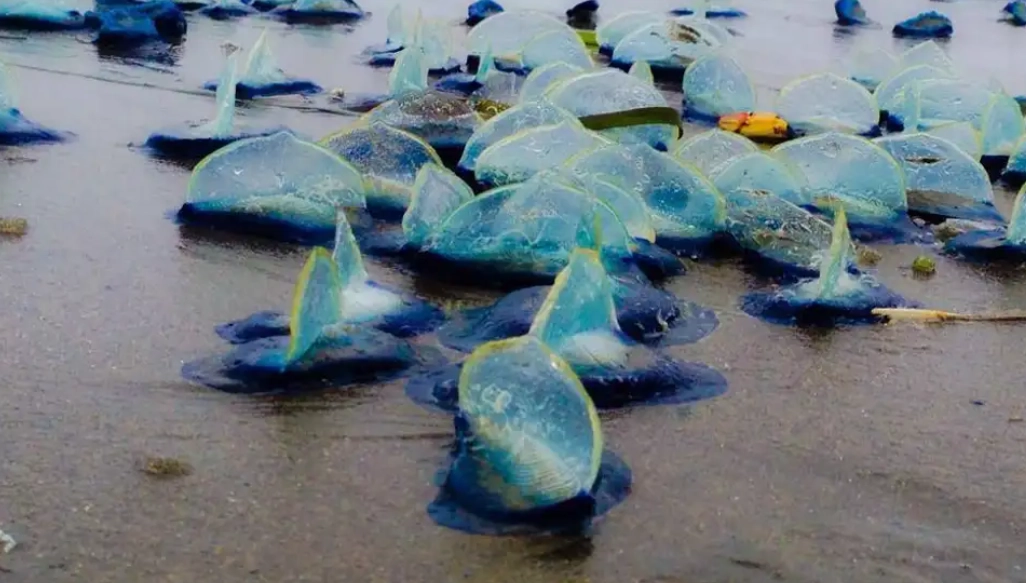
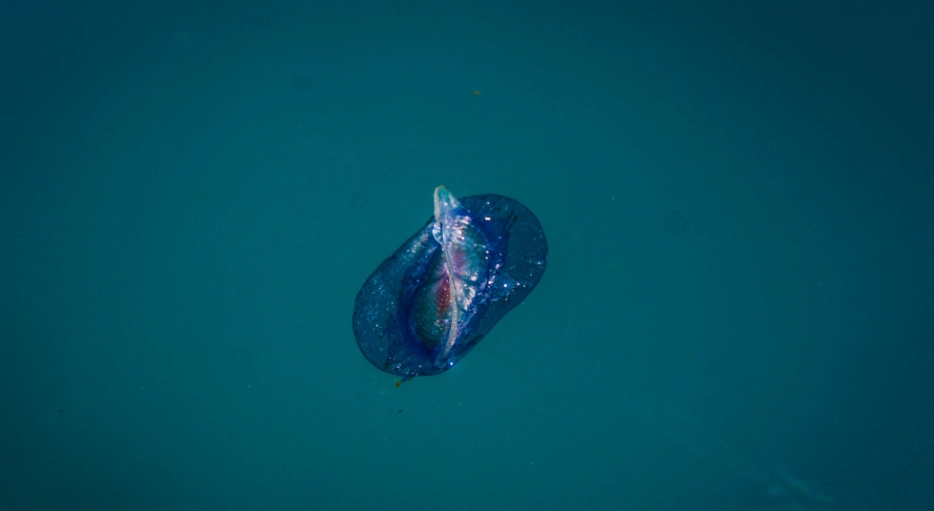
You're walking along a beach, maybe in California, Oregon, or even the UK, and you see the sand littered with thousands of shimmering, blue, coin-sized creatures. They look delicate, almost like plastic. The first thought that pops into your head is, "Wow, a jellyfish bloom." But is that accurate? Is Velella velella a jellyfish? The short, and perhaps surprising, answer is no. Not in the way we commonly understand the term. It's a classic case of mistaken identity in the marine world, and unpacking why reveals a much more fascinating story about life in the open ocean. I've been fascinated by these strandings for years. I remember one spring on a remote Oregon beach, the wrack line was a solid band of electric blue for miles. Everyone around me called them jellyfish. Even some news reports did. But as a marine life enthusiast, that label always felt a bit off. It's like calling a dolphin a fish—technically in the same neighborhood, but missing the crucial details that make it unique. Let's clear up the confusion. So, if it's not a jellyfish, what is it? Velella velella, commonly known as the "by-the-wind sailor," is a free-floating hydrozoan. Let's break that down. It belongs to the Phylum Cnidaria, which is a huge group that includes true jellyfish (like moon jellies), corals, and sea anemones. So, it's a distant cousin. More specifically, it's in the Order Anthoathecata, within the class Hydrozoa. Here's the crucial part that most summaries gloss over: Velella is not a single animal. It's a colony. What you see washed up is a complex, cooperative structure made up of thousands of tiny, genetically identical individual polyps, each with a specialized job. Some form the chitinous, blue float (the pneumatophore). Others are dedicated to catching food (the dangling tentacles). Others handle reproduction. They can't survive independently. This colonial nature is a fundamental departure from the body plan of a true jellyfish, which is a single, integrated organism (a medusa). The name "Velella" comes from the Latin word for "small sail," which is perfect. "By-the-wind sailor" is its wonderfully descriptive common name, referring to its stiff, upright sail that catches the wind. You might also hear it called a "sea raft" or "little sail." The mix-up is totally understandable. From a beachcomber's perspective, the similarities are obvious: This is where a little taxonomy knowledge saves the day. It's like seeing a whale and a shark. Both are large, live in the ocean, and have fins. But one is a mammal, the other a fish. The surface resemblance masks a deep biological divide. For Velella and jellyfish, that divide is their fundamental structure and life history. This table lays out the clear, practical distinctions. It's the kind of quick reference I wish I had when I first started identifying beach finds. See the sail? That's your instant giveaway. No true jellyfish has a structured sail like that. The blue color of the float is another strong hint, though not exclusive. This is where Velella gets really cool. Its lifecycle is a masterclass in ocean survival. The colony you find on the beach is just one part of the story. The sail isn't just for show; it's a matter of population distribution. Research, like that from institutions such as the Monterey Bay Aquarium Research Institute (MBARI), has shown something fascinating: the sail is set at either a right-hand or left-hand angle. Why does this matter? Winds in the Northern Hemisphere tend to spiral clockwise, pushing right-sailed Velella offshore and left-sailed ones toward the coast. In the Southern Hemisphere, it's the opposite. This is a genetic polymorphism that ensures some colonies are always blown out to sea (surviving) while others are blown ashore (dying but potentially colonizing new areas). It's a brutal but effective strategy. A single Velella colony is a mini-habitat. You'll often find tiny crustaceans, like the Velella sea slug (Glaucus atlanticus), or juvenile crabs hitching a ride on the underside. It provides food and transportation. When millions of them congregate, they become a significant food source for open-ocean predators like the gorgeous ocean sunfish (Mola mola) and some sea turtles. Mass strandings aren't random. They follow a seasonal pattern, often in spring and early summer. Winds shift, strong onshore breezes develop, and entire armadas of Velella are herded toward the coastline. The National Oceanic and Atmospheric Administration (NOAA) often documents these events as part of oceanographic monitoring. The smell after a few days? That's the downside. As they decompose, they can create a distinct odor, but it's a natural part of the nutrient cycle, returning organic matter to the beach ecosystem. So you're faced with a beach of blue. Here's a practical, step-by-step guide based on experience. First, observe safely. It's perfectly fine to look closely, even to gently pick one up. Their sting is negligible for almost everyone. I've handled hundreds with bare hands and never had an issue beyond a faint, fleeting itch if I rubbed my eyes afterward (don't do that). Rinse your hands with seawater afterward as a precaution. Second, photograph, don't collect. They are breathtakingly beautiful when fresh—a deep cobalt blue with a translucent sail. But they deteriorate rapidly. A jar of rotting Velella is a science experiment you'll regret. Take pictures instead. Note the sail angle if you can. Third, report it if it's significant. Local marine science centers, aquariums, or citizen science apps like iNaturalist love records of these events. Your observation helps track ocean currents and climate patterns. Finally, just appreciate it. You're witnessing a remarkable oceanic phenomenon. It's not pollution or an alien invasion. It's the result of winds and currents delivering a piece of the high seas to your feet. Can Velella velella sting you like a jellyfish? The risk is incredibly low. Their nematocysts are designed to immobilize microscopic plankton. For humans, the worst you might experience is a very slight prickling or itching sensation on sensitive skin, like the inside of your wrist. It's orders of magnitude less potent than even a mild true jellyfish sting. I advise people to simply avoid touching their face after handling any marine creature and rinse with seawater. Why do I only see Velella on the beach sometimes, not every year? Their appearance is tightly linked to specific oceanographic conditions. A warm-water eddy spinning close to shore, a sustained period of particular wind direction—these factors congregate and then strand the colonies. Some years these conditions align perfectly; other years they don't. It's a reminder of how dynamic the ocean surface is. The size of the bloom also depends on successful reproduction in the open ocean the previous season. Not necessarily by itself. Historical records show these events have happened for centuries. They are a natural population control mechanism. However, some scientists are investigating whether the frequency or scale of blooms is changing due to warmer ocean temperatures affecting prey availability or wind patterns. One or two big strandings aren't proof, but long-term data collected by citizens and scientists can help answer that. What's the best way to explain the difference between Velella and a jellyfish to a child? I use this analogy: A true jellyfish is like a single person in a boat, rowing. Velella is like a big, flat raft with lots of people stuck together, each doing a different job (one steering, one fishing, one cooking), and they have a big sail but no oars—they just go where the wind blows. The raft (Velella) and the rowboat (jellyfish) are both on the water, but they work very differently. If Velella isn't a true jellyfish, what's the closest thing that actually is? Within its own hydrozoan group, the closest relative that looks more like a conventional jellyfish is the Portuguese man o' war (Physalia physalis). It's also a colonial hydrozoan with a float and tentacles, but its sting is notoriously powerful and dangerous. Both are colonies, not single animals, which is the key shared trait that separates them from "true" jellyfish like moon jellies or sea nettles.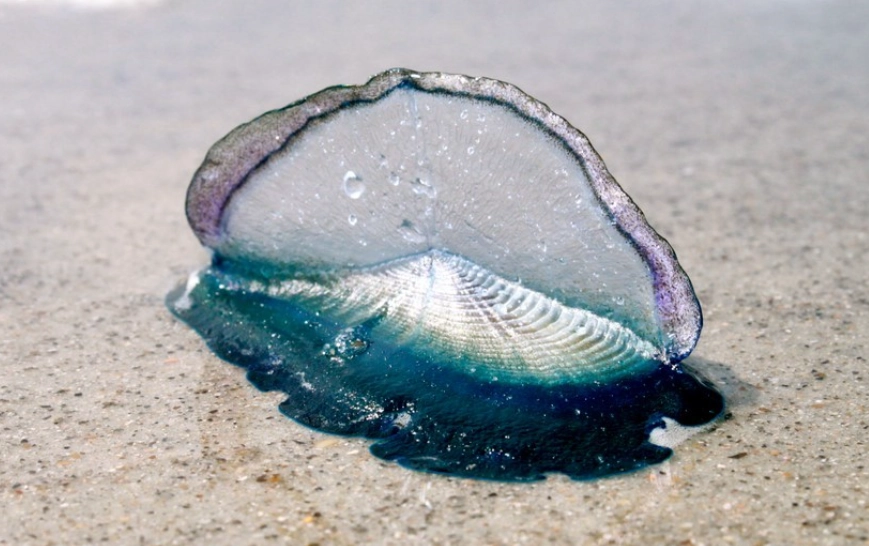
What You'll Discover
What Exactly Is Velella Velella?
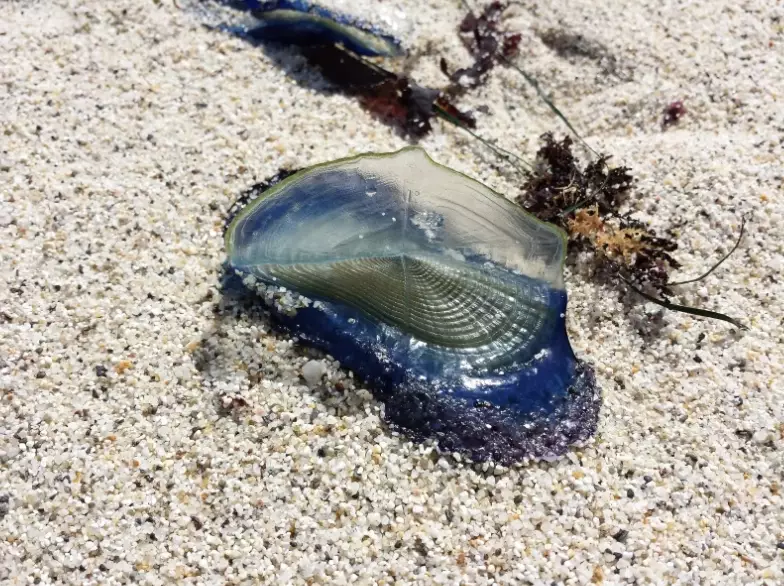
A Quick Naming Note
Why the Jellyfish Confusion Happens
Key Differences: Velella vs. True Jellyfish
Feature
Velella Velella (By-the-Wind Sailor)
True Jellyfish (e.g., Moon Jelly, Lion's Mane)
Biological Form
Colonial hydrozoan. A colony of specialized polyps.
Single medusa. One integrated organism.
Structure
Has a rigid, oval, bright blue chitinous float and a stiff, diagonal sail.
Body is a soft, pulsating bell (medusa) made of mesoglea, with no hard float or sail.
Locomotion
Passive sailor. Cannot swim. Relies entirely on wind pushing its sail and currents.
Active swimmer. Most can pulse their bell to move vertically and, to some degree, horizontally.
Life Cycle Stage
What we see is the asexual, polyp-dominated stage. It's like a floating coral colony.
What we see is the sexual, medusa stage. They have a separate, bottom-dwelling polyp stage.
Sting Potency
Extremely mild. Stinging cells are for capturing tiny plankton and are generally harmless to humans. (Some with very sensitive skin may feel a slight tingle).
Varies widely. From harmless (Moon Jelly) to extremely painful and dangerous (Box Jellyfish).
Typical Size
Small. Usually 3-8 cm (1-3 inches) long.
Can range from tiny (1 cm) to enormous (Lion's Mane tentacles over 30 meters long).
The Unique Lifecycle and Ecology of the By-the-Wind Sailor
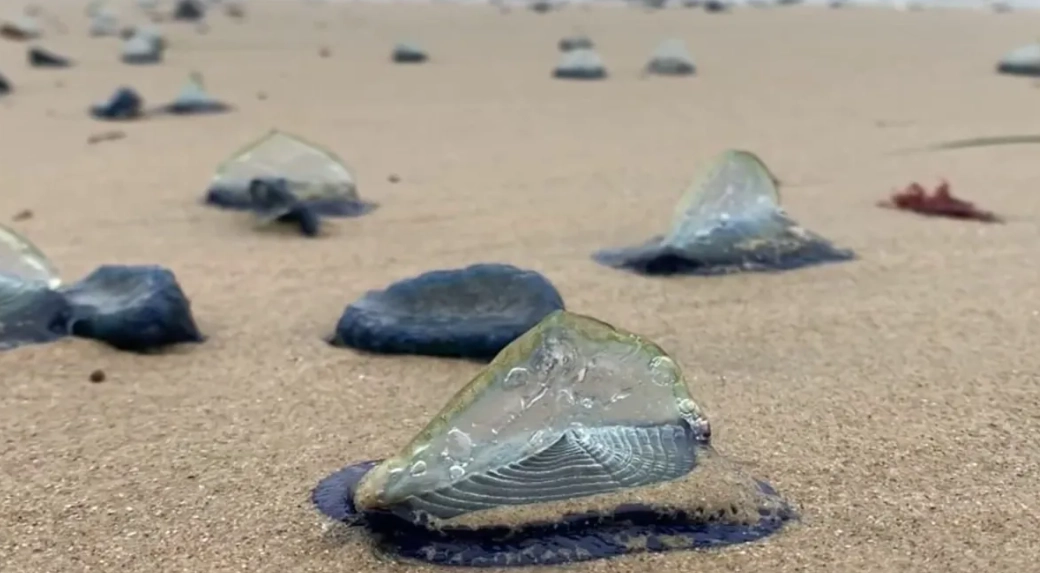
The Sail and a Genetic Lottery
A Floating Ecosystem
The Bloom and Bust Cycle
What to Do If You Find Velella on the Beach
Your Velella Velella Questions Answered
 Is a massive Velella stranding a sign of climate change or ocean problems?
 Wrapping up, the next time you see that flash of blue on the sand, you'll know you've found a by-the-wind sailor, a wondrous colonial drifter that shares only a superficial resemblance with its jellyfish cousins. It's a testament to the incredible diversity of life in the Cnidarian family. Understanding this distinction isn't just pedantic biology—it deepens our appreciation for the complex, interconnected, and often surprising strategies life uses to survive in the vast open ocean.
Velella Velella: Is It Truly a Jellyfish?
Comment