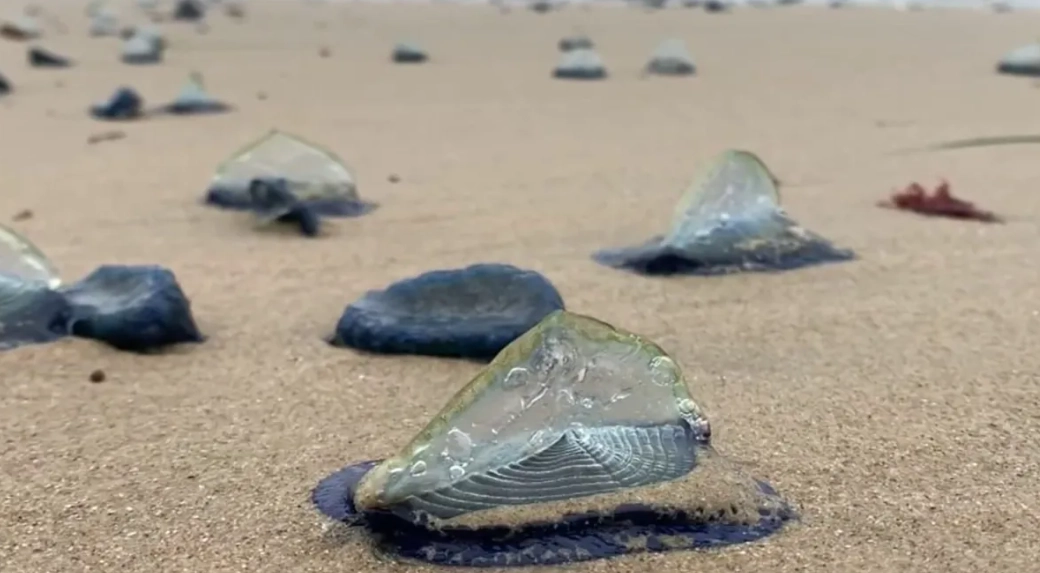
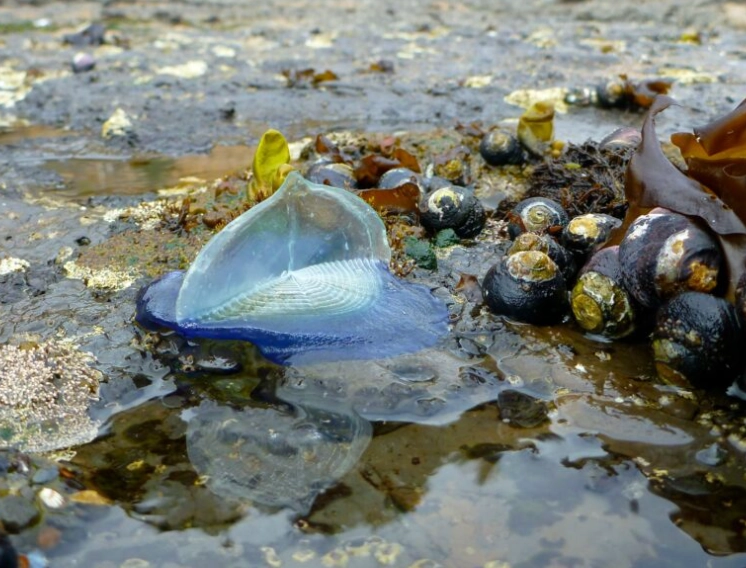
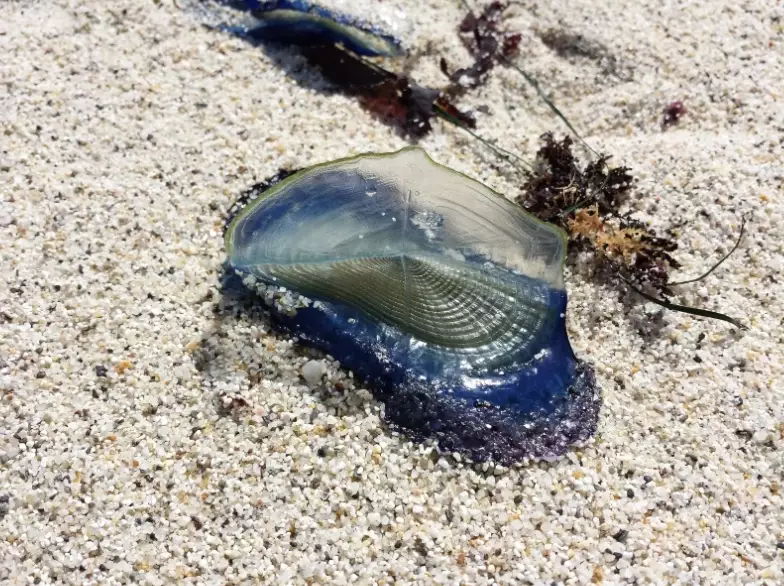
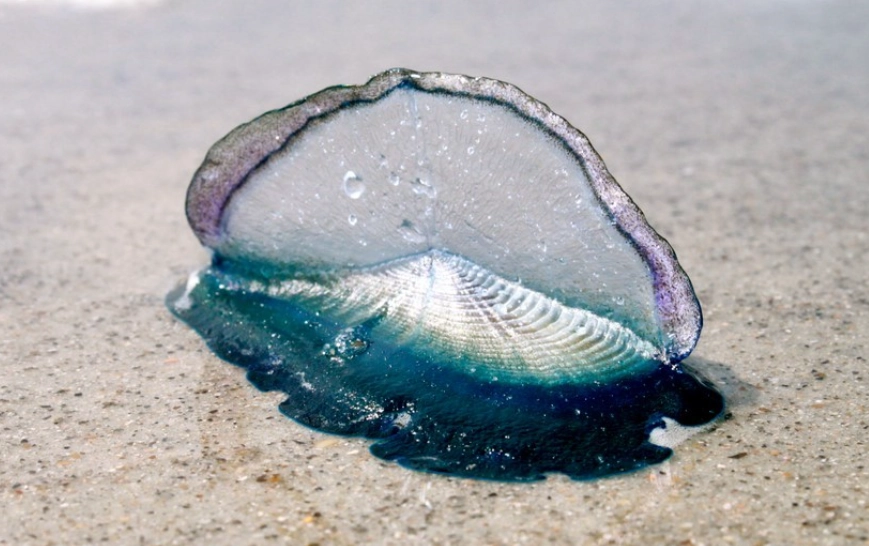
You're walking along the beach after a storm, and the shoreline is painted a surreal, shimmering blue. Thousands of tiny, sail-equipped creatures are strewn across the sand. Your first thought might be, "Jellyfish!" and a follow-up panic: can Velella velella sting you? The short, direct answer is no, they cannot sting humans in any meaningful way. But that's just the headline. The full story of these "by-the-wind sailors" is a fascinating lesson in mistaken identity, marine biology, and why you should still be cautious around other blue blobs on the beach. Let's clear up the biggest confusion right away. Velella velella is not a jellyfish. It looks like one, acts like one (floating on the surface), but it's something else entirely. They're hydrozoans, related to jellyfish, corals, and the infamous Portuguese man o' war. But their family tree is complex. Think of them as distant cousins with a very different lifestyle. Each little blue disc you see is a colony of thousands of individual polyps working together. The blue color comes from their chitinous float. The most charming feature is their tiny, stiff sail set diagonally across the top. This sail catches the wind, sending them sailing across the open ocean—hence the common name "by-the-wind sailor." They have no means of active propulsion. They're entirely at the mercy of winds and currents, which is why they wash ashore in massive numbers when conditions align. I remember a huge stranding on a Northern California beach. From a distance, it looked like a layer of blue plastic confetti. Up close, the intricate structure was beautiful. People were giving them a wide berth, and I don't blame them. They look dangerous. But understanding what they are changes everything. Key Takeaway: Velella velella are colonial hydrozoans, not true jellyfish. They are passive drifters with a characteristic sail, and their stunning blue color is a natural part of their float, not a warning sign. This is the core of the matter. Can they sting? Technically, yes, but practically, no. Here's the nuance most articles miss. Velella possess stinging cells called nematocysts, similar to their jellyfish relatives. These cells are used to capture their microscopic prey—tiny plankton and fish larvae. However, the nematocysts of Velella are extremely small and weak compared to those of a true stinging jellyfish. Their venom is adapted for prey about the size of a dust speck, not human skin. Marine biologists and seasoned beachcombers often handle Velella with bare hands. I've done it myself. For most people, you will feel absolutely nothing. At most, if you have very sensitive skin or press the tentacles (the stringy parts hanging underneath) into a thin, delicate area like your wrist or between your fingers, you might feel a faint, fleeting prickling sensation. It's less than a mosquito bite and vanishes in seconds. No rash, no welts, no lasting pain. The real risk isn't from the sting. It's from the defensive slime. When stressed or dying, Velella can release a mild mucous. If you get this on your hands and then rub your eyes, it can cause irritation. It's a mild irritant, not venom. The lesson here is simple: wash your hands with seawater after touching any marine life, Velella included. This is the critical information that can prevent a painful mistake. The Portuguese man o' war (Physalia physalis) is the Velella's infamous cousin, and it is extremely dangerous. It delivers a painful, potentially life-threatening sting. From a distance, or to an untrained eye, they can be confused. Both are blue, float on the surface, and wash ashore. This confusion is the root of much of the fear around Velella. You need to know how to tell them apart instantly. It's a basic but vital beach safety skill. If you see something large, with long separate tentacles and a big gas bladder—do not touch it. Assume it's a man o' war and give it a very wide berth, even on sand, as detached tentacles can still sting. Authorities like the National Oceanic and Atmospheric Administration (NOAA) consistently warn about this hazard. Rule of Thumb: If it's small (credit-card sized), flat, and has a crisp little sail, it's a harmless Velella. If it's bigger than your hand, has a bulbous float, and/or long trailing threads, it's a dangerous Portuguese man o' war. When in doubt, always assume it's dangerous. So you're faced with a beach full of blue sailors. What should you actually do? Here's a step-by-step guide based on real-world experience, not textbook theory. First, Identify. Use the table above. Spend 10 seconds confirming you're looking at Velella. Look for the small size and the stiff sail. No long tentacles? Good. Handling. It's generally safe to pick one up gently from its hard, blue float (the disc). Avoid grabbing the delicate, fringe-like tentacles underneath. Even though the sting is negligible, it's just good practice. If you have sensitive skin, eczema, or known allergies to marine life, maybe just look—don't touch. For Kids and Pets. This is a common worry. A child grabbing a Velella is at minimal physical risk. The bigger issue is them then rubbing their eyes with slimy hands. Supervise, let them look, and make hand-washing the non-negotiable next step. For dogs, the risk is similarly low, but some dogs might have a sensitive mouth or stomach. It's best to keep pets from eating them, as with any unknown beach debris. The Smell. Nobody talks about this enough. A fresh stranding is odorless. But after a day or two in the sun, thousands of decaying Velella will produce a strong, fishy, ammonia-like smell. It's unpleasant but not toxic. If you're visiting a beach known for strandings, a quick check of local conditions or beach reports can save your picnic. Photography Tip: They photograph beautifully. Get down low for a macro shot of the sail structure. The contrast against the sand is stunning. Just rinse your camera or phone if you get splashed. Walking through a Velella stranding is a unique marine experience. That electric blue carpet is a direct window to the open ocean. Now you can appreciate it without an ounce of fear. You know they're fascinating, complex, and essentially harmless neighbors from the deep. You can confidently identify them, teach others, and steer clear of their truly dangerous lookalike. The ocean is full of wonders, and Velella velella is one of the most beautiful and misunderstood.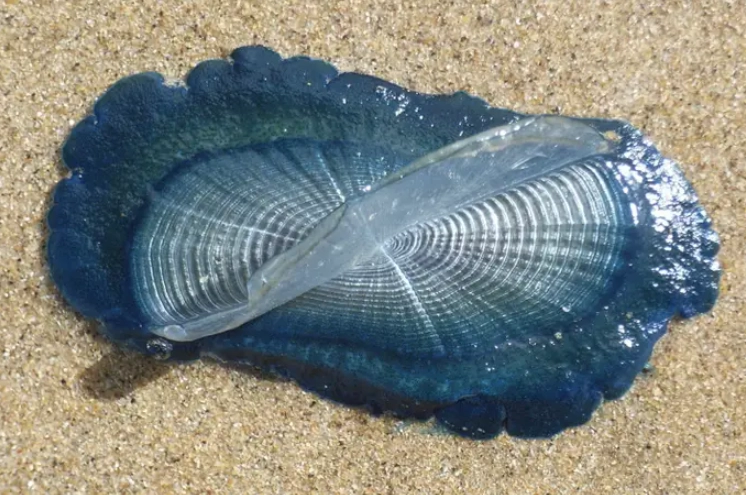
What You'll Discover
What Exactly Is a Velella Velella?
The Sting Mechanism: Why Velella Are Mostly Harmless to Humans
The "Glove Test" Reality
The Dangerous Lookalike: Portuguese Man o' War
Feature
Velella Velella (By-the-Wind Sailor)
Portuguese Man o' War
Size
Small. Usually 3-7 cm (1-3 inches) across.
Large. The float alone can be 30 cm (1 foot) long, with tentacles extending meters.
Shape
Flat, oval, or circular disc. Thin and chitinous.
Large, gas-filled, elongated bladder that looks like a deflated balloon or a blue sausage.
Color
Deep, opaque blue with a clear, stiff sail.
Translucent blue, pink, or purple float, often with a iridescent sheen.
Sail/Flag
A flat, triangular, chitinous sail set diagonally.
No stiff sail. It may have a crested "sail" on top of the bladder, but it's soft and flexible.
Tentacles
Short, fine, fringe-like tentacles hanging a few cm underneath.
Long, separate, rope-like stinging tentacles that can trail 10 meters (30+ feet) behind.
Human Impact
Essentially harmless. No medical threat.
Severe, painful sting. Can cause welts, fever, shock, and rarely, death. Requires medical attention.
Your Practical Beach Encounter Guide
Expert Answers to Your Burning Questions
 Can you get stung by a dead Velella velella?
If Velella can't really sting, why does my skin itch after I touched one on the beach?
That's likely one of two things. First, it could be a mild reaction to the defensive mucous, not the venom. It's a physical irritant, especially if your skin was already dry or sun-exposed. Second, and more commonly, it's psychosomatic. The power of suggestion is strong—you see a blue "jellyfish," your brain expects a sting, and you feel one. Try handling one with the knowledge it's harmless, and the sensation often disappears.
My dog just ate a Velella on the beach. Should I rush to the vet?
Probably not. Monitor your dog. The main concern is gastrointestinal upset from eating a foreign object, not poisoning. The nematocysts are unlikely to survive the digestive process. Look for signs of vomiting, diarrhea, or lethargy. If any of those appear, or if your dog ate a large number of them, a call to your vet for advice is wise. The bigger threat on beaches is dead fish, garbage, or the dreaded man o' war.
The stinging cells (nematocysts) can remain active for some time after death, especially if the creature is still moist. However, given their weakness, even a "live" sting is barely noticeable. A dried-out, crispy Velella on the upper beach poses no stinging risk at all. The slime factor is also gone. The real danger, again, is confusing a dead Portuguese man o' war for a dead Velella. Its tentacles can retain potency for days.
Why are there suddenly so many Velella on my local beach this year?
Mass strandings are linked to wind and current patterns. Strong, persistent onshore winds (like those from spring storms) can push entire floating armadas onto the beach. Some years see huge blooms, others almost none. It's a natural population fluctuation. Researchers, such as those at the Monterey Bay Aquarium Research Institute (MBARI), study these events as indicators of oceanographic conditions. A big stranding isn't a sign of ecosystem collapse; it's often a sign of a productive ocean.
Is it true the sail direction determines which beach they strand on?
This is a brilliant piece of natural history. Individual Velella have sails set either left-handed or right-handed (like a sailboat tacking port or starboard). Populations in different ocean basins have evolved a predominance of one type. This ensures that when prevailing winds blow, some of the colony will be blown away from shore, while others are blown toward it. It's a survival strategy to ensure the species isn't completely wiped out by a single wind event. On your beach, you'll likely see mostly one orientation.
Comment