When you hear "big fish with big teeth," a great white shark probably flashes in your mind. That's fair. But the ocean's menu of large, toothy predators is far more diverse and fascinating. We're talking about the ultimate survival machines, where teeth aren't just for eating—they're specialized tools for grabbing, slicing, crushing, or holding. I've spent years diving with these animals, from the reefs of the Pacific to the cold currents off South Africa, and the biggest lesson is this: fear often comes from misunderstanding. Let's strip away the Hollywood myth and look at what these big-toothed fish really are, how they live, and how you can safely witness their power. Forget the single image of a razor-sharp triangle. Predatory fish dentition is a masterclass in evolutionary adaptation. Here’s a breakdown of the main players, beyond the usual shark suspect. Look at that table. A grouper's teeth are nothing like a barracuda's. The payara's fangs are in a league of their own. This specialization is key. A common mistake new divers make is assuming all big teeth mean the same level of threat. A moray eel's teeth are perfect for its reef-hole ambush strategy, but it's not built for chasing you down. Its bite is a defensive reaction, not a predatory one on humans. I remember a dive in the Red Sea where a large great barracuda followed our group. Its sheer presence, that unblinking stare and those unmistakable teeth, set everyone on edge. But it was just curious, maybe hoping our movement would stir up prey. It never made an aggressive move. Understanding intent changes everything. You want to see these animals in the wild. Smart. It's an unparalleled experience. But doing it safely is non-negotiable, for you and for the animal. This isn't about fear; it's about respect and protocol. Not all dive sites are equal for predator viewing. You need locations with reliable encounters and, crucially, operators with a conservation ethic. Top Locations for Responsible Viewing: Mossel Bay, South Africa: For great white shark cage diving. Research operators who use baiting (chumming) minimally and prioritize education. The season is best from April to September. Beqa Lagoon, Fiji: Famous for bull shark dives. The operators here have perfected a controlled, bait-supplemented dive that draws in dozens of sharks. It's intense but highly regulated. Look for a shop affiliated with the Shark Trust or similar NGOs. Maldivian Channels: During the monsoon currents, channels like Fotteyo Kandu become highways for grey reef sharks, white tips, and the occasional tiger shark. A liveaboard trip is your best bet here. Cocos Island, Costa Rica: Remote and pristine. Huge schools of scalloped hammerheads and large silky sharks. This is advanced diving due to currents and depth, but the spectacle is unmatched. You'll need a liveaboard from the mainland. Always ask your dive operator specific questions: What is your code of conduct around animals? Do you enforce no-touch, no-chase rules? How do you handle a client who doesn't listen? Their answers tell you everything. This is the part most blogs gloss over. It's not just "don't touch." It's about your entire demeanor. Predators read body language. Erratic, fast movements can trigger a curiosity or a defensive response. Keep your limbs close. Move slowly and deliberately. Maintain neutral buoyancy—kicking the coral or stirring up sand stresses the ecosystem and makes you look clumsy. If you're face-to-face with a large shark or a curious barracuda, maintain eye contact. It sounds counterintuitive, but in the animal kingdom, this often signals that you see them and are not easy prey. Do not turn and swim away frantically. Back away slowly if you need to create space. Photographers, listen up. I've seen more dangerous situations created by someone backing up through a group to get the perfect shot than by any shark. Know your surroundings. Your camera is not a shield. Let's bust some myths that even experienced ocean lovers sometimes get wrong. Misconception 1: Bigger teeth always mean more dangerous to humans. False. The Goliath grouper has a mouth big enough to swallow you, but its teeth and feeding mechanics make that virtually impossible. Its threat is negligible unless you're a crab. Conversely, a bull shark has relatively smaller teeth than a great white, but its aggressive temperament in brackish water makes it statistically more dangerous. Misconception 2: They're always hunting. Not even close. Predators are energy conservators. A study on great whites off Guadalupe Island showed they spend most of their time cruising slowly or resting in currents. The perpetual hunting machine is a myth. They attack when the energy reward is worth it. Misconception 3: If you see one, you're in immediate danger. Reality: You've been noticed long before you see them. An attack is an absolute last resort for most species. Most "encounters" are investigations. The shark circling you? It's gathering data. Your calm, predictable response is the best data you can give it—that you're not food. My non-consensus point here: We project our terrestrial predator logic onto them. On land, a large predator near you is often a direct threat. In the ocean, you are a strange, bubble-blowing anomaly in their three-dimensional world. You are more often an object of curiosity than a target. This is the uncomfortable truth. Many of these apex predators are in steep decline. They grow slowly, mature late, and have few offspring. This makes them incredibly vulnerable to overfishing, bycatch, and habitat loss. The International Union for Conservation of Nature (IUCN) lists the great white shark as Vulnerable. The oceanic whitetip is Critically Endangered. Why should you care? Because these big fish with big teeth are the ocean's balance-keepers. They remove the sick and weak, control mid-level predator populations, and their movements help cycle nutrients. A reef without sharks is often a reef overrun by smaller fish that graze algae down to nothing, killing the coral. Supporting conservation isn't just donating. It's choosing to dive with eco-operators. It's refusing to buy shark fin products or unsustainable seafood. It's advocating for marine protected areas (MPAs). According to a report by the IUCN, well-enforced MPAs are one of the most effective tools for rebuilding shark and large predator populations. I'm snorkeling and see a big barracuda hovering nearby. Should I get out of the water immediately? Getting out immediately is usually an overreaction and your splashing exit could trigger interest. Barracudas are visual hunters attracted to shiny objects (like jewelry or a diving watch). Stay calm, keep your movements smooth, and gradually swim towards your boat or the shore. Avoid dangling your feet if you're near the surface. They are investigating, not hunting you. I've snorkeled with dozens over the years; a calm demeanor is your best defense. What's the most effective way to tell if a large, toothy fish is just curious or becoming aggressive? Watch its posture. A curious shark or fish will often swim in a relaxed, sinuous pattern. Signs of heightened agitation or potential aggression are more pronounced and species-specific. For many sharks, it includes pectoral fins pointing downward, a hunched back, and rapid, zig-zag swimming. For moray eels, it's gaping its mouth wide open (a threat display). If you see these postures, it's time to calmly but purposefully create distance, keeping the animal in your sight. Never turn your back. How can I help with conservation efforts for these predators on a regular basis? Beyond donations, your most powerful tools are your wallet and your voice. Use apps like Seafood Watch to avoid seafood from fisheries with high bycatch of sharks and rays. When you travel, post about and support the responsible operators. Write to your political representatives supporting the creation and funding of Marine Protected Areas. Citizen science is huge—report sightings to platforms like Shark Trust's "Shark Sightings" database. Every data point helps scientists understand populations better.What’s Inside This Deep Dive
Meet the Predators: A Toothy Lineup
Predator
Signature Teeth & Function
Primary Prey & Hunting Style
Where You Might See Them
Great White Shark
Serrated, triangular teeth. Built for slicing through blubber and flesh.
Marine mammals (seals, sea lions), large fish. Ambush from below.
Coastal temperate waters worldwide (e.g., South Africa, California, Australia).
Barracuda
Long, dagger-like, uneven teeth. Designed for grabbing and shearing.
Smaller fish. Lightning-fast burst attacks.
Tropical & subtropical reefs globally (e.g., Caribbean, Red Sea, Indo-Pacific).
Giant Moray Eel
Long, needle-sharp teeth that curve backward. Act like fish hooks.
Fish, octopus. Ambush from reef crevices.
Indo-Pacific reefs, often in holes or coral heads.
Goliath Grouper
Rows of small, rasp-like teeth. Not for tearing, but for holding prey.
Fish, crustaceans, even small sharks. Uses suction to inhale prey whole.
Warm Atlantic waters (Florida, Brazil), often around wrecks & ledges.
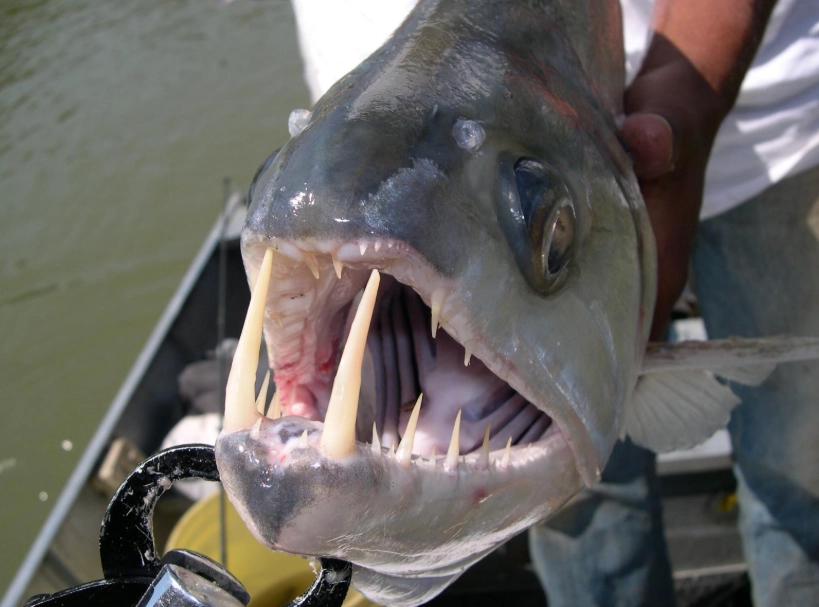
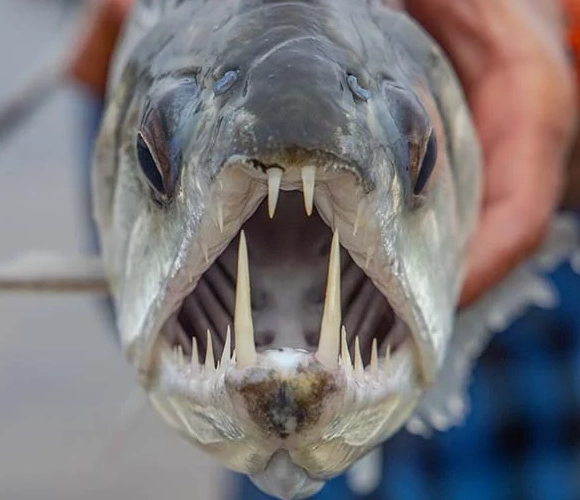
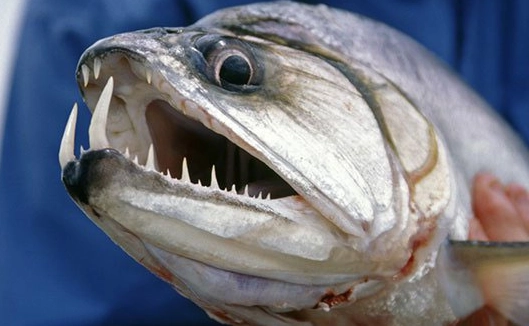
Payara (Vampire Fish)
Two massive, protruding lower fangs (up to 6 inches). For impaling.
Other fish. Stabs prey with precision.
Freshwater rivers of the Amazon Basin (South America).
How to Safely Observe Big-Toothed Fish?
Choosing Your Location & Guide
Your Personal Conduct in the Water
What Are the Biggest Misconceptions About These Predators?
Are These Big-Toothed Fish in Trouble?
Your Questions, Answered by Experience
Big Fish with Big Teeth: Ocean's Apex Predators Revealed
Comment