You're walking through a Southeast Asian rainforest, eyes peeled for wildlife. You glance at a leaf, see what looks like a fresh, white-and-black bird dropping, and move on. You just missed one of nature's greatest con artists—the bird poop frog. This isn't a single species' name you'll find in a taxonomy book. It's a survival strategy so perfect, it's evolved in different frogs around the world. The most famous practitioner? The tadpole of Wallace's flying frog (Rhacophorus nigropalmatus). For years, I thought I knew camouflage, until I spent twenty minutes staring at a leaf, convinced it was just poop, only to have a colleague point out the tiny, breathing froglet right in front of me.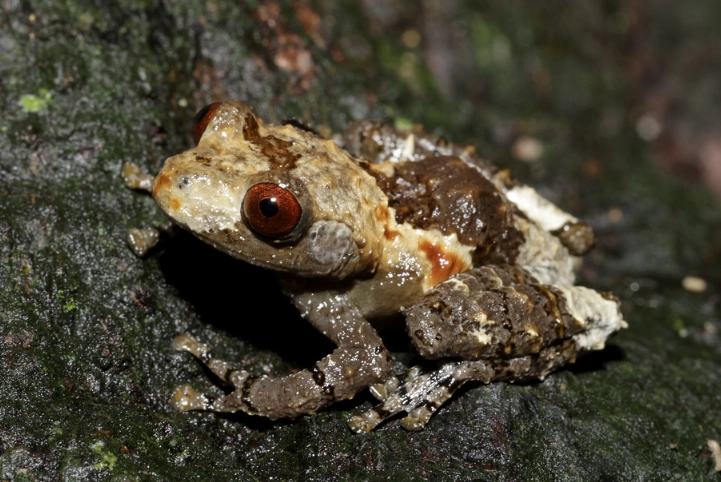
What's Inside This Guide
What Exactly Is a Bird Poop Frog?
Let's clear this up first. "Bird poop frog" primarily refers to the juvenile stage of Wallace's flying frog. Adult Wallace's flying frogs are stunning, with vibrant green bodies, yellow sides, and huge webbed feet for gliding. But their tadpoles and froglets? They look like something a bird left behind.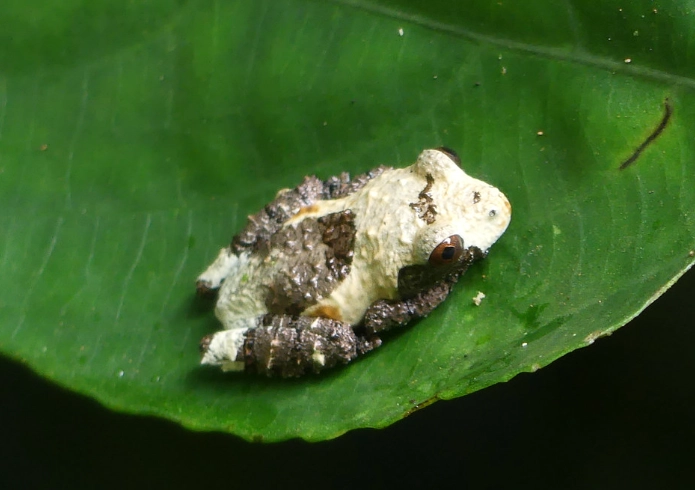
The transformation is incredible. The tadpoles are a mottled brown and white. When they metamorphose into tiny froglets, they retain this coloration. They perch motionless on the tops of leaves, often along forest streams. Their bodies are blob-like, lacking the defined frog shape. The white and black/brown splotches are a near-perfect match for avian droppings.
Key Identifiers: Look for a small (1-2 cm), lumpy blob on a leaf surface. Coloration is irregular patches of chalky white and dark brown or black. It will not move. At all. That's the hardest part—overcoming the instinct to ignore what looks like waste.
I've seen seasoned herpetologists walk right past them. The camouflage isn't just color; it's behavior. A real frog would hop. A bird poop froglet plays statue. This brings me to a common mistake: people confuse other mottled brown frogs with this specific disguise. Many frogs are cryptic, but the bird poop specialists take it to an extreme, mimicking not just a leaf or bark, but an inedible, ignored object.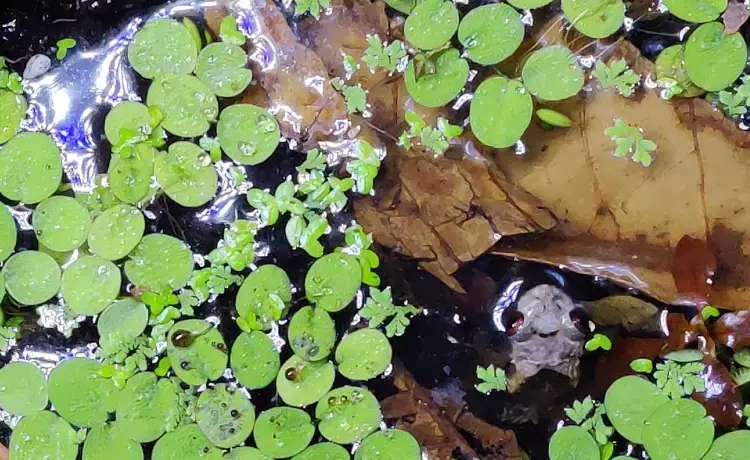
Why Disguise as Bird Poop? The Survival Logic
From an evolutionary standpoint, it's genius. Think about what predators are hunting tiny froglets in the rainforest: birds, snakes, larger spiders, mammals. What do all these predators have in common? They use visual cues to find food.
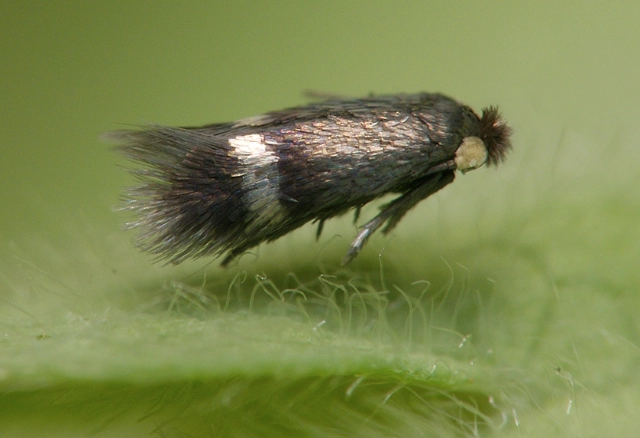
Now, what's the one thing in the forest that none of them are looking to eat? Bird excrement. It's non-nutritious, potentially messy, and simply not on the menu. By mimicking it, the froglet removes itself from the visual search pattern of every predator that might fancy a small amphibian snack.
This strategy is a form of Batesian mimicry, where a harmless species mimics an unprofitable or harmful one. In this case, the "harmful" model is just a gross, inedible object. The payoff is huge. Survival rates for these vulnerable, ground-dwelling (or leaf-dwelling) juveniles likely skyrocket compared to if they were just generically brown.
It's not foolproof. Some specialized predators might not be fooled. But for the generalist hunter, a white-and-black splat signals "not food." It's a cheaper, more effective strategy than producing toxins, which requires specific diet and energy.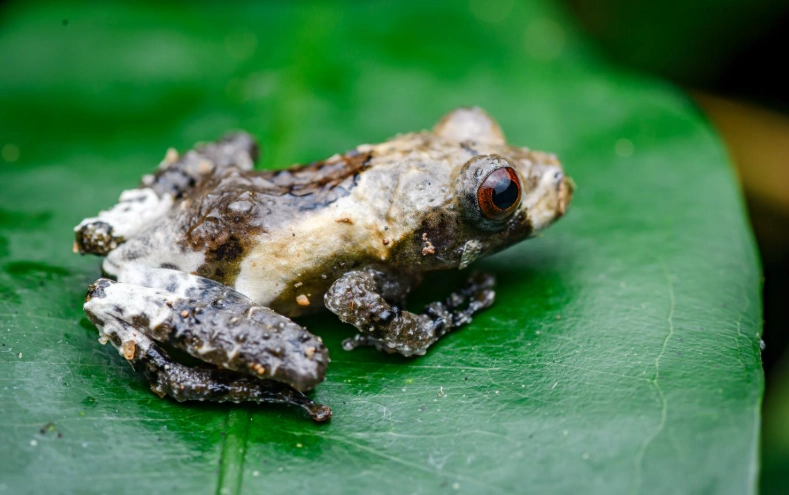
How to Find a Bird Poop Frog in the Wild
If you're planning a trip to see this marvel, you need a strategy. You can't just wander and hope. Here’s the plan, based on frustrating and rewarding hours spent in Borneo and Peninsular Malaysia.
Prime Locations and Timing
You need to be in the native range of Wallace's flying frog: the rainforests of Borneo, the Malay Peninsula, Sumatra, and parts of Thailand. National parks like Taman Negara (Malaysia) or Danum Valley (Borneo) are excellent starting points.
Focus on lowland riparian areas—forests near slow-moving streams or small rivers. The adults lay their eggs in foam nests on leaves overhanging water. The tadpoles drop into the water below, and the froglets emerge onto nearby vegetation.
Time of day is less critical than weather. Go after a period of rain. The moisture encourages activity and makes the frogs easier to spot against wet leaves. Early morning or late afternoon light is softer and reduces glare.
Essential Gear and Search Technique
Forget the fancy equipment if you don't have this mindset: slow down. You are not looking for a frog. You are auditing every piece of bird poop on every leaf at eye level and below.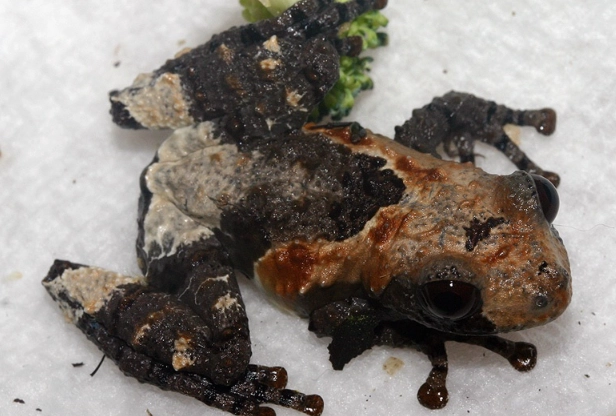
| Gear Item | Why It's Crucial | Pro Tip |
|---|---|---|
| Headlamp/Flashlight | Even during the day, a angled beam can reveal texture and create shadows that betray a 3D frog. | Use a diffuser to avoid harsh glare. Side-lighting is best. |
| Macro Lens/Camera | To document your find without disturbing it. The details are tiny. | A camera with a good zoom can double as a scanning tool. |
| Patience (The Most Important) | You will stare at a lot of actual bird poop. | Set a pace of 10 meters per 5 minutes. It's painfully slow, but it works. |
| Local Guide | They know specific streams and have a trained eye for the impossible. | Hire a guide specializing in herping or macro photography. |
The technique: Scan leaves along streams, particularly broad, smooth leaves like those of gingers or saplings. Look for the white splat. When you see one, stop. Get your light on it. Look for the faintest contour of a head, or the suggestion of legs tucked underneath. If you stare long enough, you might see the slight pulse of a breath. If it's been raining, check for a clean spot underneath it—real poop would drip.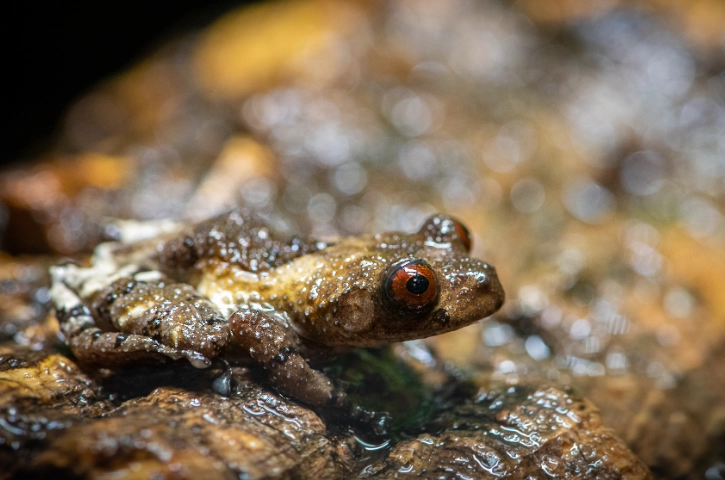
Beyond Bird Poop: Other Masters of Disguise
The bird poop trick is brilliant, but it's just one entry in the frog camouflage playbook. Other species have evolved to look like moss, lichen, dead leaves, or even stones. Here’s a quick comparison to appreciate the diversity of deception.
| Camouflage Type | Example Frog Species | Key Features | Habitat |
|---|---|---|---|
| Bird Dropping | Wallace's Flying Frog (juvenile) | Blobby form, white & black mottling, absolute stillness on leaf tops. | Southeast Asian rainforest leaves over water. |
| Dead Leaf | Amazon Horned Frog (Ceratophrys cornuta) | Leaf-like body outline, pointed "snout," variable brown/orange coloration, lies flat on forest floor. | South American leaf litter. |
| Lichens & Moss | Mossy Frog (Theloderma corticale) | Green, bumpy, textured skin that perfectly matches moss-covered rocks. Curls into a mossy ball. | Limestone caves & karst forests in Vietnam. |
| Bark | Gray Treefrog (Hyla versicolor) | Rough, lichen-patterned skin, ability to change shades of gray/green to match substrate. | Eastern North American trees. |
What sets the bird poop froglet apart is the specificity of the model. Mimicking a generic leaf offers some protection. Mimicking a ubiquitous, ignored object like bird waste offers near-total invisibility from a wider range of predators. It's a niche within a niche.
A Responsible Observer's Guide
Finding one of these frogs is thrilling. Your actions next are critical. These are tiny, vulnerable juveniles.
Do not touch. The oils and salts on human skin can damage their permeable skin. You also risk knocking them off their perfect perch, exposing them.
Minimize light. A quick photo with diffused flash is fine. Don't bombard it with bright light for minutes on end.
Never collect. Taking wildlife from its natural habitat is often illegal and always disrupts local ecology. Their camouflage only works in their specific environment.
The best practice is observation, documentation, and moving on. Let the frog continue its perfect impersonation in peace. The memory (and the photo) is your trophy.



Comments
Leave a Comment