If you've ever stared into a saltwater aquarium and been captivated by a creature that looks like a living, crawling rock, you might have met a helmet urchin. Forget the spiky, round sea urchins you're used to seeing. Helmet urchins, scientifically grouped under Clypeasteroida, are the sand-sifting, flat-bodied engineers of the reef. They're fascinating, surprisingly hardy, and can be a fantastic addition to a mature marine tank—if you know what you're doing. Most online guides give you the basics, but they miss the nuanced, gritty details that make the difference between a thriving urchin and a costly mistake. Let's fix that.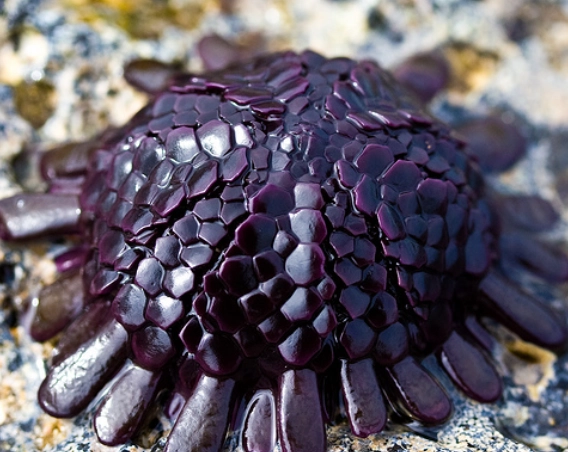
What's Inside This Guide
What Exactly Is a Helmet Urchin?
Helmet urchins, or sand dollars (for the familiar beach finds), are echinoderms. Their body is a rigid, flattened test—think of a domed plate—covered in a dense carpet of tiny, hair-like spines. They don't have the long, dangerous spines of their relatives. Instead, they use these short spines to slowly bulldoze through sand and gravel.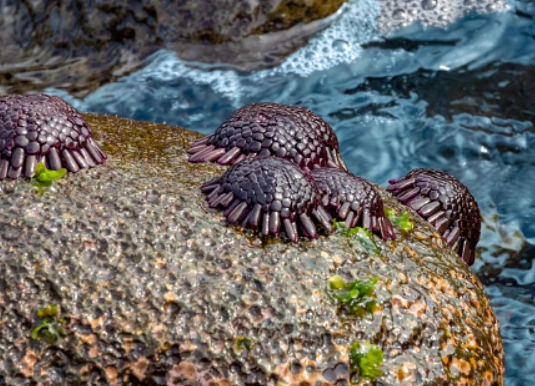
Their mouth is on the bottom, perfectly positioned to sift through the substrate for algae, detritus, and microscopic organisms. Watching one work is hypnotic; it's a living, organic vacuum cleaner for your tank's sandbed. According to the World Register of Marine Species (WoRMS), the order Clypeasteroida contains a diverse array of species adapted to various sandy environments.
They play a critical ecological role. In the wild, their constant grazing prevents algal mats from forming on sandy bottoms and aerates the substrate, much like earthworms do in soil. In your aquarium, they offer the same service, but you become their sole ecosystem manager.
How to Set Up the Perfect Tank for a Helmet Urchin
Here's where most beginners trip up. You can't just drop a helmet urchin into a newly cycled nano tank. Their needs are specific and non-negotiable.
Tank Size and Stability Are Everything
I recommend an absolute minimum of 30 gallons for the most common species. Why so much? They need a large, established sandbed to graze on. A small tank's sandbed can be stripped bare in days, leading to starvation. A larger, mature tank (think 6+ months old) has a more robust microfauna population and biofilm layer—their natural food source.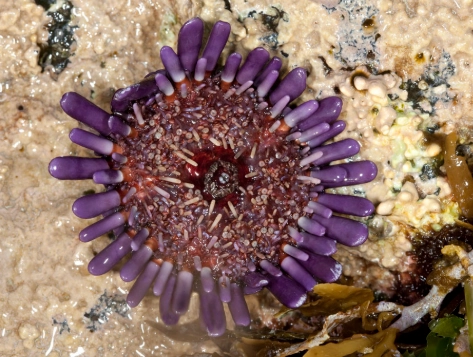
Water stability is paramount. These aren't fish that can handle parameter swings. Your filtration must be robust. A quality protein skimmer, live rock for biological filtration, and consistent water flow are essential. I'm a fan of canister filters or a sump system for the mechanical and chemical filtration flexibility they offer.
The Substrate: It's Not Just Sand
The wrong substrate is a death sentence. Avoid crushed coral or large, sharp gravel. Their delicate spines can't navigate it, and they can injure themselves. You need a fine to medium-grained aragonite sand. It should be deep enough for them to partially bury themselves—aim for a bed at least 2-3 inches deep. CaribSea's Arag-Alive or similar live sand products are excellent as they introduce beneficial bacteria from the start.
Water Parameters: The Magic Numbers
You need to be a chemist. Test weekly, without fail.
| Parameter | Ideal Range | Why It Matters |
|---|---|---|
| Salinity | 1.024 - 1.026 SG | Stable salinity is critical for osmoregulation. Fluctuations cause severe stress. |
| Temperature | 76°F - 80°F (24°C - 27°C) | Standard reef range. Use a reliable heater with a controller. |
| pH | 8.1 - 8.4 | Low pH can dissolve their calcareous test over time. |
| Alkalinity | 8 - 12 dKH | This is the big one. They use carbonate to maintain their shell. Low alkalinity leads to erosion. |
| Calcium | 400 - 450 ppm | Works with alkalinity for test/shell health. |
| Nitrates & Phosphates | As low as possible ( | They tolerate some nutrients, but high levels fuel algae they can't always outcompete. |
Let me give you a scenario. Imagine you set up a 40-gallon breeder tank. You cycle it with live rock and sand for two months. You add a few small fish and let the microalgae bloom and settle. Only then, maybe in month three, do you consider adding a helmet urchin. That mature sandbed is its supermarket.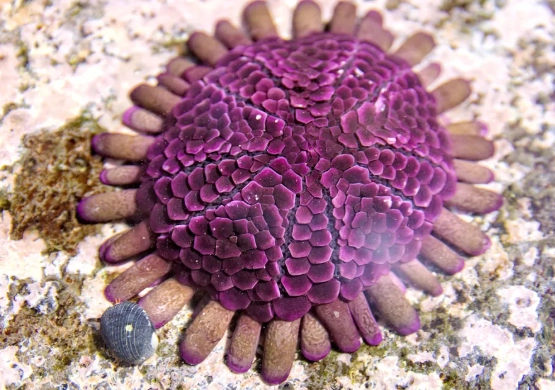
Helmet Urchin Care: The Day-to-Day Routine
Daily care is less about active feeding and more about observation and maintenance.
Feeding: In a mature tank, they will graze constantly. But this is the most common point of failure—assuming your sandbed is enough. It often isn't. You must supplement. Twice a week, place a small piece of dried nori (seaweed) or a sinking algae wafer on the sand near them at lights out. They'll find it. Some will even take small bits of mysis shrimp or fish pellets. Watch to see if they consume it; if it's ignored, remove it to avoid pollution.
Handling: Never, ever lift them out of the water. Their bodies can trap an air bubble, which can be fatal when they re-submerge. If you need to move them, gently coax them into a plastic container underwater.
Tankmates: Choose wisely. Most fish are fine. But avoid triggerfish, large puffers, or wrasses like the birdnose wrasse that specialize in picking at echinoderms. Peaceful gobies, clownfish, and blennies are excellent companions. Be cautious with other sand-sifters like certain starfish or gobies that might compete for food.
Helmet Urchin Species: Which One Is Right for You?
Not all helmet urchins are the same. Here’s a breakdown of the ones you might actually find for sale.
| Common Name | Scientific Name (Example) | Appearance & Size | Care Difficulty & Notes |
|---|---|---|---|
| Long-Spined Urchin (Often mislabeled) |
Diadema sp. | Long, black spines. NOT a true flat helmet urchin. Grows large (up to 10" diameter). | Moderate. Eats algae aggressively. Spines are fragile and can break, posing a water quality risk. Not for small tanks. |
| Pencil Urchin | Eucidaris sp. | Thick, blunt spines like pencils. More rounded than flat. | Easy. Very hardy, excellent algae grazer. Less reliant on sandbed. A great "beginner" urchin. |
| True Sand Dollar / Cake Urchin | Clypeaster sp. | Very flat, almost circular, with a dense fur of short spines. 3-5" across. | Difficult. Requires a very large, established sandbed. Specialized feeder. For experts only. |
| Variable Sea Biscuit | Clypeaster rosaceus | Oval, domed shape. Beautiful patterns on the test. 4-6" long. | Moderate to Difficult. Needs a mixed sand/rubble substrate. More commonly available than true sand dollars. |
My personal recommendation for a first-timer is the Pencil Urchin. It's forgiving, does a great job on algae, and its care requirements align well with a standard reef tank setup.
The Unspoken Challenges: What Nobody Tells You About Keeping Urchins
Here's the expert insight you won't find in most care sheets.
First, the "bulldozing." They are strong. They will move small rocks, dislodge frags that aren't glued down, and topple lightweight decorations. Your aquascape needs to be cemented.
Second, they are escape artists. If they can find a way to climb out of the water via equipment cords or overflow boxes, they will. And they will die. Ensure your tank has a tight-fitting lid or that the water line is well below any openings.
Finally, their health can be hard to gauge. A sick fish gasps or hides. A sick urchin just... slows down. The most telling sign is spine loss. If you see patches of bare test, it's a major red flag for poor water quality (especially low alkalinity/calcium) or disease. Quarantine is as important for them as for fish, but rarely done. A 14-day observation in a separate tank can save your entire display from introduced parasites.
Helmet Urchin FAQs: Expert Answers to Your Burning Questions
Keeping a helmet urchin is a commitment to a different kind of aquarium husbandry. It's less about flashy colors and more about appreciating a subtle, industrious cleaner that connects your tank to the function of a real reef. Get the setup right, pay attention to the details everyone else glosses over, and you'll have a unique pet that's both a worker and a wonder.



Comments
Leave a Comment