Picture this: you're on a night hike in a Central American rainforest, your headlamp cuts through the darkness, and you catch a glimpse of something hanging from a branch. It looks like a small, furry pouch. Then it shifts, and you see a face—a face covered in deep, labyrinthine folds of skin, like a piece of crumpled parchment. You've just met Centurio senex, the wrinkle faced bat. This isn't your typical bat. Forget the sleek, pointy-nosed silhouettes. This creature looks like it's been sculpted by a surrealist artist. For years, its bizarre appearance and secretive habits made it a ghost in the scientific literature. We knew it existed, but that was about it.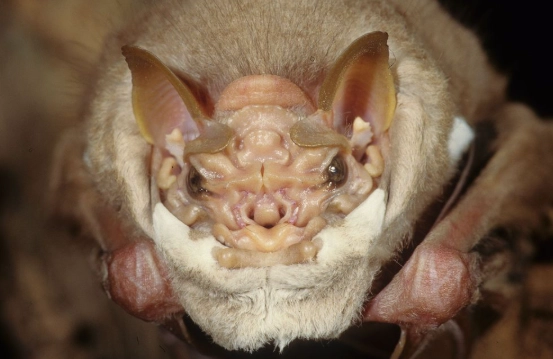
Today, we're pulling back the curtain. This guide isn't just a list of dry facts you can find anywhere. It's a deep dive into what makes this bat tick, built on observations from researchers who've spent decades untangling its mysteries. We'll look at why its face is like that, what it actually eats (spoiler: it's not what everyone assumed for years), and where you might have a chance to see one without disturbing it. More importantly, we'll talk about why this weird little bat matters and how its survival is tied to the health of entire ecosystems.
What's Inside? Your Quick Guide
A Face Only a Mother Could Love? The Science of the Wrinkles
Let's address the elephant in the room, or rather, the wrinkles on the bat. The face of Centurio senex isn't just oddly textured; it's a complex landscape of folds, flaps, and a completely concealed lower jaw. When the bat is at rest, it can pull a loose fold of skin from its chin up and over its mouth like a furry mask. It's uncanny.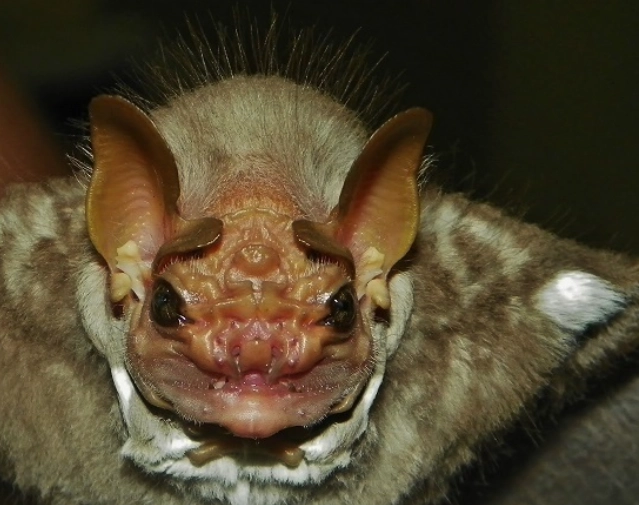
For a long time, biologists threw out guesses. Camouflage? Maybe. Protection? Possibly. But the leading theory now, supported by detailed behavioral studies, is far more functional: the wrinkles are a sensory array and a feeding tool.
Think of each fold and groove as a channel. In the humid, still air of the forest understory where these bats often forage, scent plumes from ripe fruit don't travel in clean lines. They meander. Those facial wrinkles might help trap and direct odor molecules towards the bat's nose, giving it a super-powered sense of smell to locate its dinner. The mask-like chin skin? It might help keep sticky fruit juices off their fur while eating, or even play a role in directing scent during specific feeding maneuvers. It's less about looking scary and more about being an ultra-efficient fruit-finding machine.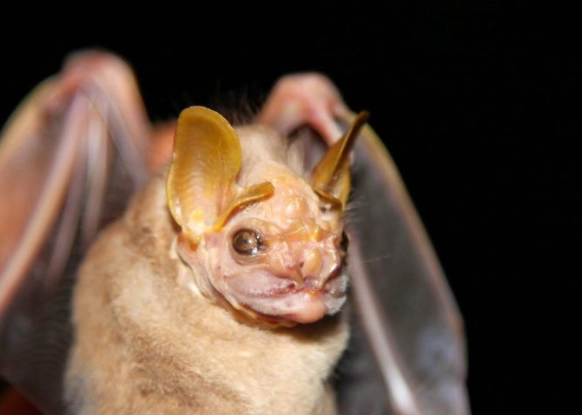
| Facial Feature | Probable Function | Notes & Expert Insight |
|---|---|---|
| Complex Wrinkles & Folds | Enhanced olfactory guidance; potentially thermoregulation or moisture retention. | Not just random skin. The pattern may help navigate scent trails in cluttered, low-wind environments. |
| Expandable Chin Skin ("Mask") | Protection from fruit pulp/debris; may funnel scent during feeding. | Often pulled up when roosting, possibly for camouflage. A common mistake is thinking the bat has no lower jaw when masked. |
| Reduced, Simple Ears | Suggests less reliance on echolocation for hunting compared to insectivorous bats. | They still echolocate for basic navigation, but their calls are likely simple and adapted for short-range use in dense foliage. |
Here's a nuance most articles miss: the wrinkle pattern isn't uniform. Some individuals have deeper, more pronounced folds than others. Is this age-related? Genetic? We don't fully know yet. It's one of those subtle details that makes field identification a bit trickier than just "look for the wrinkly one."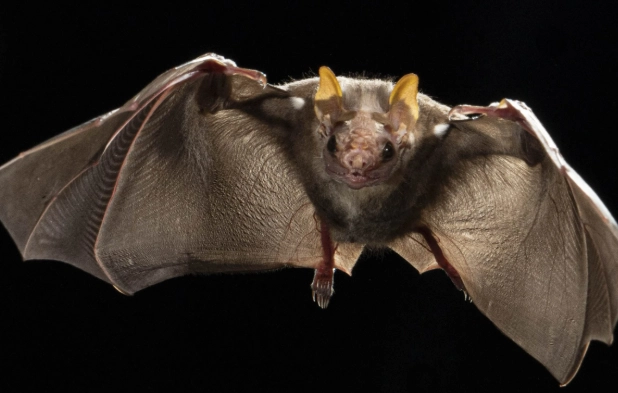
Where in the World Are Wrinkle Faced Bats?
You won't find these bats in Europe, Africa, or your backyard in North America (unless you live in extreme southern Texas or the Florida Keys, where very rare vagrants have been recorded). Centurio senex is a Neotropical specialist. Its world is the humid lowland forests and adjacent semi-deciduous woodlands from central Mexico down through Central America and into northern South America, including parts of Colombia, Venezuela, and Trinidad.
They're not canopy dwellers. You're more likely to find them in the understory, along forest edges, or in secondary growth. They seem to have a particular affinity for areas with a mix of tall trees for roosting and dense, fruiting shrubs for feeding. I've had the best luck spotting them in Costa Rica, not deep in untouched primary forest, but in well-preserved private reserves and wildlife corridors where forest meets pasture. They're adaptable, but only to a point.
A critical, often-overlooked requirement is specific roost sites. They don't crowd into caves by the thousands like some bat species. They tend to roost alone or in very small, loose groups, often under large, sheltered leaves (like heliconias or bananas), in dense vine tangles, or in the thatch of old buildings. They want cover from rain and predators, and plenty of airflow. If those specific micro-habitats disappear, the bats leave.
What Do Wrinkle Faced Bats Eat? (Hint: It's Not Bugs)
This is where old assumptions led us astray. For decades, based on early, incomplete observations, many sources listed the wrinkle faced bat as insectivorous or carnivorous. Some even suggested it ate small vertebrates! Modern research, involving analysis of fecal samples and direct observation, has settled the debate: they are primarily frugivores, specializing in soft, juicy fruits.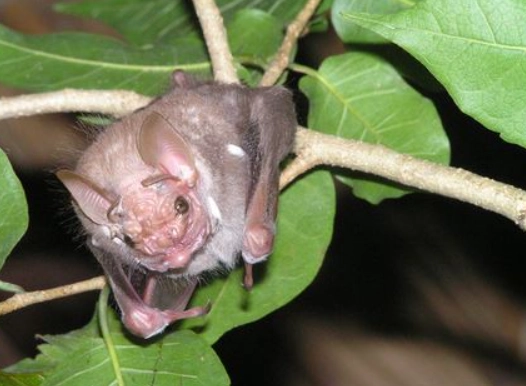
Figs (Ficus spp.) are a major part of their diet, along with fruits from peppers (Piper), and various nightshade family plants. They use their strong jaws and teeth to crush the fruit, swallowing the juice and pulp and spitting out the seeds and skin in a neat pellet. This makes them crucial seed dispersers. A forest without bats like Centurio senex is a forest that struggles to regenerate.
Their foraging behavior is stealthy. They don't swoop and grab on the wing like a hawk. They land on a fruit cluster, often hanging upside down by one foot while using the other to pull fruit to their mouth. This is where the facial mask might come in handy, acting like a bib. They're quiet feeders, and they don't stay long at one tree, minimizing exposure to owls or other nocturnal predators.
One of the biggest mistakes novice wildlife watchers make is assuming all small bats are insect-eaters. This assumption can lead to misidentification and a misunderstanding of the bat's ecological role. Seeing a small bat near a fruiting tree at night? Think fruit bat first, especially in the tropics.
Observing Wrinkle Faced Bats: A Practical Guide
You're not going to see a wrinkle faced bat on a sunny afternoon. They are strictly nocturnal and masters of concealment. But with the right approach, you can dramatically increase your chances of a respectful, memorable encounter.
Prime Locations for a Sighting
Target countries like Costa Rica, Nicaragua, Panama, and Belize. Within those countries, focus on eco-lodges and reserves known for integrated conservation and scientific tourism. Places that offer guided night walks are ideal because the guides know the terrain and the likely roost spots.
Specific habitat spots to tell your guide to focus on:
- The edges of forest clearings or trails, near fruiting shrubs.
- Areas with large, broad-leaved plants like wild bananas or heliconias.
- Old farm structures with wood or thatch roofs, located near forest patches.
Timing is everything. The first 2-3 hours after full darkness are peak activity for most fruit bats.
Gear You Actually Need
Forget heavy camera traps or expensive scopes. Here’s the simple kit:
- A red-filtered headlamp: This is non-negotiable. White light will startle and disorient them (and every other nocturnal creature). Red light is much less intrusive. You can buy one or make a filter with red cellophane.
- Binoculars with good close-focus: You'll often be looking at a bat 5-15 meters away, hanging in vegetation. Binoculars that can focus at close range are crucial for seeing those incredible facial details without getting physically close.
- Patience and silence: More important than any gadget. Move slowly, talk in whispers, and let the guide take the lead.
I've seen too many excited tourists blow a perfect observation by shining a bright phone light directly at a roosting bat. The bat flies off, stressed, and everyone misses out. The red light rule is the single most important piece of etiquette.
Are Wrinkle Faced Bats Endangered?
According to the IUCN Red List, Centurio senex is currently classified as Least Concern. This sounds reassuring, but it's a bit misleading. The "Least Concern" label often reflects a lack of detailed population data, not necessarily abundance.
The real threats are habitat-centric:
- Deforestation for agriculture: This removes both their food sources and their specific roosting sites.
- Fragmentation: Isolated forest patches can't support viable populations long-term.
- Misguided persecution: Because people don't understand them, bats are often feared and killed on sight.
Their survival is a bellwether. If forests are healthy enough to support specialized frugivores like the wrinkle faced bat, they're likely healthy enough for a huge range of other species.
How Can You Help Protect Wrinkle Faced Bats?
You don't need to be a biologist in the field.
- Support habitat corridors: Donate to or volunteer with organizations that buy and reforest land to connect isolated patches, like the Monteverde Conservation League in Costa Rica or Rainforest Trust.
- Be a responsible tourist: Choose eco-lodges that employ local guides, protect land, and follow strict wildlife viewing guidelines (like using red lights). Your tourism dollars vote for conservation.
- Spread the word, not the fear: Share what you've learned. A photo of a wrinkle faced bat with a caption about its role as a seed disperser does more for conservation than a hundred generic "save the rainforest" posts.
It's about seeing them not as a weird oddity, but as a vital, functioning part of a system we all depend on.


Comments
Leave a Comment