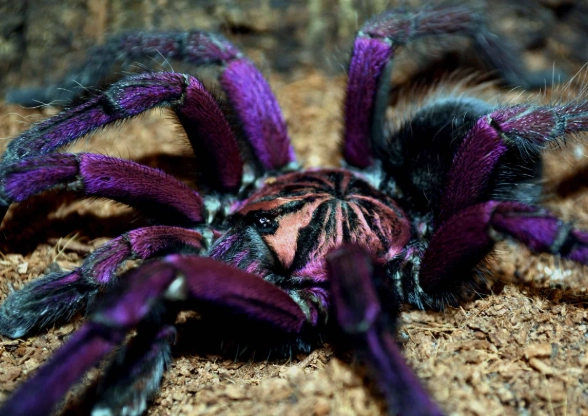
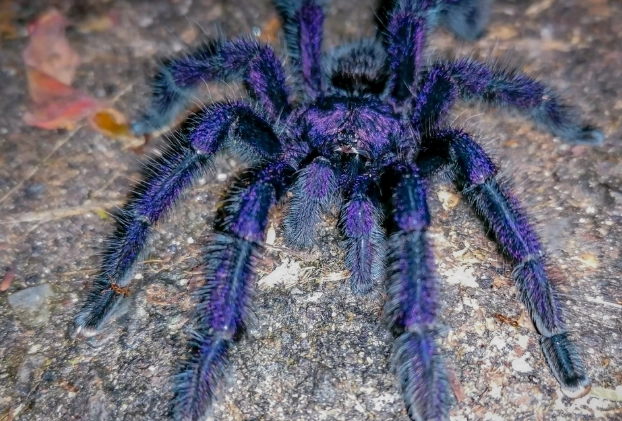
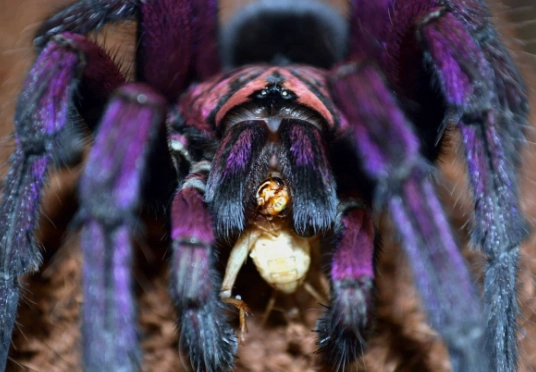
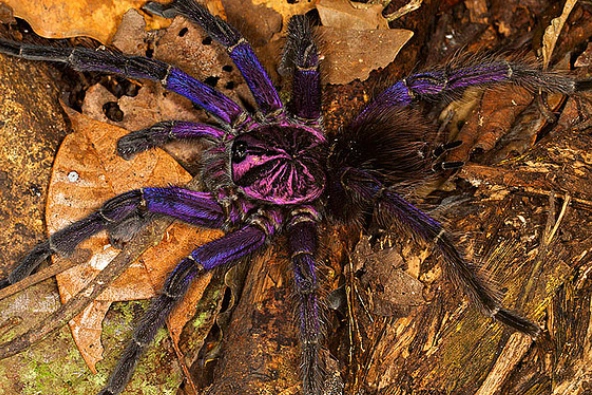
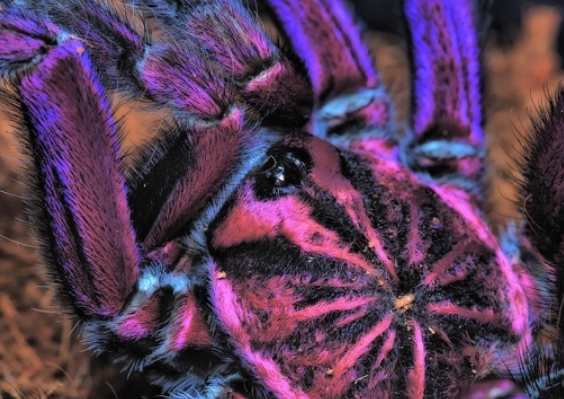
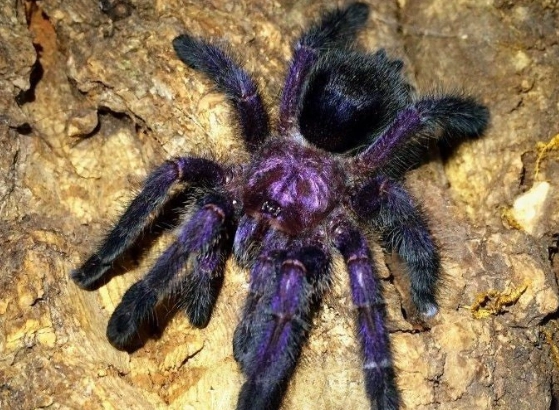
I still remember the first time I saw a purple tarantula spider in person—it was at a reptile expo, tucked in a small enclosure, and its iridescent hue caught my eye instantly. Most people think tarantulas are just brown or black, but these purple ones? They're something else. If you're curious about them, whether as a pet or just to learn, you've come to the right place. This guide dives deep into everything from their biology to keeping them alive and happy in captivity. Let's get straight to the point: these spiders aren't your average pet, and that's what makes them fascinating. When we say "purple tarantula spider," we're usually talking about a few specific species, but the most common one is Avicularia purpurea, also known as the purple pinktoe tarantula. I've kept a couple of these over the years, and their color isn't just for show—it's a structural coloration that shifts in light, giving off a metallic purple sheen. It's not paint or dye; it's all natural. They're arboreal, meaning they love climbing, and they're from the rainforests of Ecuador and Peru. Size-wise, they're medium, with a leg span of about 4 to 5 inches when fully grown. Here's a quick breakdown of their key traits: One thing I've noticed: many guides oversimplify their care. They say they're easy for beginners, but that's not entirely true. Their humidity needs are precise, and if you mess that up, they can get stressed quickly. I learned this the hard way when my first one started hiding all the time—turned out the enclosure was too dry. The purple color is most vibrant on their carapace and legs, while the abdomen tends to be darker with some hair. They have pink toe pads (hence the name "pinktoe"), which help them grip surfaces. Juvenile purple tarantulas often look different—more brownish—and develop the purple as they mature. It's a gradual process, so don't expect a tiny spider to be fully purple right away. These spiders are native to the Amazon rainforest regions, specifically in countries like Ecuador and Peru. They thrive in humid, tropical environments where temperatures range from 75°F to 85°F (24°C to 29°C). In the wild, they build silky retreats in tree hollows or under bark, rarely coming down to the ground. I've read reports from researchers like those at the American Arachnological Society that highlight how deforestation is impacting their habitats, making some populations vulnerable. If you're thinking of keeping one, replicating this environment is crucial. A common mistake I see is people using desert-style setups for arboreal tarantulas—it just doesn't work. They need vertical space, not a wide tank. Imagine a tall terrarium with plenty of branches and foliage. I use cork bark and live plants like pothos to mimic their natural home, and it keeps them active and healthy. Caring for a purple tarantula spider isn't rocket science, but it does require attention to detail. I've broken it down into key areas based on my experience and chats with other keepers. Start with a tall glass or acrylic terrarium—at least 12 inches tall for an adult. Screen tops are fine, but ensure they're secure; these spiders can squeeze through small gaps. Substrate should hold moisture: I mix coconut fiber with sphagnum moss, about 2-3 inches deep. Add vertical elements like branches or fake vines for climbing. Humidity needs to be 70-80%, which means misting lightly every other day. Use a hygrometer to monitor it; guesswork leads to problems. Temperature-wise, keep it between 75°F and 82°F. Room temperature often works if your home is warm, but in colder months, a low-wattage heat mat on one side of the enclosure helps. Avoid direct heat sources—they can dehydrate the spider. Purple tarantulas are insectivores. Feed them live prey like crickets, roaches, or mealworms once or twice a week for adults, more often for juveniles. Size matters: the prey should be no larger than the spider's abdomen. I've seen people overfeed, thinking it'll make them grow faster, but that just leads to obesity and shorter lifespans. Variety is good; rotate between crickets and dubia roaches to ensure balanced nutrition. Always remove uneaten prey after 24 hours to prevent stress. And don't worry if they refuse food before molting—it's normal. My spider once went off food for three weeks before shedding its skin. This is where opinions split. Many experts, including sources from the British Tarantula Society, advise against handling tarantulas regularly. They're fragile; a fall from even a short height can be fatal. If you must handle, do it close to the ground, over a soft surface, and let the spider walk onto your hand. Never grab them. Personally, I avoid handling unless necessary for enclosure cleaning. It reduces stress for both of us. There's a lot of misinformation out there. Let's debunk a few: Myth 1: Purple tarantulas are aggressive. Not true—they're more likely to flee than bite. Their urticating hairs are a defense mechanism, but they rarely use them unless provoked. Myth 2: They need constant handling to be tame. Nope. Tarantulas don't socialize like mammals; handling stresses them out and offers no benefit. Myth 3: The purple color fades in captivity. With proper care, it stays vibrant. Poor diet or incorrect lighting can dull it, though. I once met a keeper who believed myth 2 and ended up with a spider that hid constantly. It took months of minimal interaction to regain its confidence. Wrapping up, purple tarantula spiders are stunning creatures that demand respect and careful attention. They're not for everyone, but if you're willing to put in the effort, they make rewarding pets. Start with a captive-bred juvenile, set up a proper enclosure, and learn from others' experiences—including my mistakes. Happy keeping!What You'll Find Inside
What Exactly is a Purple Tarantula Spider?
Trait
Details
Scientific Name
Avicularia purpurea
Common Names
Purple pinktoe tarantula, purple tree spider
Size
4-5 inch leg span
Lifespan
Females: 10-12 years, Males: 3-5 years
Temperament
Generally docile but skittish; not aggressive
Physical Characteristics: More Than Just Purple
Where Do Purple Tarantulas Live in the Wild?
How to Care for a Purple Tarantula Spider
Setting Up the Perfect Enclosure
Feeding and Diet: What to Offer
Handling: Should You Do It?
Myths About Purple Tarantulas You Should Ignore
Answers to Your Burning Questions
How do I maintain humidity for my purple tarantula without causing mold?
Use a well-ventilated enclosure and a substrate that drains well, like coconut fiber mixed with orchid bark. Mist lightly rather than drenching, and consider a small fan for air circulation. I've found that adding springtails—tiny cleanup crews—helps prevent mold naturally.
What's the biggest mistake beginners make with purple tarantula care?
Overcomplicating the setup. Some people buy fancy gadgets, but simplicity works best. Focus on consistent humidity and temperature, and avoid frequent enclosure changes. I've seen spiders thrive in basic setups while struggling in overly elaborate ones.
Can purple tarantulas live with other spiders or pets?
Absolutely not. They're solitary and will cannibalize each other. Keep them alone in their own enclosure. As for other pets like cats or dogs, ensure the spider's space is secure and out of reach to avoid accidents.
How often should I clean the enclosure?
Spot clean weekly—remove leftover prey and waste. Do a full substrate change every 6-12 months, depending on conditions. Over-cleaning disturbs the spider's habitat and can stress it out.
Are purple tarantulas endangered in the wild?
While not globally endangered, habitat loss in South America poses threats. Always source captive-bred spiders from reputable breeders to support conservation efforts. Organizations like the IUCN track species status, but specific data on Avicularia purpurea is limited.
Comment