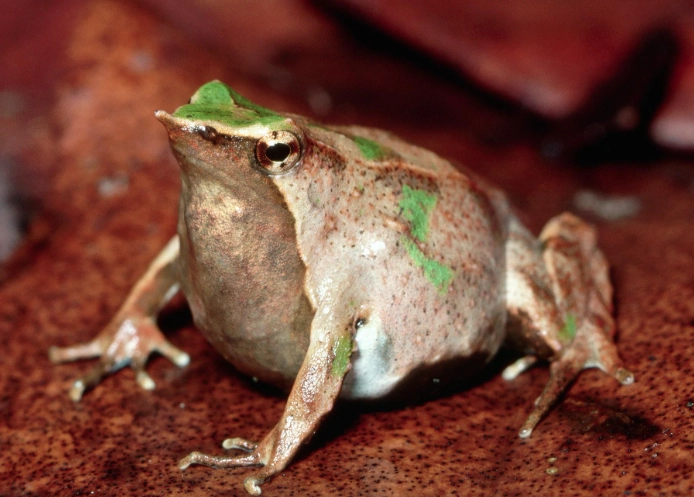
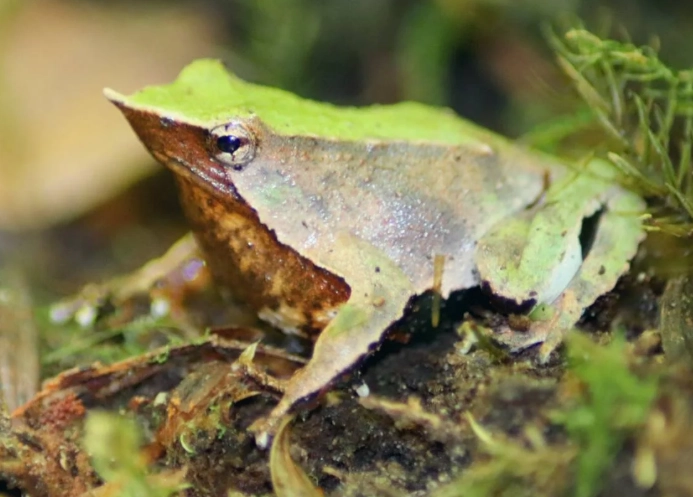
Picture this: you're walking through a moss-draped forest in southern Chile, the air cool and damp. You hear a faint, bell-like chirp. You freeze, scanning the leaf litter. Nothing. Then you see it—a tiny, leaf-shaped frog, no bigger than your thumbnail, perfectly still. This is Rhinoderma darwinii, Darwin's frog. But its most famous trick isn't camouflage. It's a form of parenting so bizarre it seems like science fiction: the male frog swallows its developing young and spits out fully formed froglets. I've spent years studying amphibians in the field, and I still find this behavior utterly mind-blowing. Yet today, that distinctive chirp is becoming a ghost sound. This isn't just a story about a cool frog fact; it's a urgent case study in amphibian decline. Forget what you know about frog parenting. Most frogs lay eggs and hop away. Darwin's frog rewrites the rulebook. First described by the legendary naturalist Charles Darwin himself in 1834 (hence the name), this frog's life cycle is its claim to fame. Here’s how it works. After mating, the female lays about 30-40 eggs on the damp forest floor. The male stands guard. This is where most articles stop. But the crucial, often-missed detail is the timing. The male doesn't just wait for any tadpole. He waits for the precise moment the embryos inside the eggs start to wiggle. Then, and only then, he scoops them up with his tongue and maneuvers them into his large, extendable vocal sac. Inside the sac, the tadpoles develop, nourished by a yolk sac and later, some evidence suggests, secretions from the father. For roughly 50-70 days, the male carries his developing offspring. He can't eat during this time. Imagine that level of commitment. Finally, he opens his mouth, and fully metamorphosed, miniature froglets—perfect replicas of the adults—hop out into the world. This is called neomelia, where the larval stage is completed within the egg or, in this case, the parent. I've seen footage of this "birth," and it never ceases to amaze. The froglets don't just tumble out; they actively climb out, one by one. It's a controlled release, not a violent expulsion. This detail matters because it shows the complexity of the behavior. It's not a simple reflex. Here's a nuance most casual sources gloss over. There were actually two species of Darwin's frog. The Northern Darwin's frog (Rhinoderma rufum) hasn't been seen since around 1981 and is almost certainly extinct. Our focus is the Southern Darwin's frog (R. darwinii), which clings to survival. The key difference? Habitat and perhaps slight variations in their brooding biology. Lumping them together erases an entire evolutionary line we've already lost. Darwin's frog is now listed as Endangered on the IUCN Red List. Some experts fear it's functionally extinct in much of its former range. The last widespread surveys paint a grim picture. So what went wrong? It's never one thing. It's a perfect storm. The scary part? Their unique reproductive strategy might now be a liability. A small, isolated population means fewer males to brood the next generation. If a brooding male succumbs to chytrid, you're not losing one frog; you're losing his entire clutch of 30-40 potential offspring. All hope isn't lost. The situation is dire, but dedicated people are fighting back. Conservation isn't just about feeling bad; it's about concrete action. Here’s what’s happening on the ground. In Chile, organizations like the Unión de Ornitólogos de Chile (Union of Chilean Ornithologists) and various university research groups are leading the charge. Efforts are multi-pronged: One project I find particularly clever involves using environmental DNA (eDNA). Scientists take water samples from streams and test for tiny traces of Darwin's frog DNA shed from their skin. It's a non-invasive way to confirm their presence without disturbing a single leaf. This tech is a game-changer for finding the last survivors. The story of Darwin's frog is a mirror. It reflects our fascination with nature's ingenuity and our profound impact on the planet. That tiny, chirping frog carrying its future in its throat is a wonder we inherited. The question is, will we be the generation that only reads about it in books, or the one that ensured its chirp never fully faded from the forest? The action—supporting habitat conservation, funding scientific research, and spreading accurate knowledge—is up to us.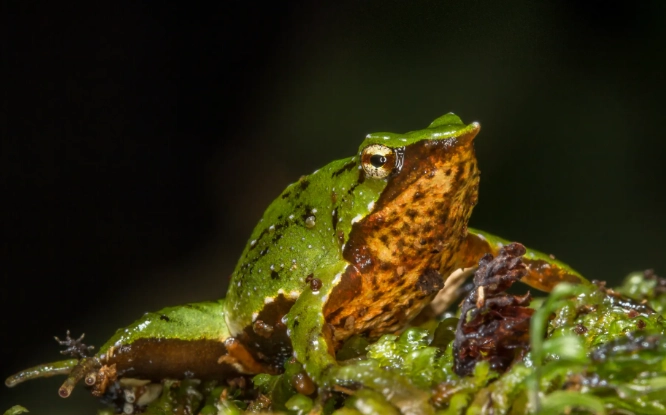
What's Inside This Guide
The Frog That Broods in Its Throat: Biology & Behavior
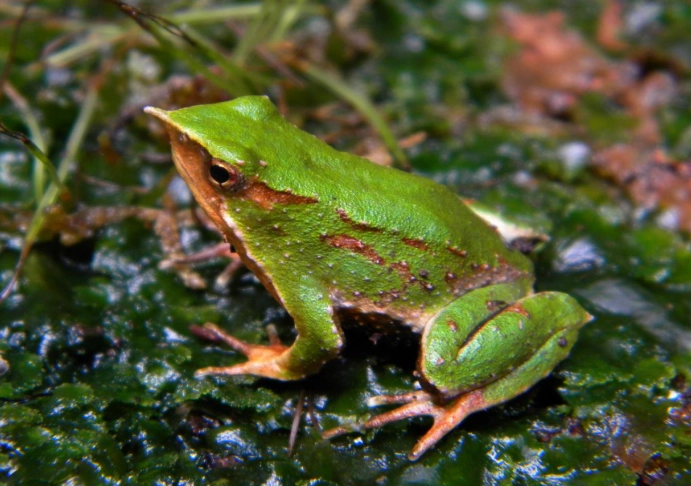
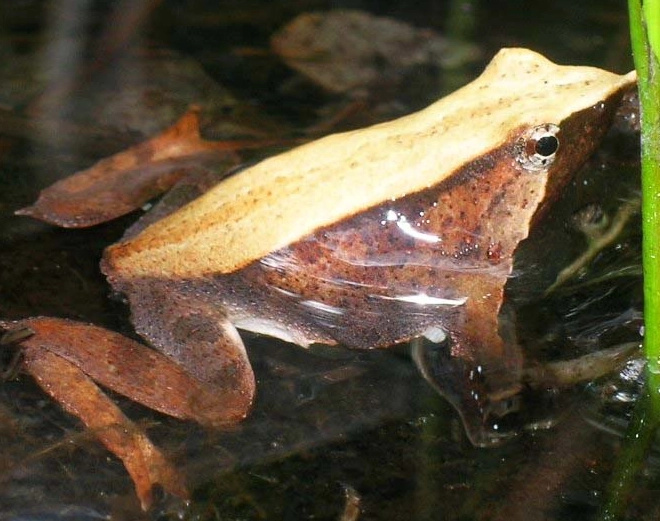
Scientific Name: Rhinoderma darwinii
Size: 2.2 - 3.1 cm (about the size of a postage stamp)
Lifespan: Estimated 10-15 years in the wild
Primary Habitat: Temperate Nothofagus (southern beech) forests of Chile and Argentina
Distinctive Feature: Prominent, fleshy "nose" (rostral projection) giving it a leaf-like appearance.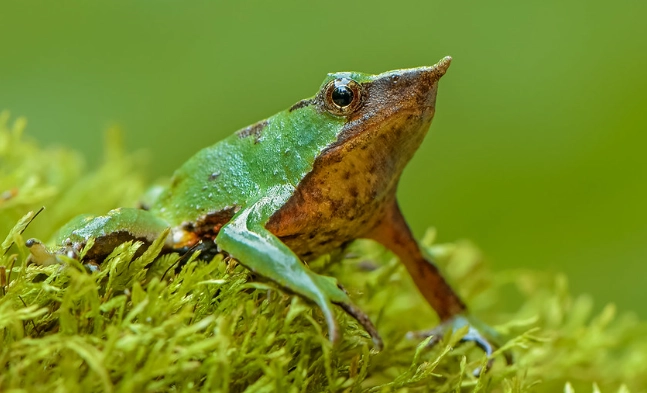
Northern vs. Southern: A Tale of Two Frogs
A Conservation Crisis: Why Is Darwin's Frog Vanishing?
The Fight to Save a Species: Conservation in Action
Your Darwin's Frog Questions Answered (By an Expert)
Quick Facts at a Glance:
Is it true the father frog "vomits" up the baby frogs?
That's a common and misleading description. "Vomiting" implies sickness or a violent, involuntary act. What the male frog does is far more controlled. After the development period, he appears to use muscular contractions of his vocal sac and body to gently maneuver the fully-formed froglets to his mouth, where they actively climb out. It's a coordinated paternal behavior, not an illness. Using the word "vomit" diminishes the remarkable nature of this parental care.
Darwin's frog is often called extinct. What's the real status?
This is a critical distinction. The Northern Darwin's frog (R. rufum) is most likely extinct. The Southern Darwin's frog (R. darwinii) is critically endangered but not globally extinct. However, it has almost certainly been extirpated (locally wiped out) from over 70% of its known historical range. Small, fragmented populations likely persist in isolated, protected forest patches in southern Chile. Calling it completely extinct can halt conservation funding and effort, which is the last thing it needs.
Can I see a Darwin's frog in a zoo outside of South America?
Extremely unlikely, and that's a good thing. Due to their precarious status, complex care needs, and biosecurity risks (both to them and from them), there are no Darwin's frogs in mainstream international zoo exhibits. Any legitimate specimens are part of highly specialized, non-public conservation breeding programs, almost exclusively within Chile. If a pet trade website claims to sell them, it's almost certainly a scam or highly illegal. The best way to "see" one is through documentaries or museum specimens.
What's the biggest mistake people make when thinking about saving species like this?
The "charismatic megafauna" bias. People care about pandas and tigers, which is great. But the loss of a tiny, unknown frog is an equally profound ecological and evolutionary tragedy. These frogs are part of a delicate food web—eating insects, being food for birds and spiders. Their unique brooding biology represents millions of years of evolution, a solution to survival that exists nowhere else. Losing them isn't just losing a frog; it's losing a chapter in the story of life on Earth, and it weakens the entire ecosystem they lived in. Supporting broad habitat conservation in the Valdivian rainforest helps everything that lives there, from the frog to the ancient trees.
If I travel to Chile, where's the best chance to experience their habitat?
Your goal should be to support conservation by visiting protected areas that safeguard their potential habitat. Focus on the temperate rainforest regions of southern Chile. Parks like Parque Nacional Alerce Andino, Parque Nacional Vicente Pérez Rosales, or the Valdivian Coastal Reserve offer pristine examples of the Nothofagus forest ecosystem they depend on. Hire a local naturalist guide—they'll know the terrain and ethics. Remember, you're incredibly unlikely to see the frog itself. You're there to see and support the home it's fighting to survive in. Tread lightly, stay on trails, and never disturb leaf litter looking for them.
Comment