Let's be honest, the main reason anyone gets a rainbow beetle is that they look absolutely incredible. That metallic, shifting rainbow sheen on its shell isn't something you see every day, even in the exotic pet world. But here's the thing most care sheets online gloss over: owning a Phalacrognathus muelleri (that's its proper scientific name) is less like having a pet and more like curating a living piece of art with very specific needs. I've kept these beetles for years, and I've seen too many enthusiasts make the same basic mistakes that lead to short, unhappy lives for these stunning creatures. This guide isn't just a rehash of common knowledge; it's the deep-dive manual I wish I had when I started, packed with the nitty-gritty details you actually need to succeed.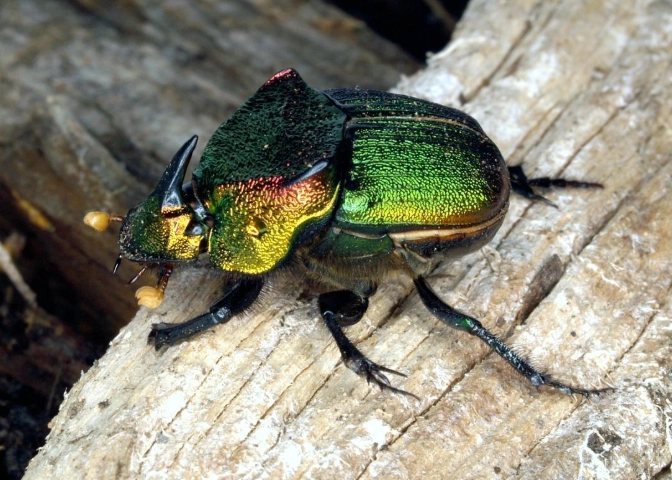
What's Inside This Guide?
- What Exactly is a Rainbow Beetle?
- How to Set Up the Perfect Rainbow Beetle Enclosure
- Feeding Your Rainbow Stag Beetle: More Than Just Fruit
- The Lifecycle: From Egg to Iridescent Adult
- Breeding Rainbow Beetles Successfully
- Common Health Issues & How to Spot Them
- Beyond the Rainbow: Ethics and Conservation
What Exactly is a Rainbow Beetle?
First off, let's clear up the name. "Rainbow beetle" usually refers to the Rainbow Stag Beetle, native to the rainforests of northeastern Australia and parts of New Guinea. It's a stag beetle, meaning the males have impressive, curved mandibles that look like antlers. The females have smaller, more practical ones. Their claim to fame is an exoskeleton that refracts light, creating hues of green, gold, blue, and purple. It's a structural color, like a soap bubble, not a pigment.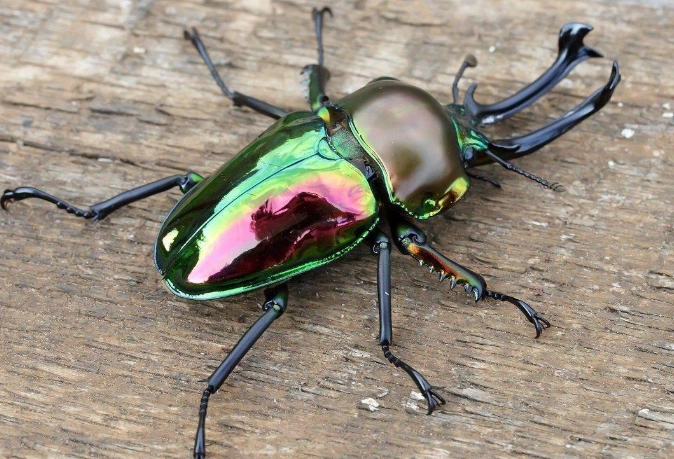
Most care sheets will tell you they're easy. I disagree. They're straightforward if you get the fundamentals right, but those fundamentals are non-negotiable. Get the humidity wrong by 10% during the larval stage, and you can stunt their growth. Use the wrong type of wood in their substrate, and the larvae might ignore it. These are the specifics we'll get into.
How to Set Up the Perfect Rainbow Beetle Enclosure
Think of this as building a tiny, bioactive slice of a Queensland rainforest floor. An adult beetle doesn't need a mansion, but it does need precision.
The Non-Negotiable Shopping List
| Item | Specifications & Details | Why It Matters |
|---|---|---|
| Enclosure (Terrarium) | Glass or acrylic, minimum 5-gallon (19L) for 1-2 adults. Height is more important than floor space. Secure, ventilated lid is a must. | Provides stable humidity and allows for climbing. Escape artists are real. |
| Substrate | 4-6 inch (10-15 cm) deep layer. A mix of 60% Flake Soil (fermented hardwood), 30% Decayed Hardwood (Oak, Maple), 10% Sphagnum Moss. | This is their world. Adults burrow and lay eggs in it. Larvae live and eat it. Cheap potting soil is a death sentence. |
| Heating & Humidity | Heat mat on ONE SIDE of the tank (not under). Digital hygrometer/thermometer. Target: 70-78°F (21-26°C), 70-80% humidity. | Creates a thermal gradient. Beetles can move to their preferred temp. Consistent humidity prevents desiccation. |
| Decor & Hides | Pieces of cork bark, broad-leafed artificial plants, a shallow dish for jelly food. | Provides climbing surfaces, hiding spots to reduce stress, and a designated feeding area. |
The biggest mistake I see? People using a heat lamp. These beetles are nocturnal and humidity-sensitive. A heat lamp will bake the moisture right out of the tank, leaving you with a crispy, stressed beetle. A low-wattage heat mat on the side, controlled by a thermostat, is the way to go.
Feeding Your Rainbow Stag Beetle: More Than Just Fruit
Adult rainbow beetles have a sweet tooth, but their diet needs variety for optimal health and breeding potential.
- Beetle Jelly: This is the staple. Commercially available, nutritionally complete, and doesn't mold quickly. Offer a small cup (like a bottle cap) every other day.
- Fresh Fruit: Treats, not staples. Banana, mango, peach. Never citrus. Offer a tiny piece once a week, remove after 12 hours to prevent fruit fly infestations.
- Protein (for breeding females): This is often missed. A light smear of high-quality, sugar-free cat food or specialized insect protein jelly once a week helps egg development.
For the rainbow beetle larvae, it's simpler: they eat the substrate itself. That's why high-quality flake soil and rotten wood are critical investments. You shouldn't need to "feed" them directly if their environment is built correctly.
The Lifecycle: From Egg to Iridescent Adult
This is where the real commitment lies. The adult beetle is the dazzling but brief finale. Most of its life is spent as a larva.
Stage 1: Egg. Tiny, white, laid in the substrate. Incubation: 2-3 weeks.
Stage 2: Larva. The grub stage. This lasts 8-14 months. They go through three instars (growth phases), getting dramatically bigger each time. Your job is to leave them undisturbed in their substrate, maintaining steady temperature and humidity. The urge to check on them weekly is strong—resist it. Every disturbance costs them energy.
Stage 3: Pupa. The larva builds a hard, earth-packed cocoon. Inside, it metamorphoses. This takes 1-2 months. Do not touch or dig up a pupa. You can kill it easily.
Stage 4: Adult. The star of the show emerges. Sadly, they only live for 4-8 months as adults. Their sole purpose now is to eat, climb, and if you're lucky, reproduce.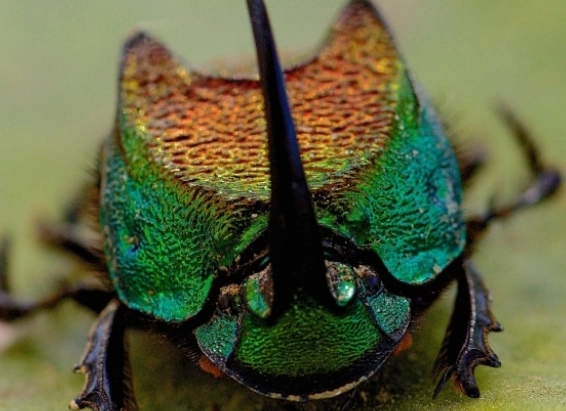
Breeding Rainbow Beetles Successfully
You've got healthy adults and want to continue the cycle. Here's the step-by-step most guides skip the nuances of.
- Condition the Pair: Feed the female extra protein for 2-3 weeks before introducing the male. A well-fed female lays more, healthier eggs.
- The Introduction: Place the male into the female's enclosure (not the other way around). Watch closely. If the male is overly aggressive, remove him. A successful mating can last several hours.
- Egg-Laying Setup: After mating, ensure the female has a deep (8+ inches), slightly moist substrate of pure, soft flake soil. This is her "oviposition" site.
- The Waiting Game: Leave her alone for 4-6 weeks. Then, you can very gently "sift" the substrate to find eggs or tiny L1 larvae. Use a soft paintbrush to move them to individual rearing containers if you wish to maximize survival rates.
Why breed them? Beyond the joy, captive breeding takes pressure off wild populations, a key point for conservation.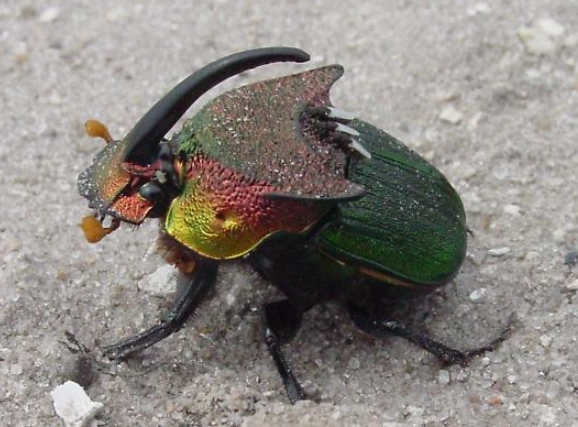
Common Health Issues & How to Spot Them
These beetles are hardy if their environment is right, but problems can creep up.
- Mites: Tiny white or red dots on the beetle or in the substrate. Often come from contaminated soil or fruit. Quarantine new substrate. For a mild infestation, provide a "mite island"—a piece of paper towel with a drop of honey in the center; mites congregate there, remove and replace daily.
- Dehydration: Beetle looks listless, limbs are stiff. The abdomen may appear shriveled. Check humidity immediately. Offer water jelly or a shallow water dish with a sponge.
- Injury: Falls onto hard surfaces can crack the exoskeleton. Keep substrate deep and decor soft. A small crack can be sealed with a dab of clear nail polish (non-toxic formula) to prevent infection, but prevention is key.
- Failed Molting (Larva): If a larva dies during a molt, the humidity was almost certainly too low or fluctuating.
Beyond the Rainbow: Ethics and Conservation
While not currently endangered, their rainforest habitat is under threat. Always source your beetles from reputable captive breeders, not wild-caught suppliers. Ask the breeder about the lineage. Good breeders track generations. Participating in captive breeding programs, even on a small scale, contributes to the species' security and reduces the ecological impact of the pet trade. Organizations like the Beetle Breeders Association (a hypothetical but representative example) promote best practices.
Your Rainbow Beetle Questions, Answered
I’ve had my rainbow beetle larvae for weeks, but they haven’t grown. What’s wrong?
The temperature is likely too low. Larval metabolism is heat-driven. If you're keeping them at 70°F (21°C), growth is glacial. Bump it up to a steady 75-77°F (24-25°C) and you should see a noticeable change in substrate consumption (more frass) within a couple of weeks. Also, double-check your substrate quality—low-grade soil lacks nutrients.
Can I keep multiple male rainbow stag beetles together?
I wouldn't recommend it, even in a large tank. Those impressive mandibles aren't just for show. Males are territorial and will fight, often leading to fatal injuries like pierced abdomens or torn legs. One male with one or two females is the safest social setup. If you must keep males together, you need an enormous enclosure with multiple deep hiding spots and feeding stations, and even then, it's a risk.
My adult beetle just sits still all day. Is it sick or dying?
Probably not. Remember, these are nocturnal insects. Being inactive and buried in the substrate during the day is perfectly normal, even healthy, behavior. They become active at dusk and through the night. Judge their health by their appearance when they are active: a healthy beetle moves with purpose, has a plump abdomen, and eats readily. Lethargy during their normal active hours is a more concerning sign.
What's the single most important piece of equipment for a beginner?
A good digital hygrometer. Guessing humidity is the fastest route to failure. Those cheap analog dials are notoriously inaccurate. Spend $15 on a digital one with a probe. Knowing your humidity is 73% instead of "kinda damp" allows you to make precise adjustments—adding a mist, or lifting the lid for a bit. It takes the guesswork out of the most critical environmental factor.
Comments
Leave a Comment