Forget everything you think you know about chameleons. The image of a large, slow-moving lizard with swiveling eyes is completely shattered when you encounter a pygmy chameleon. We're talking about creatures so small they can comfortably perch on your fingertip, so perfectly camouflaged they vanish against a leaf, and with a lifestyle so secretive that even seasoned herpetologists can miss them in the wild. I've spent years fascinated by reptiles, but my first encounter with a Brookesia micra—the current record holder for the world's smallest chameleon—on a research trip to Madagascar was a humbling moment. It redefined "small." This isn't just a shrunken version of a typical pet chameleon; it's a completely different ecological and behavioral package, and that's where most aspiring keepers get it wrong.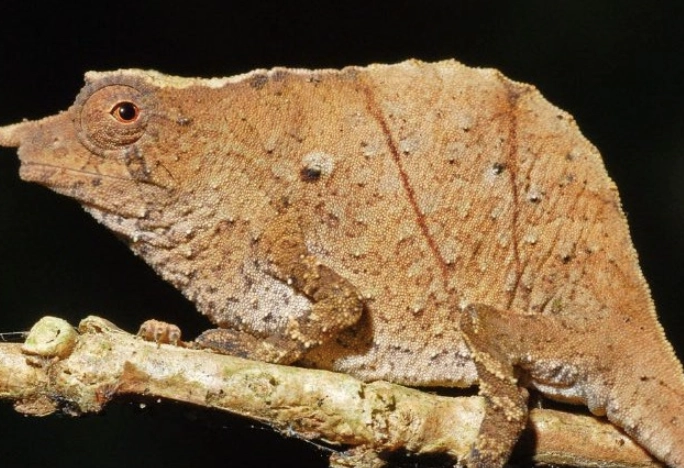
What's Inside?
A Biology Marvel in Miniature
Let's start with the scale. The smallest chameleon, Brookesia micra, has a total body length (snout to tail tip) of just about 29 millimeters. That's barely over an inch. Even the larger pygmy species, like some in the Rhampholeon genus from mainland Africa, rarely exceed 3-4 inches. This tiny size isn't just cute; it dictates their entire existence.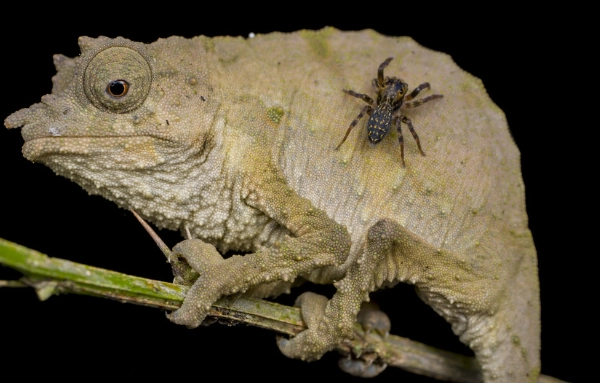
Their color-changing ability is present but subtle. Don't expect rapid, dramatic shifts into rainbow patterns. Their palette is tuned for the leaf litter—browns, tans, muted greens, and greys. The change is slow, a gradual blending into a specific patch of moss or a piece of bark. Their eyes move independently, but their world is measured in centimeters, not meters. Their projectile tongue is a marvel of micro-engineering, capable of snatching a fruit fly or a springtail with pinpoint accuracy from a distance equal to their own body length.
Key Takeaway: Their small size means an incredibly high surface-area-to-volume ratio. They lose moisture and heat far faster than a larger reptile. This single physical fact is the root of almost every challenge in keeping them alive in captivity.
Habitat Secrets of the Forest Floor
Most pygmy chameleons are terrestrial or semi-terrestrial. While their larger cousins are arboreal kings, pygmies are the humble inhabitants of the forest floor. They live in the leaf litter, among low-growing plants, on thin twigs and blades of grass. In Madagascar, many Brookesia chameleon species are found in specific, often fragmented, forest patches. Their habitat is cool, humid, and dimly lit by filtered sunlight.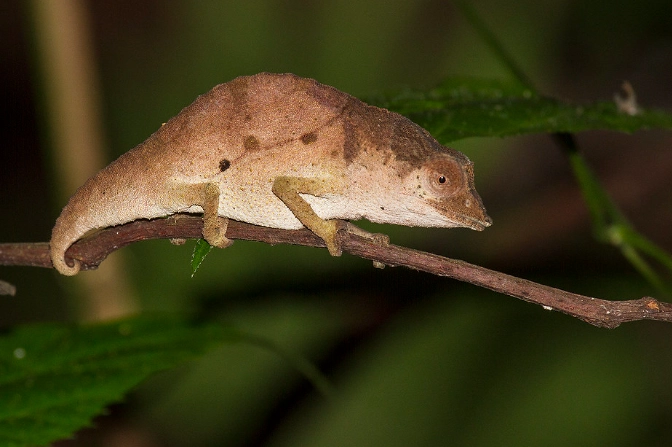
This is a crucial distinction for care. Placing a pygmy chameleon in a tall, dry, hot screen cage meant for a Veiled Chameleon is a death sentence. Their world is horizontal, not vertical. Humidity is consistently high, often above 70-80%, and temperatures are moderate, rarely exceeding 75-80°F (24-27°C) during the day, with a significant drop at night. I've seen setups fail because someone used a standard heat lamp that baked the entire tiny enclosure, desiccating the animal in hours.
The Real Challenge of Pygmy Chameleon Care
Here's the uncomfortable truth most care sheets gloss over: pygmy chameleons are not beginner reptiles. They are often labeled as "delicate," and that's an understatement. Their care is a constant, meticulous balancing act. The biggest mistake I see is treating them like a small, easy pet.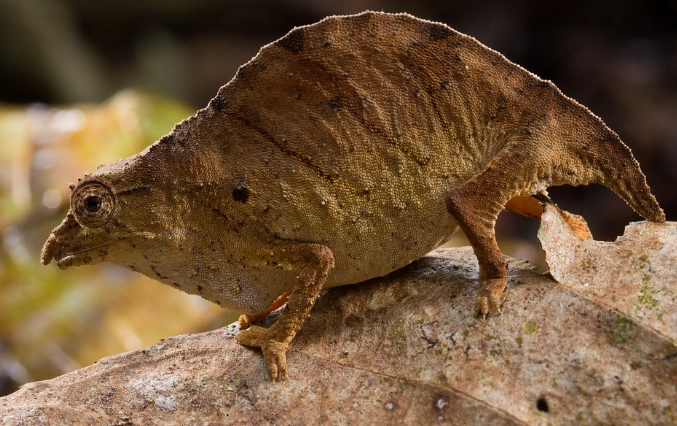
Their fragility stems from their niche:
Food Size: Their prey must be tiny. Pinhead crickets, flightless fruit flies (Drosophila melanogaster and the larger D. hydei), and springtails are staples. A regular small cricket is often too large and can actually injure or stress them.
Hydration: They rarely drink from a dish. They lick moisture from leaves. This means their enclosure needs fine misting several times a day with a hand sprayer or an automated misting system set to produce very fine droplets. But it can't stay soggy, or you'll get mold.
Stress: They are easily stressed by handling, loud noises, and even frequent viewing. A stressed pygmy chameleon will stop eating, hide constantly, and its health can decline rapidly. They are display animals, not handling pets.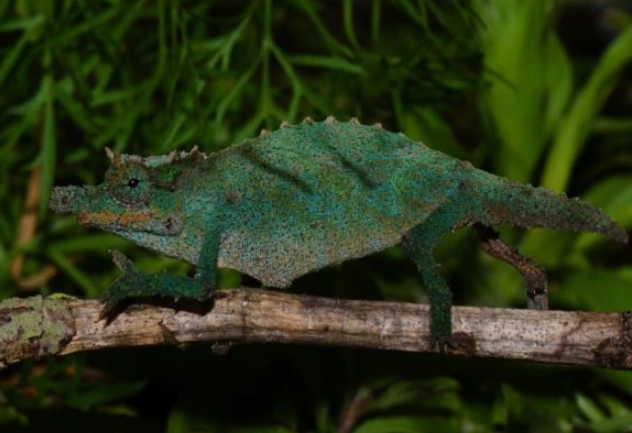
Meet the Family: Common Pygmy Chameleon Species
While most are wild-caught and their trade is controversial or regulated (all Malagasy Brookesia are CITES listed), a few species are more commonly seen in the specialized hobbyist trade. It's vital to know which one you're looking at, as needs vary.
| Species | Origin | Max Size | Key Temperament Note |
|---|---|---|---|
| Bearded Pygmy Chameleon (Rieppeleon brevicaudatus) | East Africa (Tanzania, Kenya) | 2.5 - 3 inches | One of the hardier species, more adaptable to captive conditions. Semi-terrestrial. |
| Spectacled Pygmy Chameleon (Rhampholeon temporalis) | East Africa | 3 - 4 inches | Often more arboreal than others. Requires delicate, thin branches for climbing. |
| Brown Leaf Chameleon (Brookesia superciliaris) | Madagascar | 4 - 5 inches | Larger but very sensitive. Strictly terrestrial, needs deep leaf litter. Often wild-caught. |
My personal experience has been mostly with the Bearded Pygmy. Even they, considered the "easy" option, required a level of attention to detail that surpassed my crested geckos or leopard geckos by a wide margin. The Madagascar species, like those in the Brookesia genus, are an order of magnitude more challenging and should ideally be left to conservation breeding programs.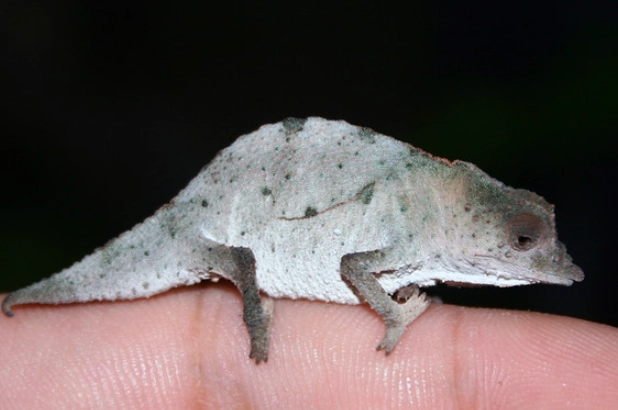
A Realistic Setup Guide
If you're committed, here's a blueprint. Forget big tanks. A small, well-sealed glass terrarium is better than a large, ventilated one because it holds humidity. A 10-gallon tank (or a 12" x 12" x 12" Exo Terra) is ample for a pair.
How to Set Up a Pygmy Chameleon Habitat
Substrate: A deep, bioactive substrate is ideal. A mix of coconut fiber, sphagnum moss, and leaf litter (oak or magnolia). This holds moisture and supports springtails and isopods (clean-up crew).
Hardscape: Plenty of cork bark flats, thin branches (manzanita or ghost wood), and live or artificial plants with small leaves (e.g., Ficus pumila, small ferns). Create hiding spots at ground level.
Climate Control:
• Heating: A very low-wattage heat mat on one side of the tank, connected to a thermostat set to 72-75°F. No basking lamps.
• Lighting: A low-output UVB light (like a ZooMed 5.0 compact bulb) on a 12-hour cycle. They don't bask, but they need low-level UV for calcium metabolism.
• Humidity: This is the killer. Aim for 70-80%. Use a digital hygrometer. Mist 2-3 times daily for 30-45 seconds. An automatic mister (like MistKing) is a worthy investment.
Feeding: Offer tiny, gut-loaded insects daily. Dust with calcium powder 2-3 times a week and a multivitamin once a week. A culture of flightless fruit flies is non-negotiable.
Your Questions, Answered (The Deep Dive)
Keeping pygmy chameleons is a niche within a niche. It's a practice in humility, observation, and accepting that you are trying to replicate a very specific slice of a distant forest floor on your desk or shelf. The reward is the privilege of observing one of nature's most exquisite miniatures—a master of camouflage that lives its entire life in a space smaller than a shoebox. If you approach it with respect for its fragility and a commitment to meticulous care, it's an unparalleled experience. If you're looking for a hands-on, easy pet, look elsewhere. But if you want a living piece of art and a daily lesson in ecosystem management, the tiny pygmy chameleon might just be your ultimate challenge.





Comments
Leave a Comment