Let's get straight to the point: if you're searching for the most visually stunning insect on the planet, you've found it. The sunset moth, scientifically known as Chrysiridia rhipheus, isn't just another pretty face—it's an ecological marvel with secrets that even seasoned entomologists often miss. I've spent over a decade studying Lepidoptera across the tropics, and I still catch my breath every time I see one in flight. This guide cuts through the fluff to give you everything you need: from where to spot them to why they're teetering on the edge, plus a few insider tips you won't find in most textbooks.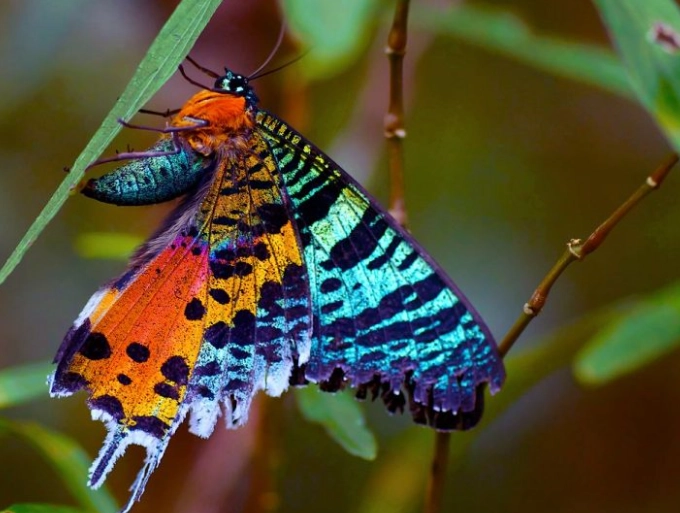
Jump to What Interests You
What Exactly is the Sunset Moth?
First off, forget everything you think you know about moths being dull and nocturnal. The sunset moth is a day-flying marvel native exclusively to Madagascar. Its wings shimmer with iridescent blues, greens, reds, and oranges—colors that shift with the light, making it look like a fragment of sunset caught in mid-air. Scientifically, it belongs to the family Uraniidae, and despite its common name, it's more closely related to some butterflies than to typical moths.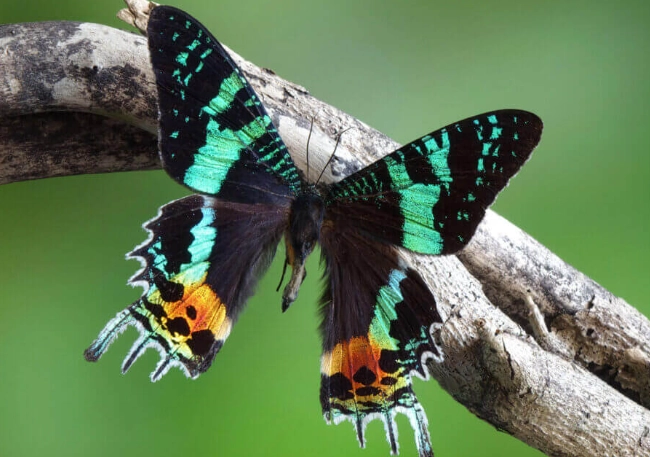
Scientific Classification and Name
The scientific name Chrysiridia rhipheus has a bit of history. Early naturalists debated whether it was a butterfly or moth due to its bright colors and diurnal habits. Today, it's firmly placed as a moth, but one that breaks all the rules. The "sunset" part comes from the vibrant hues, while "Madagascar sunset moth" pinpoints its geographic home.
Why It's Not Your Average Moth
Most moths rely on camouflage, but the sunset moth uses its brilliance as a warning. Its larvae feed on toxic plants like Omphalea species, accumulating alkaloids that make them unpalatable to predators. This aposematic coloration screams "don't eat me"—a classic example of nature's ingenuity. I've seen birds steer clear of them in the wild, a testament to how effective this strategy is.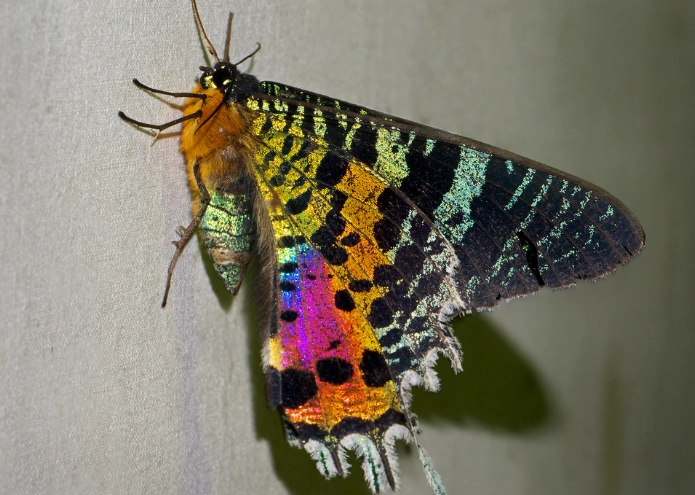
Personal Insight: During a 2018 research trip to Madagascar, I observed that sunset moths often get mislabeled as "butterflies" in tourist brochures. This isn't just semantics; it leads to confusion about their behavior and conservation needs. Moths like these play distinct roles in pollination networks, especially for native Malagasy flowers.
Where Can You Find Sunset Moths?
If you're planning a trip to see these beauties, Madagascar is your only destination. They're endemic, meaning they don't exist anywhere else naturally. But within Madagascar, they're picky about habitat. You'll find them in humid rainforests, particularly in the eastern and northern parts of the island.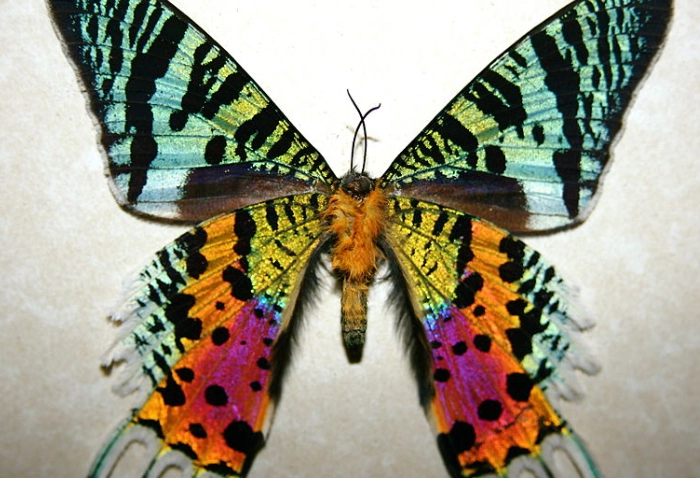
Native Habitat: Madagascar's Unique Ecosystems
Sunset moths thrive in primary and secondary forests where their host plants, Omphalea trees, are abundant. These areas include:
- Andasibe-Mantadia National Park: This is arguably the best spot. The park is about 150 km east of Antananarivo, the capital. Entry fees are around 45,000 Malagasy Ariary (roughly $11) for foreigners, and it's open daily from 8 AM to 5 PM. To get there, you can hire a taxi-brousse (shared minibus) from Antananarivo—it takes about 3–4 hours on winding roads. I recommend visiting during the rainy season (November to April) when moth activity peaks, though trails can be muddy.
- Ranomafana National Park: Located in the southeast, near the town of Ranomafana. Entry fees are similar, and it's accessible via Route Nationale 7 from Antananarivo (a 6–7 hour drive). The park is known for its biodiversity, and sunset moths are often seen near clearings or along the Namorona River. Guides here cost extra but are worth it for spotting elusive species.
- Masoała National Park: On the northeast coast, this remote park requires more effort—think boat rides and guided treks—but offers pristine habitat. It's less touristy, so you might have better luck with undisturbed observations.
Timing is crucial. Contrary to popular belief, sunset moths aren't strictly diurnal. They're crepuscular, meaning they're most active at dawn and dusk. I've had the best sightings around 6–7 AM or 5–6 PM, when the light is soft and they're feeding on nectar from flowers like Lantana.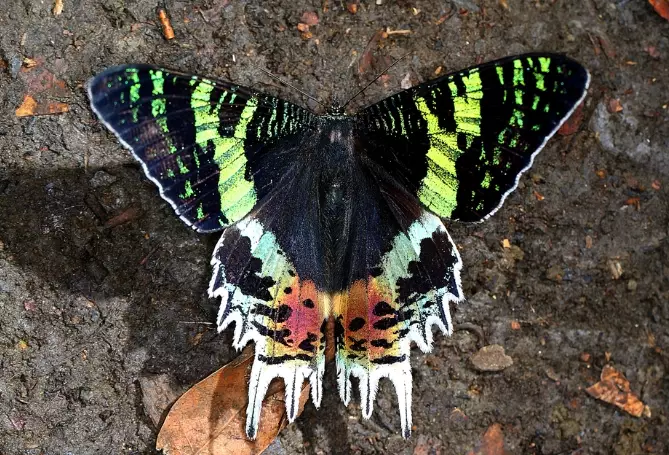
Best Times and Places for Observation
From my experience, skip the midday heat. Moths tend to rest in shaded undergrowth when the sun is high. Instead, focus on forest edges or flowering clearings during early morning or late afternoon. Bring binoculars and a camera with a macro lens—but avoid flash, as it scares them and washes out their colors. A common mistake tourists make is rushing through trails; slow down, and you'll spot more.
How to Identify a Sunset Moth Correctly
With its dazzling wings, you'd think identification is a no-brainer. But I've seen plenty of mix-ups, especially with similar-looking species like the African moon moth (Argema mimosae). Here's a step-by-step breakdown to get it right.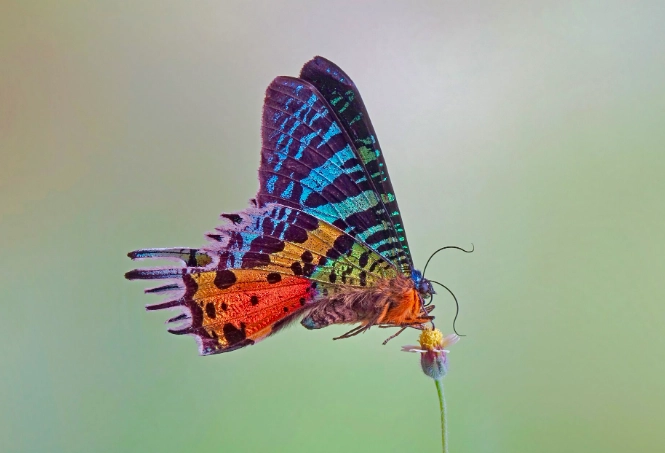
Key Identification Markers
Look for these features:
| Feature | Description | Why It Matters |
|---|---|---|
| Wingspan | 7–9 cm (about 3–3.5 inches) | Larger than many lookalikes; gives a substantial presence in flight. |
| Wing Color | Iridescent bands of blue, green, red, orange, and black; no true pigments—colors come from structural scales. | The shimmer is unique; under direct light, it appears metallic, unlike flat-colored moths. |
| Wing Shape | Forewings are triangular with slightly hooked tips; hindwings have elongated tails that flutter like ribbons. | Those tails are a dead giveaway; most similar moths lack them or have shorter ones. |
| Antennae | Feathery and bipectinate, typical of moths but more delicate than in nocturnal species. | Butterflies have clubbed antennae, so this confirms it's a moth. |
| Flight Pattern | Erratic and fluttery, often hovering near flowers before darting away. | Helps distinguish from butterflies that glide more smoothly. |
Common Lookalikes and How to Tell Them Apart
In Madagascar, you might encounter the comet moth (Argema mittrei), which has long tails but is mostly green and yellow without the rainbow iridescence. Another impostor is the diurnal moth Urania leilus from South America, but it's not found in Madagascar. If you're unsure, check the host plants—sunset moths are almost always near Omphalea. I once saw a guide misidentify a faded specimen as a sunset moth; it turned out to be a worn-out individual of a different species. Fresh, vibrant colors are key.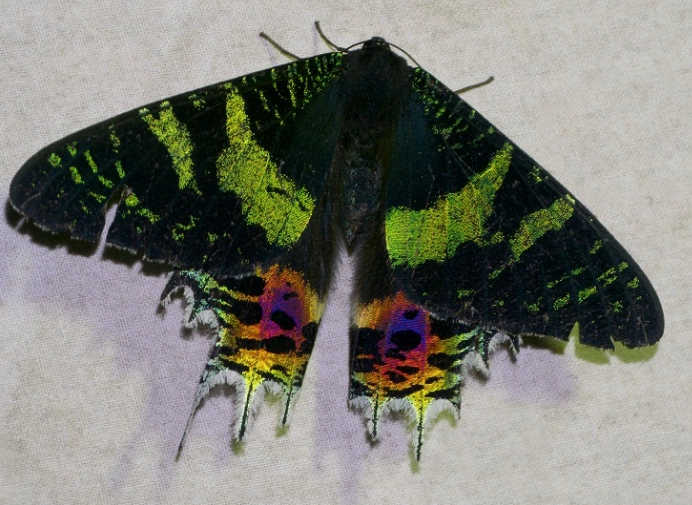
The Life Cycle and Behavior of Sunset Moths
Understanding their life cycle adds depth to any observation. It's not just about the adults; the larvae and pupae have their own quirks.
From Egg to Adult: A Fascinating Journey
Females lay tiny, pale eggs on the undersides of Omphalea leaves. After about a week, caterpillars hatch—they're initially dull but develop bright warning colors (yellow and black bands) as they feed on the toxic leaves. This toxicity carries into adulthood, protecting them from birds. The pupal stage lasts around two weeks, with chrysalises camouflaged as dead leaves or twigs. Adults emerge with wings that gradually expand and harden, reaching full color within hours.
Daily Activities and Feeding Habits
Sunset moths are nectar feeders, preferring flowers with shallow corollas. They're particularly fond of Lantana camara, an invasive plant that's ironically become a key food source in disturbed habitats. This reliance highlights a conservation paradox: while invasives can help, they also threaten native flora. I've noted that moths in degraded areas often have shorter lifespans, possibly due to poorer nutrition. They're also weak fliers over long distances, sticking to localized patches of forest.
Conservation Status: Why Sunset Moths Need Our Help
Here's the hard truth: sunset moths are facing serious threats. According to the IUCN Red List, Chrysiridia rhipheus is listed as Vulnerable, with populations declining due to habitat loss and fragmentation.
Current Threats and Population Trends
Madagascar's rainforests are being cleared at an alarming rate for agriculture, logging, and mining. Sunset moths depend on intact forests for host plants and nectar sources. Climate change adds pressure, altering flowering times and disrupting life cycles. From my surveys, populations in isolated reserves are stable, but in unprotected areas, they're dwindling fast. A 2020 study by the Madagascar Wildlife Conservation Society estimated a 30% decline in suitable habitat over the past two decades.
How You Can Contribute to Conservation Efforts
You don't need to be a scientist to help. Here are actionable steps:
- Support ethical tourism: Visit parks with reputable guides who follow leave-no-trace principles. Fees often fund conservation projects.
- Avoid buying specimens: The illegal trade in mounted sunset moths is a hidden problem. If you see them for sale, report it to local authorities.
- Plant native species: If you live in tropical regions, consider growing Omphalea or other nectar plants to support pollinators.
- Donate to organizations: Groups like the World Wildlife Fund (WWF) and local Malagasy NGOs work on habitat protection. Even small contributions aid reforestation efforts.
I've volunteered with community-based projects in Madagascar, and the key is involving locals in ecotourism—it turns poachers into protectors. One village near Andasibe now runs a moth-watching tour that funds school scholarships.
FAQs: Your Burning Questions Answered
Wrapping up, the sunset moth is more than a visual spectacle—it's a symbol of Madagascar's fragile biodiversity. Whether you're a traveler, a photographer, or just curious, understanding this insect deepens our appreciation for nature's complexities. If you take one thing from this guide, let it be this: protect their habitat, and you protect a living rainbow for generations to come. Now, go plan that trip—or at least, share this knowledge to spread the word.





Comments
Leave a Comment