You're scanning a frigid coastal bay in Alaska, your breath fogging in the air. A raft of black and white ducks bobs on the waves. Most are the familiar Common Goldeneye, but one stands out. Its head looks almost purplish-black, and the white facial patch isn't a round dot, but a bold, elegant crescent. You've just found a Barrow's Goldeneye (Bucephala islandica), a bird with a more specialized and, frankly, more dramatic lifestyle than its common cousin. If you've struggled to tell them apart or wondered where to reliably see this stunning diver, you're in the right place. This guide cuts through the confusion with specific locations, identification hacks most guides miss, and a clear look at why this duck matters.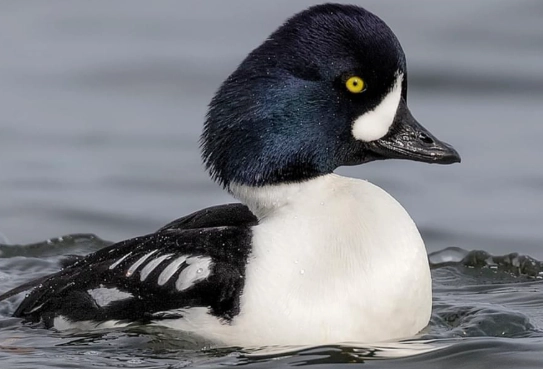
What's Inside This Guide
Spot the Difference: Barrow's vs. Common Goldeneye
This is the hurdle for most birders. At a distance, on choppy water, they can look identical. But get a decent look, and the differences are clear. The mistake I see most often? People rely solely on head shape. It's a clue, but not the most reliable one, especially with moving birds.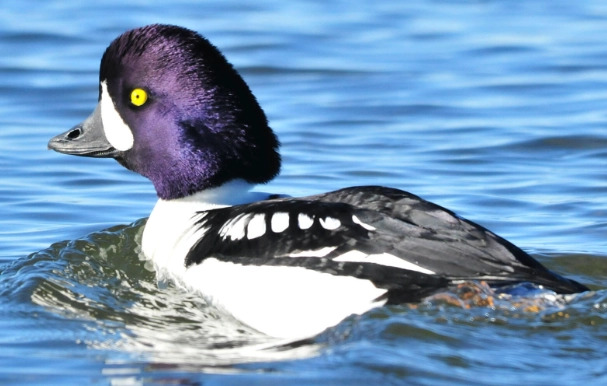
The male Barrow's Goldeneye has a head that can appear glossed with purple or green in good light, compared to the Common's iridescent green. But the real giveaway is the facial mark. The Barrow's sports a thin, crescent-shaped white patch in front of the eye. The Common Goldeneye male has a larger, circular or oval white patch behind the bill. It's the difference between a comma and a period.
Pro Tip Most Guides Miss: Don't just look at the head. Check the sides. In flight or when stretching, the male Barrow's shows more extensive white on the inner wing (the secondary feathers) than a Common Goldeneye. It forms a longer white stripe. This is often more visible in poor light than subtle head color.
Females are trickier. Both are gray with brown heads. The female Barrow's typically has a slightly yellower-orange bill tip (but this varies). Her head is a darker, richer brown and often has a more pronounced, steep forehead that meets the bill at a sharper angle, giving her head a triangular profile. The Common female's head is a paler brown and slopes more gently from the crown to the bill.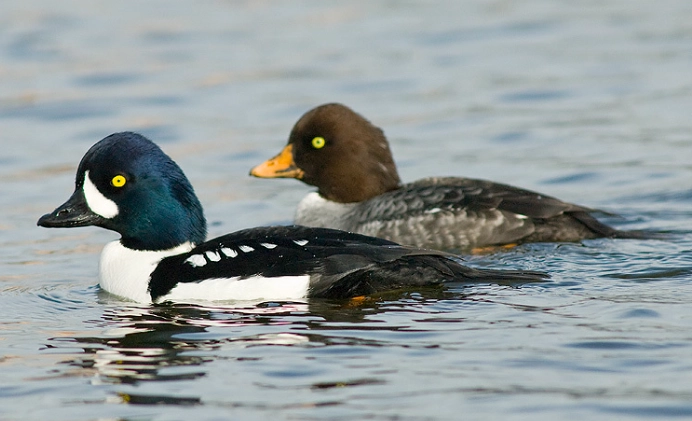
| Feature | Male Barrow's Goldeneye | Male Common Goldeneye |
|---|---|---|
| Head Color | Purplish-black gloss | Greenish-black gloss |
| Facial Patch | Thin white crescent in front of eye | Large round/oval patch behind bill |
| Body Sides | Black back extends in "spurs" down white sides | Clean line between black back and white sides |
| Wing Pattern (in flight) | Longer white stripe on inner wing | Shorter white wing patch |
Where to Find Them: Prime Viewing Spots
Barrow's Goldeneyes have a patchy, northern distribution. They're not scattered everywhere. You need to go to their core areas. Forget random lakes in the Midwest; think specific, cold-water habitats.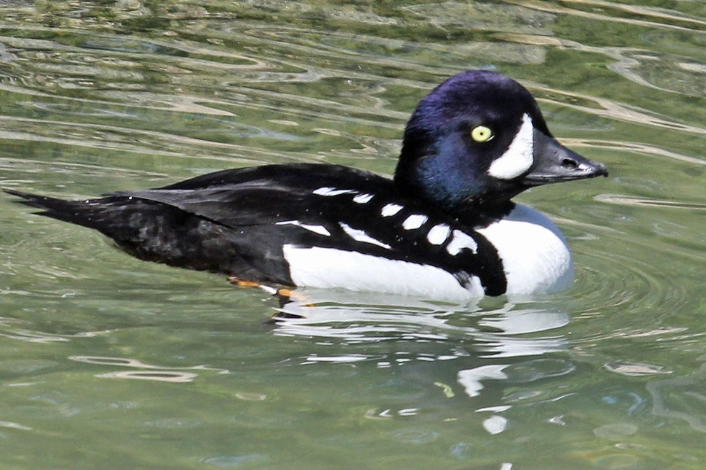
The two major populations are: 1) the Eastern Population in Iceland, Greenland, and a tiny relict group in eastern Canada (like Lac-à-la-Tortue in Quebec), and 2) the much larger Western/North American Population. For North American birders, the West is where it's at.
Top Locations in Alaska & Western Canada
This is their summer breeding heartland and fantastic for winter viewing too.
- Mendenhall Wetlands State Game Refuge (Juneau, AK): A classic, accessible spot. Drive the road along the wetlands in winter. You'll see rafts of both goldeneye species in the channels and sheltered waters. Best months: October through April.
- Potter Marsh (Anchorage, AK): The boardwalk here is famous. While you might see them in summer, it's a reliable winter haunt when other water freezes. Scan the open channels carefully.
- Coastal British Columbia Inlets: Places like Indian Arm near Vancouver or Deep Bay on Vancouver Island host significant wintering flocks. A spotting scope is highly recommended from shoreline pull-offs.
Key Wintering Grounds in the Pacific Northwest U.S.
Thousands migrate south along the coast to spend winter in protected bays.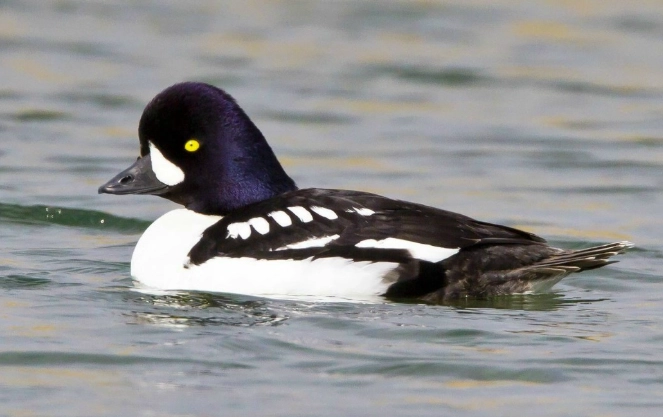
- Samish Bay & Padilla Bay (Washington): This is arguably the single best place in the contiguous U.S. to see large flocks. Drive the back roads around Bayview or Edison on a high tide. The ducks raft up close to shore. I've counted over 500 in a single scan here in January.
- Sandy Point (Whatcom County, WA): Another reliable Washington hotspot. The mix of freshwater outflow and saltwater attracts them.
- Coos Bay & Yaquina Bay (Oregon): Major Oregon estuaries that support wintering birds. View from public parks and boat ramps along the bay shores.
These aren't just random spots. They share key features: sheltered, shallow saltwater or brackish bays with abundant shellfish (their food) and nearby freshwater sources for drinking.
Life on the Edge: Diet, Breeding, and Migration
Barrow's Goldeneyes are tied to the boreal forest and its waterways. They nest in tree cavities, often old Northern Flicker or Pileated Woodpecker holes, near lakes and ponds. They're fussy. The water needs to be clear and rich in aquatic insects for the ducklings. This specialization makes them vulnerable to logging and shoreline development.
Their diet shifts with the season. In summer, it's insects, larvae, and plant material. In winter, they switch almost entirely to bottom-dwelling invertebrates: mussels, clams, crabs, and shrimp. They dive in 10-20 feet of water, prying shellfish off rocks. You'll often see them surface, then maneuver the shell in their bill to swallow it whole.
Migration is a drawn-out affair. They leave northern breeding grounds from September to November, moving to coastal wintering sites. The return trip starts as early as February. Some birds, particularly in Iceland and parts of coastal BC, are nearly resident, only moving short distances if ice forces them to.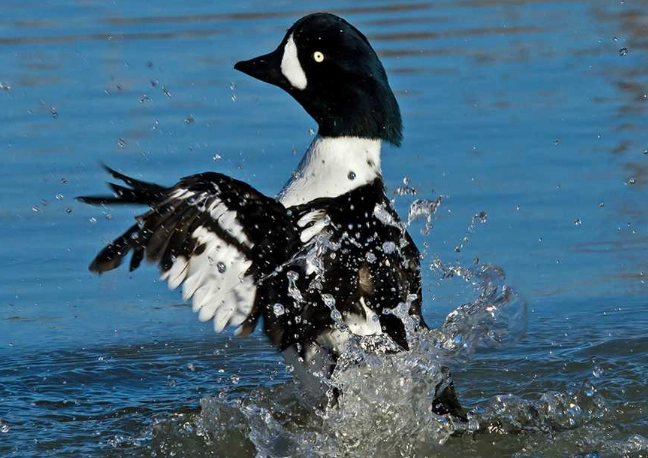
Are Barrow's Goldeneyes at Risk?
Globally, they're classified as Least Concern by the IUCN. But that broad label hides regional concerns. The Eastern Population in Iceland/Greenland is stable. The Western Population is also generally healthy, but faces local pressures.
The main threats aren't dramatic. They're slow and cumulative: loss of nesting trees from forestry, degradation of freshwater breeding lakes from pollution or development, and disturbance at key wintering sites from boat traffic and coastal construction. Oil spills in coastal bays would be catastrophic for wintering flocks.
Organizations like Ducks Unlimited and government agencies work to protect nesting habitat through programs like the installation of nest boxes, which they use readily. According to the U.S. Fish and Wildlife Service, monitoring through surveys like the Waterfowl Breeding Population and Habitat Survey is crucial for tracking trends.
Planning Your Barrow's Goldeneye Trip
Let's get practical. You want to see one. Here’s how to make it happen.
Best Time of Year: For the easiest viewing, aim for winter (November - March). The birds are concentrated in coastal bays, often in large, mixed flocks. Summer (June-August) offers a chance to see them on pristine boreal lakes, but they're more dispersed and wary around nests.
Gear You Need: A decent pair of binoculars (8x42 is ideal) is the bare minimum. A spotting scope on a tripod is a game-changer for scanning distant rafts on bays. Dress for the weather—layers, waterproof boots, warm gloves. A field guide or app like Merlin Bird ID is helpful for quick confirmation.
A Sample 3-Day Winter Trip (Pacific Northwest Focus):
Day 1: Fly into Seattle (SEA) or Vancouver (YVR). Drive north to Bellingham, WA. Spend the afternoon at Sandy Point State Park, scanning the Strait of Georgia. Day 2: Drive south to the Samish Flats area. Spend the morning driving farm roads around Samish and Padilla Bay. Key spots: the end of Bayview-Edison Road, the Edison Slough. Afternoon: explore Padilla Bay Shore Trail. Day 3: Option A: Take a ferry to Vancouver Island and check spots like Deep Bay. Option B: Head south to Skagit Bay or continue exploring other Whatcom County sites.
This itinerary puts you in the heart of their highest-density winter habitat.
Expert Answers to Your Goldeneye Questions
In Alaska, where is the single easiest place for a tourist to see a Barrow's Goldeneye?
For sheer convenience, the Mendenhall Wetlands in Juneau. You can see them from your car along the Glacier Highway if the weather's bad. The visitor centers in Juneau often have staff who can point you to the day's best spot. Potter Marsh in Anchorage is a close second, offering a guaranteed birding experience right off the highway with a paved boardwalk.
I only have binoculars, not a scope. Can I still identify them reliably in a mixed flock?
Yes, but you need patience and to wait for the right view. Focus on getting a clear look at the head of a male. That crescent vs. round spot is visible with good 8x or 10x binoculars if the bird is facing you or sideways. Don't waste time on distant, sleeping birds. Watch for active ones that lift their heads. The side pattern (black spurs on white) is another binocular-friendly clue if the light is decent.
Why are there almost no Barrow's Goldeneyes in the eastern United States?
It boils down to glacial history and habitat fidelity. During the last ice age, the population was likely pushed into two separate refugia: one in the west (Beringia/Alaska) and one in the east (possibly Atlantic Canada). When the ice retreated, they expanded from these cores but remained faithful to their specific, northern forest and mountain lake habitats. The eastern refugium population was always smaller and more vulnerable. The eastern deciduous forests and warmer lowlands that dominate the eastern U.S. simply don't offer the clear, insect-rich lakes and coastal bays they require. They're a true bird of the North and West.
Are nest boxes effective for helping Barrow's Goldeneye populations?
Extremely effective, but with a caveat. In areas where natural tree cavities have been lost to logging, nest boxes can be a fantastic conservation tool. Studies in British Columbia show high occupancy rates. However, the boxes must be placed correctly—near suitable water, high enough off the ground, with the right size hole to exclude larger competitors. The real solution is protecting stands of mature and dead trees (snags) near lakeshores, but boxes are a great stopgap. If you're on land they use, putting up a box is one of the most direct ways to help.





Comments
Leave a Comment